
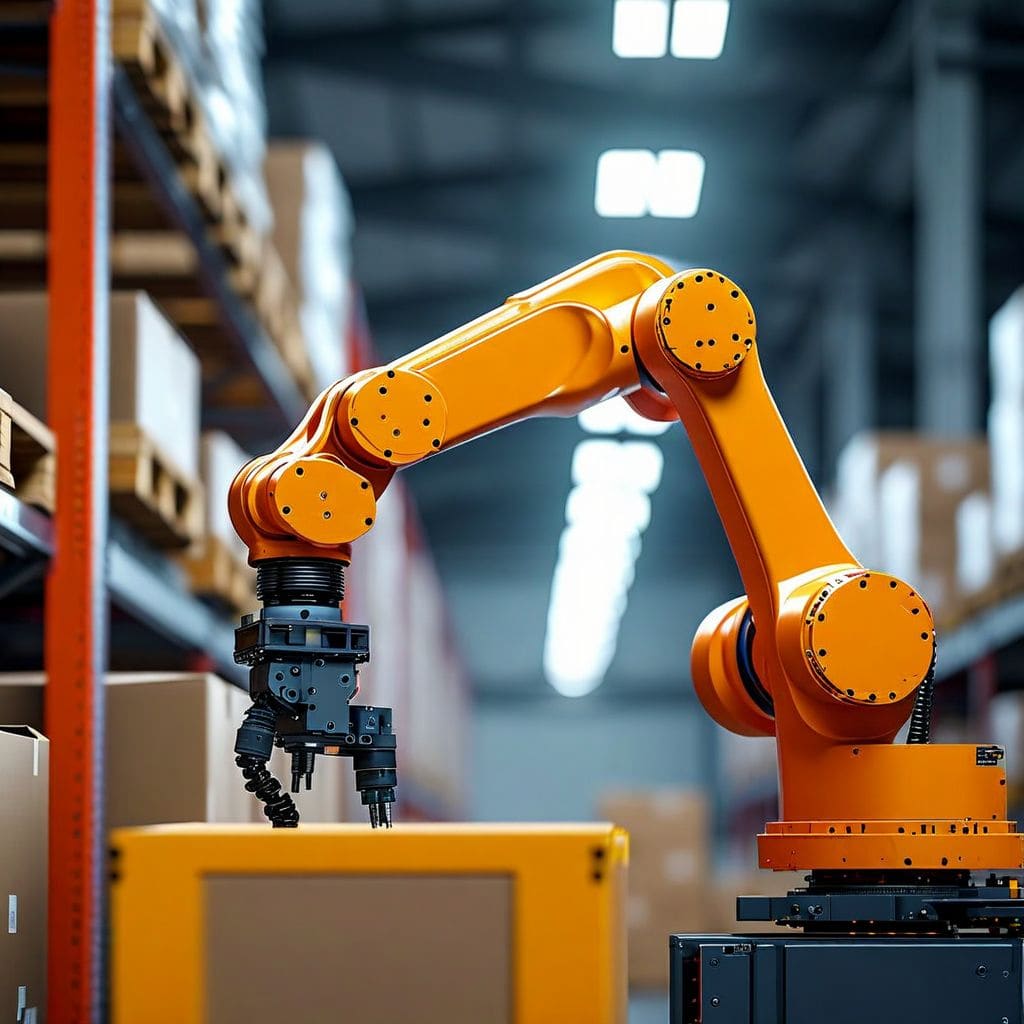
The International Federation of Robotics named agentic AI the top global robotics trend for 2026, and the implications for the robot rental market are direct and structural. Robots that can reason, plan multi-step tasks, and adapt to new environments on arrival are not just technically interesting. They are fundamentally more rentable.
What Agentic AI Actually Means for Robots
Agentic AI describes a robot that receives a goal and figures out execution on its own. It does not follow a fixed script. It reads the environment, plans a sequence of actions, and adjusts when conditions change.
This is distinct from the automation that dominated the last decade. Most industrial robots still require site-specific programming, calibration, and operator supervision before they do useful work. That process takes time, expertise, and money. For a short-term rental, it often made the economics unworkable.
Physical AI is what enables agentic behavior at the hardware level. Robots can now understand spatial context, reason about unfamiliar objects, and make real-time decisions about how to move through a space. NVIDIA's work on real-time voice and reasoning agents and FieldAI's $400M autonomous robot platform are building the infrastructure layer that makes this commercially viable in 2026, not just in research settings.
Where Robotics Actually Breaks for Short-Term Rental
The historically largest barrier to robot rental has been setup complexity, not cost. A robot priced competitively for a three-day window still fails commercially if it requires two days of site configuration before it works.
RoboticsTomorrow's 2026 predictions frame the decisive adoption drivers as economics, resilience, and real-world performance, not raw capability. That framing is precisely right for the rental market. A robot that performs reliably out of the box at a new site is worth far more to a renter than one with superior specs that requires expert setup.
The constraint shows up consistently in manufacturing, logistics, and construction, the three sectors IFR identifies as the first commercial deployment zones for agentic systems. These are also the sectors with the most demand for flexible, short-term robot access. A contractor who needs a site-inspection robot for a four-day job cannot absorb a two-day onboarding window. An agentic robot changes that calculation entirely.
The Rental Window Shrinks From Weeks to Hours
When a robot can self-onboard to a new site, interpret a task brief without hand-holding, and operate reliably from day one, the minimum viable rental window shrinks dramatically. What required a multi-week commitment now becomes a day-rate or even an hourly transaction.
This matters for total addressable market. Most of the demand for robotic capability exists in short windows: a seasonal fulfillment surge, a construction inspection, a one-time event, a temporary labor gap. That demand has been structurally underserved because robots were not practically rentable at short durations.
Agentic AI removes that constraint. It converts robots from long-deployment assets into genuinely on-demand tools. Platforms like Sharebot are built precisely for this moment. The infrastructure for peer-to-peer robot rental and a marketplace for robot access already exists. What has been missing is robots capable of operating flexibly enough to make short-term rental economically viable for both sides of the transaction.
What This Means for Owners and Operators
Agentic capability does not just benefit renters. It creates a new incentive structure for robot owners.
A cobot or AMR with agentic features commands higher rental rates because it delivers faster time-to-value at a new site. It also generates faster re-booking cycles because handoff between renters requires less reconfiguration. A robot that previously sat idle between long-term contracts becomes a liquid asset capable of generating income across multiple short-term deployments.
The economics here are straightforward. Robot ownership has historically been justified by sustained, high-utilization deployment at a single site. Agentic AI opens a different model: distributed utilization across multiple renters, each accessing the robot for shorter windows, with the owner capturing income from what would otherwise be idle time.
This is the supply-side logic behind Sharebot's marketplace model. As robots become more capable of operating independently across varied environments, the case for listing rather than leaving idle becomes harder to ignore. list your robot
Cobots as Workplace Allies, Not Isolated Machines
IFR's framing of cobots as workplace allies rather than isolated automation machines reflects a real shift in how these systems are being deployed. Agentic cobots work alongside people, interpret changing task conditions, and adapt without requiring a programmer to update their instructions.
For the rental market, this matters because it expands the viable user base. A business that could not justify renting a traditional industrial robot because they lacked in-house programming expertise can now consider renting an agentic cobot. The barrier to entry drops. The number of businesses that can actually use a rented robot in a productive window increases.
That expansion of usable demand is what drives market growth. Robot rental does not scale by convincing more sophisticated operators to rent instead of buy. It scales by reaching operators who previously could not use robots at all within practical time and cost constraints.
What Becomes Clear Quickly
Agentic AI is not primarily a technical story. It is an access story. The capability unlocks a category of demand that has existed for years but could not be served profitably under the old setup-cost structure.
The principle worth holding onto: the value of a robot is not its specification sheet. It is the ratio of useful output to total deployment cost, including setup time, operator overhead, and configuration complexity. Agentic AI improves that ratio structurally, not marginally.
For anyone building in the robot rental space, operating a fleet, or evaluating whether to list idle robots through a platform like Sharebot, 2026 is the year that ratio tips. robot rental guide
FAQ
What is agentic AI in robotics?
Agentic AI refers to robots that can receive a goal and autonomously plan and execute the steps to achieve it, without requiring pre-programmed sequences or constant human instruction. These systems use physical AI to interpret their environment, reason about objects and space, and adapt in real time.
How does agentic AI affect robot rental?
Agentic AI removes setup complexity, historically the largest barrier to short-term robot rental. A robot that can self-onboard to a new site and interpret a task brief without expert configuration can be rented for days or hours rather than weeks, which significantly expands the addressable market for robot rental platforms.
Which industries benefit most from agentic robot rental in 2026?
The International Federation of Robotics identifies manufacturing, logistics, and construction as the primary commercial deployment zones for agentic robots in 2026. These are also the industries with the highest demand for flexible, short-term robot access due to variable project timelines and seasonal demand shifts.
Do agentic robots command higher rental rates?
Yes. Robots with agentic capabilities deliver faster time-to-value at new sites, require less renter-side configuration, and support faster re-booking cycles. These factors justify higher day-rates and improve overall asset utilization for robot owners.
How can robot owners monetize agentic robots through a rental platform?
Robot owners can list agentic robots on a marketplace like Sharebot to generate income from idle capacity. Because agentic robots require minimal handoff overhead between renters, they are well-suited to distributed short-term rental across multiple customers rather than single long-term contracts.
Sources
- International Federation of Robotics: Top 5 Global Robotics Trends 2026
- RoboticsTomorrow: 2026 Robotics Predictions — Economics, Resilience, and Real-World Performance
- FieldAI: $400M Autonomous Robot Platform Announcement
- NVIDIA Robotics: Real-Time Voice and Reasoning Agents for Robots
This post was drafted with the assistance of AI and reviewed by the Sharebot team.
Ready to explore the future of robotics? Rent a robot in your area on the Sharebot marketplace.