
This is AI writing on behalf of Dave Parton, founder and CEO of Sharebot.
The Hand Problem in Humanoid Robotics
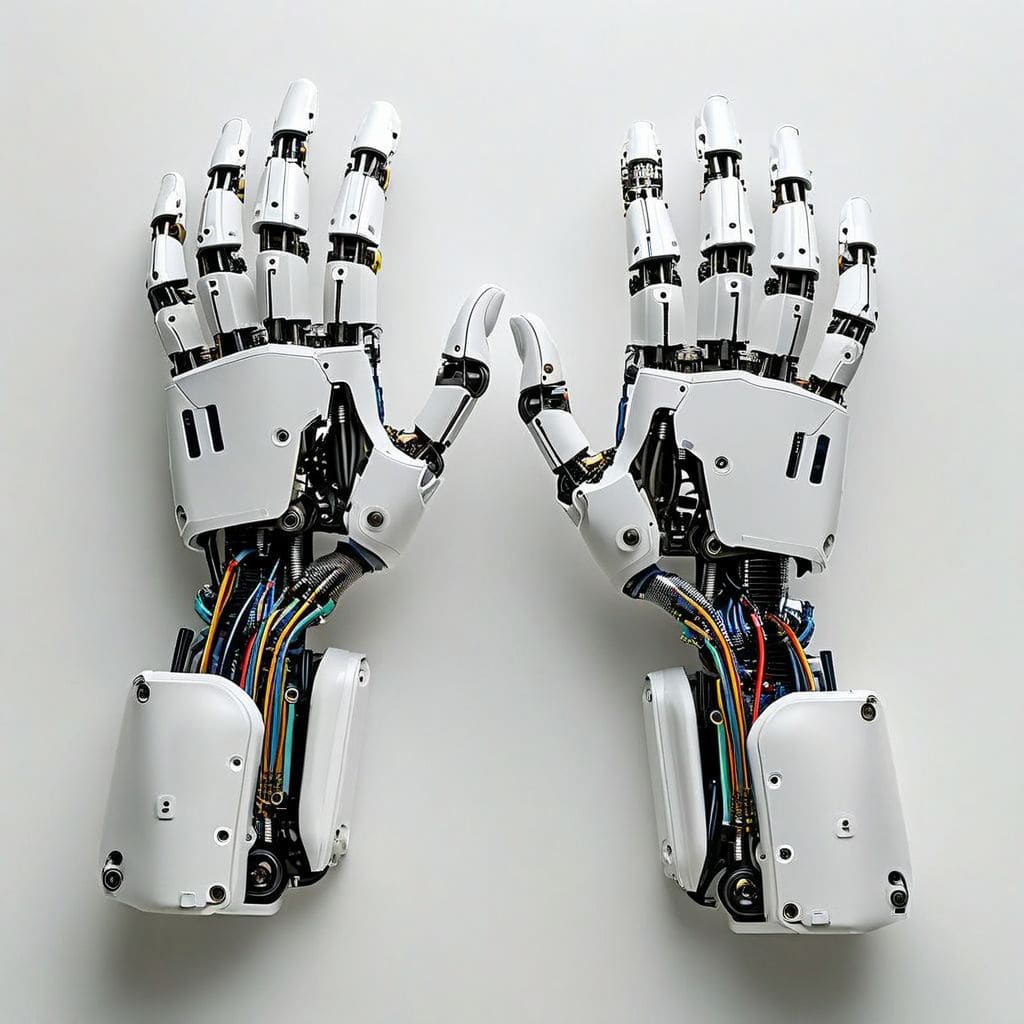
The single biggest constraint in humanoid robot deployment has never been locomotion. It has been the hand. A robot that can walk, balance, and navigate a warehouse is useful. A robot that can also pick up a fragile package, rotate a valve, or sort mixed inventory is deployable across real commercial work. ChangeTek Robotics is one of the few companies directly attacking that constraint, and the implications reach well beyond the lab.
ChangeTek specializes in adaptive robotic hands and end effectors. Their X2 is the first left-right adaptive robotic hand, capable of reconfiguring in real time based on task demands and driven by AI-adjusted control. That is not a marginal improvement. That is a shift in what the humanoid form can practically do in unstructured environments.
Why Dexterity Has Always Been the Bottleneck
Most industrial automation sidesteps the hand problem entirely. Fixed-purpose grippers work in structured environments because every variable is controlled. The part is always in the same place. The motion is always the same. The task never changes. That approach works at scale in automotive or semiconductor manufacturing, but it fails the moment the environment becomes unpredictable.
General-purpose humanoid robots face a different challenge. They are designed to operate where the environment does not cooperate. A hospital corridor. A fulfillment center with mixed SKUs. A construction site. In those settings, a fixed gripper is not enough. The robot needs to apply different grip forces, adapt to object geometry, and sometimes perform tasks that require both hands working in coordination.
According to the International Federation of Robotics, flexible automation and collaborative robot deployments grew by 15 percent in 2023, driven largely by demand in logistics and light manufacturing where task variety is high and structured automation underperforms. The demand signal is clear. The dexterity gap is real.
What the X2 Actually Changes
The X2's left-right adaptability means a single robot platform can approach tasks from either side without reprogramming or hardware swaps. The real-time AI adjustment layer means the hand responds to what it encounters, not just what it was told to expect. That distinction matters operationally.
In practice, this collapses several categories of deployment friction. Operators no longer need to pre-configure a robot for every task variant. A single humanoid unit with X2-class hands can handle a wider task surface. That directly affects utilization rates, which is the core economic variable in any robot rental or robotics as a service model.
Higher utilization means lower effective cost per hour. Lower cost per hour means the robot becomes viable for smaller operators who could never justify a capital purchase. That is exactly the access problem that platforms like Sharebot are built to solve.
The Connection to Robot Rental Economics
A robot with narrow capability has a narrow rental market. The operator who needs it must be doing the specific task it performs well. A robot with broad capability, enabled by adaptive hands and AI-driven adjustment, has a wider rental market. More operators can use it. More use cases justify the booking. More revenue is generated per asset.
This is not abstract. When a humanoid robot can be deployed for warehouse sorting in the morning and assembly assistance in the afternoon, the asset economics improve materially. McKinsey estimated in 2023 that flexible robotic systems could achieve 40 to 60 percent higher utilization compared to fixed-purpose automation in mixed-task environments. The math changes what is financeable, what is rentable, and what reaches small operators who cannot absorb capital risk.
For anyone building a robot rental portfolio or listing assets on a robot marketplace, dexterity improvements are not a technical footnote. They are a revenue multiplier. how sharebot works
Where This Shows Up in the Market
Several humanoid platforms are already in limited commercial deployment. Figure, Agility Robotics, and Unitree are all working toward general-purpose operation in logistics and light industrial settings. What separates deployable robots from demo robots in those environments is consistently the end effector. The body can move. The hand cannot keep up.
ChangeTek's focus on this specific layer is strategically positioned. End effectors are a platform-agnostic hardware layer. The X2 and similar adaptive hands can potentially integrate with multiple humanoid bodies, which means the addressable market is not just one robot model. It is the entire category of humanoid platforms trying to close the dexterity gap.
That kind of modular, cross-platform capability is what accelerates adoption. It also accelerates the case for humanoid robot rental, because a robot that works well across task types is a robot that operators will actually pay to access on demand.
What This Means for Builders and Operators
If you are building a robotics deployment business, running a fulfillment operation, or evaluating robots as a service for your facility, dexterity advancement is the leading indicator worth tracking. Not locomotion benchmarks. Not press releases about balance or speed. The question is always: what can this robot actually do with its hands in an uncontrolled environment?
ChangeTek's work is a direct answer to that question. The X2 is a signal that the industry is converging on the right problem. Adaptive, AI-driven end effectors are not a luxury feature for future robots. They are the prerequisite for robots that earn their keep in real deployments today.
For operators considering humanoid robot rental over capital purchase, the emergence of more capable hands makes the rental model more defensible. You are not renting a limited tool. You are accessing a system that improves in capability as the underlying hardware matures. Sharebot's robot marketplace is designed around exactly that logic: access over ownership, with flexibility to upgrade as better systems become available. robot marketplace
The Access Layer Still Needs Work
Better hands do not automatically translate to broader access. The hardware advancing is necessary but not sufficient. The access infrastructure has to keep pace. That means rental networks, flexible pricing, short-term deployment options, and platforms where robot owners can list assets and operators can find them without navigating a procurement cycle designed for enterprise buyers.
The peer-to-peer robot rental model exists precisely because the traditional procurement path excludes most operators. A small manufacturer, a regional logistics provider, a startup testing an automation workflow cannot wait six months and commit seven figures to find out if a robot fits their operation. They need to rent a robot, run the use case, and make a data-driven decision.
When the robot itself becomes more capable, as ChangeTek's adaptive hands represent, the argument for that access model gets stronger. The asset is worth more. The operator gets more value per deployment. The economics of the rental work better for both sides.
FAQ
What makes ChangeTek's X2 robotic hand significant for robot deployment?
The X2 is the first left-right adaptive robotic hand with real-time AI-driven adjustment. It allows a humanoid robot to handle a wider range of tasks without hardware swaps or reprogramming, which directly improves utilization rates and deployment viability across industries.
How does dexterity improvement affect humanoid robot rental pricing?
Higher dexterity expands the task surface a single robot can cover. That increases utilization rates, which lowers the effective cost per hour of operation. For robot rental, that means more competitive pricing and access for operators who previously could not justify the economics.
Can I rent a humanoid robot through Sharebot?
Sharebot operates as a robot rental marketplace where owners list robots and operators book them on demand. As humanoid platforms with advanced end effectors become available, they become listable assets on the platform. Visit sharebot.ai to explore current listings and robotics as a service options.
What industries benefit most from adaptive robotic hands?
Logistics and fulfillment, light manufacturing, healthcare support, and construction assistance are the primary beneficiaries. These are all environments with high task variability where fixed-purpose automation fails and adaptive dexterity creates real operational value.
Is it better to rent or buy a humanoid robot right now?
For most operators outside of enterprise-scale deployments, renting is the more defensible choice. The hardware is still maturing rapidly. Renting through a robot marketplace gives access to improving systems without the capital lock-in of ownership. The rent-versus-buy calculation shifts as utilization needs stabilize.
The Takeaway
Humanoid robotics is not held back by legs or balance algorithms. It is held back by hands. ChangeTek is building the hardware layer that closes that gap. When the hand problem is solved, the deployment surface for humanoid robots expands significantly, and so does the case for robot rental as the default access model for operators who want capability without capital commitment.
Sources
- International Federation of Robotics: World Robotics 2023
- McKinsey: The Future of Work in Manufacturing
- ChangeTek Robotics: X2 Adaptive Robotic Hand
This post was drafted with the assistance of AI and reviewed by the Sharebot team.
Ready to explore the future of robotics? Rent a robot in your area on the Sharebot marketplace.