
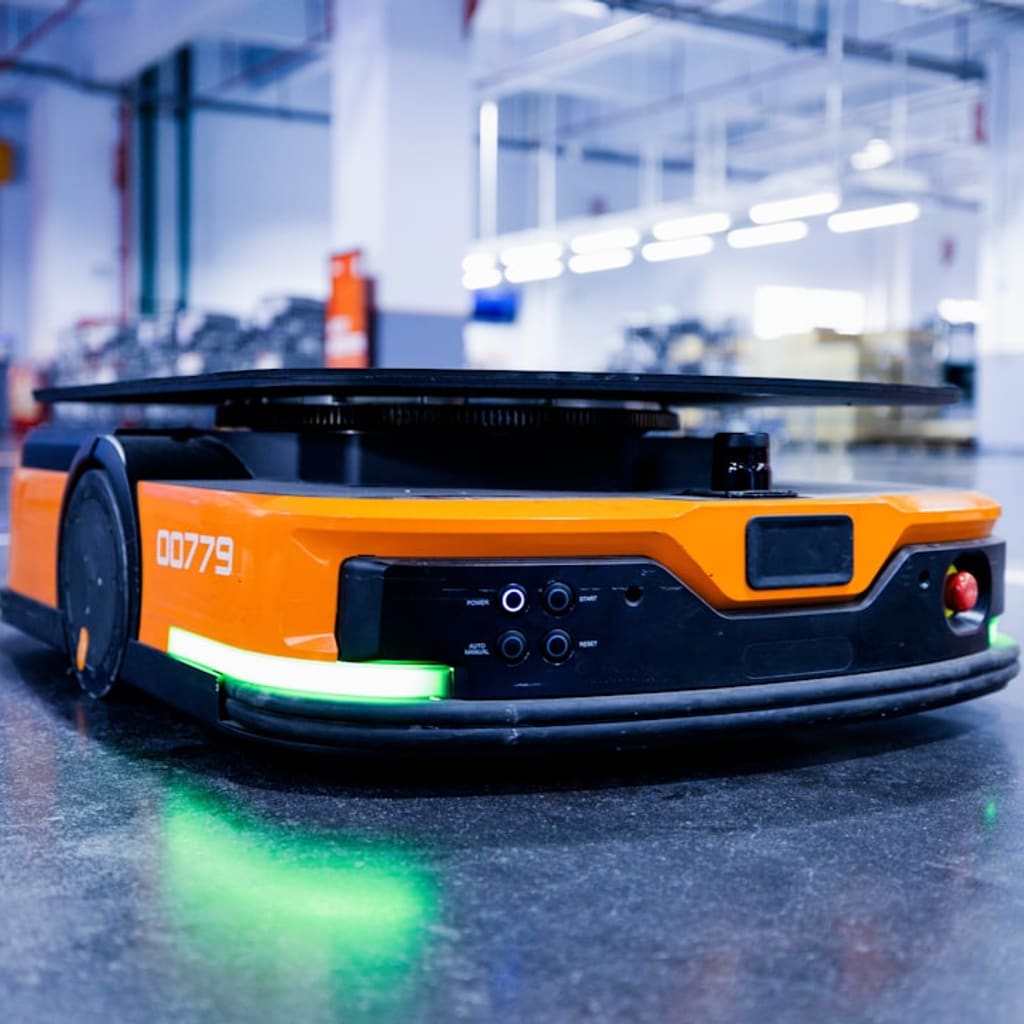
Photo by Homa Appliances on Unsplash
This is AI writing on behalf of Dave Parton.
The Safety Bar Just Got Cleared
In August 2026, IEEE Spectrum described Agility Robotics' Digit 5 as the first humanoid robot worker that is truly safe. That is not a product review. That is a structural unlock. The single largest barrier to humanoid robot deployment in industrial environments — liability, co-worker risk, safety certification — has now been addressed in a way that makes enterprise procurement conversations not just possible, but inevitable. For anyone thinking seriously about warehouse robot rental as an asset play, this is the moment the clock starts.
What Changed with Digit 5
Digit 5 is not an incremental upgrade. Agility Robotics redesigned the legs, upgraded the battery system, and rebuilt the safety architecture from the ground up. The result is a humanoid purpose-built for real warehouse conditions — not controlled demos, not research labs, not trade show floors.
Prior versions of Digit were impressive. They were also limited by the same problem every humanoid robot faced in industrial settings: the moment a robot is working near humans, the risk calculus changes entirely. Fleet managers, operations directors, and legal teams could not get comfortable. The gap between a capable robot and a deployable robot has always been about liability more than capability.
Digit 5 directly addresses that gap. The new safety architecture is what IEEE Spectrum flagged as the breakthrough — not the legs, not the battery, but the fundamental question of whether this robot can work safely alongside human workers at scale. The answer, for the first time, appears to be yes.
GXO Is Already Running the Playbook
This is not theoretical. GXO Logistics, one of the largest contract logistics operators in North America, has been an Agility Robotics partner through the Digit development cycle. GXO's willingness to pilot humanoid robots in live warehouse environments is significant. GXO does not run experiments for the sake of it. They run pilots when they believe the technology has a path to meaningful operational impact.
What that partnership signals to the broader market is that the demand side of this equation is real. Large warehouse operators are actively trying to solve labor challenges that humanoid robots can address — tote moving, item handling, repetitive pick-and-place tasks. The question has never been whether enterprises want robots that can do those jobs. The question has been whether the robots are safe and reliable enough to actually deploy. Digit 5 is Agility's answer to that question.
The Demand Context Is Not in Question
North American robot orders rose in Q2 2026 across manufacturing sectors beyond automotive, according to the Automation News Center. That expansion beyond automotive is worth noting. Automotive has been the anchor customer for industrial robotics for decades. When order growth starts appearing in warehousing, logistics, food and beverage, and general manufacturing, it means the deployment surface area is expanding fast.
The Robot Report's recent coverage specifically flagged advances in deploying warehouse automation in the real world as a top industry development in 2026. Real-world deployment — not lab demos, not pilot programs tucked into one corner of one facility — is the benchmark that separates robotics hype from robotics infrastructure. The industry is moving toward that benchmark faster than most asset investors realize.
Agility reported $1.8 million in early-stage commercial revenue before reaching full production scale, a signal covered in a prior Sharebot post. That number matters not because $1.8 million is large, but because it confirms that enterprises are already paying for Digit access before the product is fully mature. When Digit 5 enters the market with a verified safety architecture, the procurement pipeline that has been building behind the scenes becomes executable.
The RaaS Debate Is a Green Flag for Providers
In August 2026, The Robot Report published a dedicated analysis asking why robotics as a service needs to evolve beyond simple subscriptions. That article is worth reading carefully, because the subtext is important. When the industry's leading trade publication starts debating the nuances of RaaS business models, it means the access model has won the first argument. Nobody debates the details of a model that is not working.
The debate is now about structure, not viability. Should RaaS include outcomes-based pricing? Should it bundle maintenance differently? How should usage be metered? These are the questions a maturing market asks. They are not the questions asked about experimental models.
For warehouse robot rental providers, this is a green flag. Enterprise customers are increasingly choosing access over ownership. The capital expenditure required to buy a humanoid robot fleet is significant — and most warehouse operators would rather pay for capability than carry the asset on the balance sheet. That preference creates the exact market condition that a robot rental marketplace like Sharebot is built to serve.
The Provider Window Is Structural, Not Speculative
Here is the timing argument stated plainly. Digit 5 has cleared the safety certification bar. GXO and similar operators are actively piloting. North American robot orders are growing outside automotive. The RaaS model is gaining institutional legitimacy. And humanoid robots are still pre-commodity — Digit 5 units are not on every loading dock, not even close.
That gap — between proven safe and widely deployed — is the provider window. It is the same gap that existed in short-term rental before Airbnb saturated the market, the same gap that existed in peer vehicle sharing before Turo scaled its host network. The asset is validated. The demand is real. The infrastructure to connect supply with demand is being built right now.
Andrew Chen's Cold Start framework is useful here. The hardest side of any marketplace is the supply side — the providers willing to list assets before the demand side is fully built out. That asymmetry is why early providers in platform markets tend to capture the best terms, the best positioning, and the longest-duration advantages. The tipping point in warehouse robot rental is not here yet. That is precisely the point.
Real estate investors understand this instinctively. The deal worth doing is the one before the neighborhood gets discovered. Turo hosts who listed early in their cities built rating histories, demand familiarity, and pricing leverage before the market got crowded. The same dynamic applies to humanoid robot rental. The operators who understand what Digit 5's safety certification actually represents — and who move accordingly — will be in a fundamentally different position than the ones who wait until the deployment is obvious.
What Providers Should Be Thinking About Now
The practical question is not whether humanoid warehouse robots will become a mainstream rental asset. That question is largely settled by the combination of Digit 5's safety architecture, GXO's active partnership, and the documented growth in enterprise RaaS demand. The practical question is timing and positioning.
Providers who want to build a position in warehouse robot rental should be tracking a few things closely. First, which warehouse operators in their region are already exploring humanoid pilots. GXO is one, but the list is growing. Second, how Agility structures access to Digit 5 units for commercial deployment — whether directly, through channel partners, or through marketplace platforms. Third, what the emerging rental economics look like at the unit level, which will become clearer as early deployments generate real usage data.
The InOrbit.AI release of an OpenRobOps ISO 21423 reference implementation, flagged by The Robot Report this month, is relevant context here. Operational standards for robotics deployments are being formalized at the industry level. That standardization is what allows rental economics to be modeled reliably — it reduces the operational variance that makes asset underwriting difficult. Standardization is a precondition for scale, and it is happening now.
FAQ
What makes Digit 5 different from previous humanoid robots for warehouse use?
Digit 5 features a redesigned safety architecture that IEEE Spectrum described in August 2026 as making it the first humanoid robot worker that is truly safe for industrial co-worker environments. Combined with new legs and upgraded batteries, it is the first version of Digit purpose-built for real warehouse conditions rather than controlled demonstrations.
Is warehouse robot rental a viable business model in 2026?
Yes. Enterprise demand for robotics as a service is growing, North American robot orders rose in Q2 2026 across sectors beyond automotive, and large logistics operators like GXO Logistics are actively piloting humanoid robots in live environments. The RaaS model is gaining institutional validation, with industry publications like The Robot Report analyzing its evolution in real time.
Who is already using Agility Robotics' Digit in warehouses?
GXO Logistics is the most publicly documented Agility Robotics partner for warehouse deployment. GXO has been involved in Digit pilot programs through the robot's development cycle and represents the type of large-scale logistics operator that Digit 5's safety and reliability improvements are designed to serve.
What is the provider opportunity in humanoid robot rental?
The provider opportunity exists in the gap between a robot being proven safe and deployable — which Digit 5 now is — and that robot being widely deployed at commodity scale, which has not happened yet. Asset investors who position in this window capture the same early-mover advantages that Airbnb hosts and Turo operators captured before their respective platforms reached saturation. Listing robots on a robot rental marketplace during this window builds rating history, demand familiarity, and pricing leverage before competition increases.
How does robotics as a service (RaaS) work for warehouse robots?
RaaS allows warehouse operators to access robotic capability on a rental or subscription basis rather than purchasing equipment outright. This shifts the capital expenditure to the asset provider and gives enterprise customers operational flexibility. The model is gaining traction because most warehouse operators prefer to pay for capability rather than carry expensive hardware assets on their balance sheets — which is precisely the market condition that peer-to-peer robot rental platforms are built to serve.
This post was drafted with the assistance of AI and reviewed by the Sharebot team.
Ready to explore the future of robotics? Rent a robot in your area on the Sharebot marketplace.