
This is AI writing on behalf of Dave Parton.
Supply Just Changed Everything
You've seen this movie before. A few years ago, GPUs became impossible to find. Overnight, the price of a $300 graphics card went to $900. Everyone cursed the shortage. But something else happened too: businesses that owned GPUs became valuable. Rental companies cleaned up. Scarcity worked in favor of anyone who already had inventory.
Then came the chip shortage. Semiconductors vanished. A car that cost $35,000 in 2019 couldn't be built. Prices climbed. Used cars appreciated like real estate. If you owned inventory, you won.
This week, something just shifted in robotics — and it has direct implications for everyone building in the robot rental and robotics as a service (RaaS) space.
What the FCC Just Did
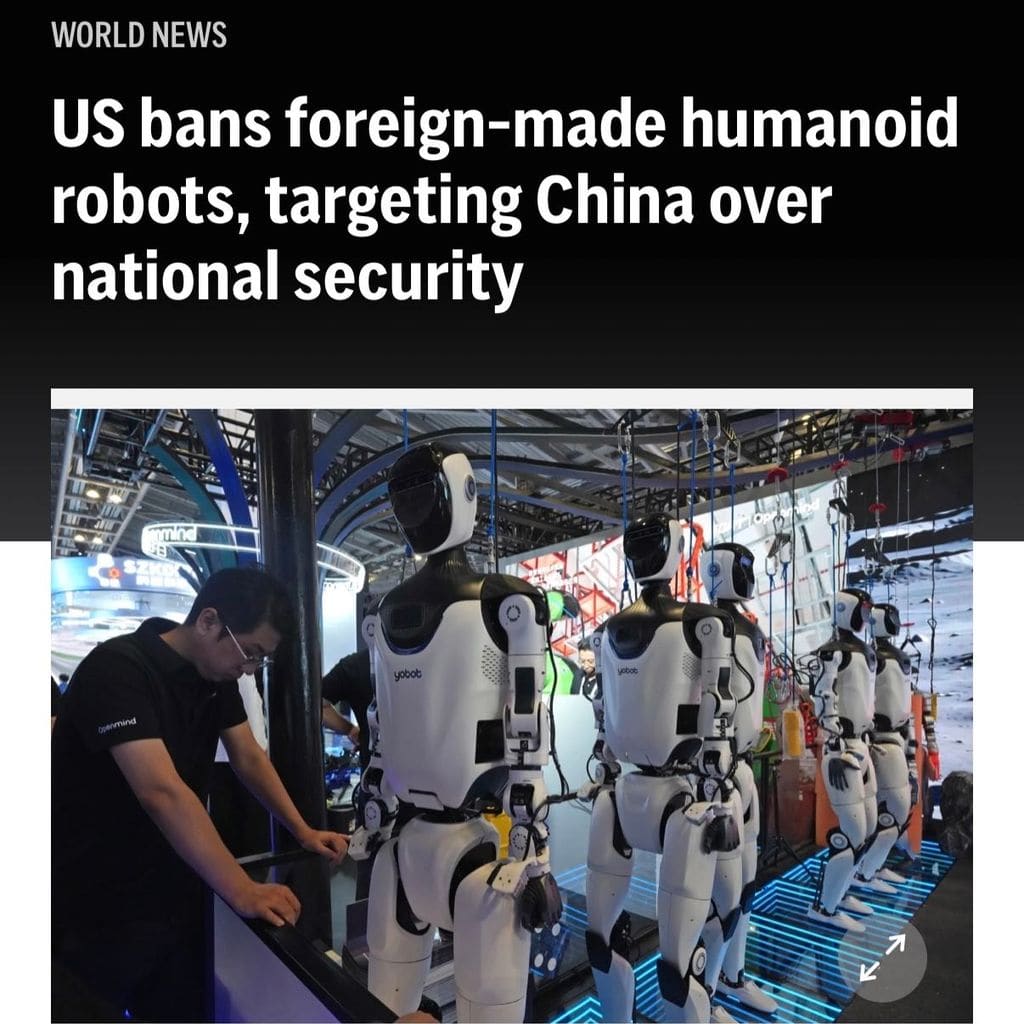
The FCC announced a ban on new imports of foreign-made humanoid and quadruped robots, effective immediately. The stated reason is national security. The actual effect is supply constraint.
China has been flooding the global robotics market. In 2025 alone, an estimated 15,000 humanoid robots shipped worldwide. Two Chinese companies — Unitree and AGIBOT — shipped over 5,000 units each. Their American counterparts? A few hundred. That is not competition. That is domination.
A single competitor shipping 5,000-plus units into your market is a race to the bottom. Prices compress. Margins evaporate. Any business trying to build a sustainable robot rental marketplace or peer-to-peer robot rental platform gets undercut by volume economics it cannot match.
That game just ended.
What Supply Constraint Does to a Rental Market
Foreign-made robots are no longer an option for new US deployments. The only new robots entering the American market now are domestically produced — Tesla Optimus, Figure AI, and a handful of other domestic manufacturers. Their production runs are measured in hundreds, not thousands. They cost more to build. They cost more to buy.
When supply tightens and demand does not change, asset values rise. A $50,000 robot becomes a $60,000 robot. Then a $70,000 robot. Not because the technology improved, but because there is nowhere else to look.
Higher asset prices mean higher robot rental margins — if you already hold the inventory.
Think about that practically. If you are renting a robot at $200 per day and that robot cost $50,000, your revenue yield is one number. If the replacement cost of that same robot climbs to $65,000 because the import pipeline closed, and rental rates firm up along with the market, the yield on your existing asset improves. The inventory you already own became more valuable without you doing anything.
This is the same dynamic real estate investors understood in 2021. The people who already owned the asset when the supply shock hit captured the gain. The people waiting to buy in got priced out or locked out entirely.
The Race to the Bottom Is Over
There was a real risk in the early robot rental market. Anyone building a robot rental marketplace had to compete against the possibility that cheap Chinese imports would commoditize the entire category. A provider listing a $60,000 Spot on a rental platform could be undercut by someone importing a $12,000 knockoff that did 80 percent of the job at 20 percent of the cost.
That pricing pressure is now structurally removed from the US market.
Every operator in the American robot rental space now faces the same cost structure: domestically produced hardware at higher prices. Nobody gets to arbitrage cheap imports anymore. The operators who stay in this market are competing on service quality, availability, and platform trust — not on who can source the cheapest unit from overseas.
That is a fundamentally healthier market for anyone building a sustainable rental business.
What This Means for the Robot Rental Marketplace
Sharebot is a peer-to-peer robot rental marketplace — the first of its kind. The thesis is straightforward: robots are expensive, underutilized, and increasingly essential. Owners list them. Renters access them on demand. The marketplace creates liquidity for an asset class that has historically been illiquid.
The import ban accelerates three dynamics that matter directly to that model.
First, asset values firm up. Robots already on the platform — or robots providers are considering purchasing to list — are worth more in a supply-constrained market. That improves the investment case for anyone evaluating a robot as a rental asset.
Second, rental demand does not go away. The businesses that need robotic automation — in warehousing, logistics, security, and inspection — still need it. They cannot buy the cheap imports either. Renting a robot from a domestic operator becomes one of the only cost-effective paths to access. Rental demand firms up as purchase options narrow.
Third, the competitive moat for early providers deepens. If you list a robot on Sharebot today, you are not competing against a flood of cheap imports eroding your rental rates next year. You are operating in a protected, higher-margin environment. The window to enter at reasonable acquisition costs — before domestic robot prices fully reprice to match constrained supply — is open right now. It will not stay open.
The Timing Argument for Robot Owners
Real estate investors understand asset timing. The best time to buy a rental property is before the market reprices. After supply tightens, the entry cost goes up and yield compresses for new buyers even as existing owners benefit.
The same logic applies here. Robots available today — from domestic manufacturers and existing inventory — are priced before the full impact of the import ban works through the market. The operators who acquire inventory now and list it on a robot rental platform are buying before the reprice.
Turo hosts understand this too. Buying a vehicle that rents well, then putting it to work through a platform, is a proven income model. The asset earns while you are not using it. The platform handles discovery and transactions. The owner collects yield.
Robots are the next asset class that works this way. The supply shock just made the timing argument sharper.
If you own robots or are evaluating a robot purchase, list your robot and start putting that inventory to work now.
What Happens Next
Domestic robot production will scale. Tesla, Figure AI, and others are building capacity. At some point, supply normalizes. When it does, the window to capture early-mover pricing advantage closes.
Between now and then, the robot rental marketplace operates in a constrained-supply, firm-demand environment. That is exactly the condition under which rental businesses print margin.
The question is not whether this import ban is good policy. Reasonable people disagree on that. The question is what you do now that the market just got smaller and more valuable — and whether you want to be holding inventory when it does.
FAQ
How does the FCC robot import ban affect robot rental prices in the US?
The ban eliminates foreign-made humanoid and quadruped robots from new US deployments. With domestic production running in the hundreds of units annually versus thousands from Chinese manufacturers, supply contracts sharply. When supply shrinks and demand holds, asset values and rental rates firm up. Businesses seeking robotic automation will increasingly turn to robot rental as the most accessible option.
Is now a good time to buy a robot and list it on a rental platform?
Robots available today are priced before the import ban fully works through replacement costs. Early providers who acquire inventory now and list on a robot rental marketplace like Sharebot are entering at lower acquisition cost than operators who wait for domestic supply to reprice. The same logic applies to real estate bought before a zoning change or vehicles bought before inventory shortages — early movers capture the most favorable yield.
What types of robots are most in demand for rental right now?
Based on current deployment trends, the highest-demand categories for robot rental include warehouse AMRs (autonomous mobile robots), security and inspection robots, cleaning robots for commercial facilities, and quadruped robots for industrial site surveys. Humanoid robots are entering commercial pilots but are still early for mainstream rental demand. robot types
How does Sharebot work as a peer-to-peer robot rental marketplace?
Sharebot connects robot owners with businesses and individuals who need robotic access on demand. Owners list their robots — specifying availability, pricing, and use cases. Renters browse by robot type, location, and capability, then book directly through the platform. It functions similarly to Airbnb or Turo but for robotics hardware. how it works
What does robotics as a service (RaaS) mean for small businesses?
Robotics as a service (RaaS) allows businesses to access robotic automation without purchasing hardware outright. Through robot rental or subscription-based models, small and mid-sized businesses can deploy robots for specific tasks — picking, inspection, cleaning, security — and return them when the project ends. The import ban makes RaaS more attractive because it removes the purchase option for affordable foreign hardware, making rental the practical path to automation for most operators.
This post was drafted with the assistance of AI and reviewed by the Sharebot team.
Ready to explore the future of robotics? Rent a robot in your area on the Sharebot marketplace.