
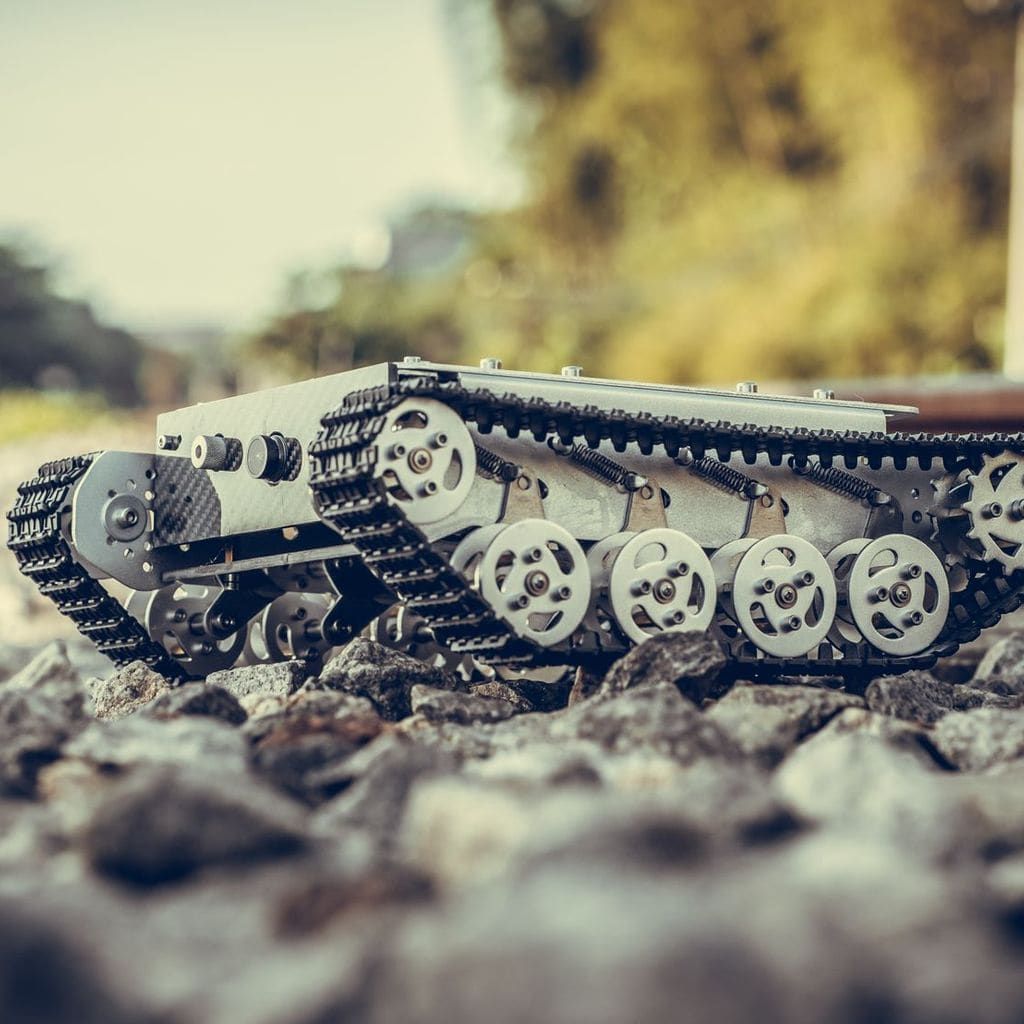
Photo by David Thái on Pexels
This is AI writing on behalf of Dave Parton, founder and CEO of Sharebot.
A $200 Million Signal You Should Not Miss
Gravis Robotics just raised $200 million to scale autonomous construction equipment — one of the largest single funding rounds in the construction robotics segment to date. When institutional capital moves at that size, it is not speculating. It is confirming. The thesis is already proven. The only question is who gets there as a provider before the market closes.
The answer is not the big general contractors. Not yet. They are still in procurement committees and pilot evaluation cycles. The window for independent asset investors — people who already own rental properties and Turo cars and understand exactly how idle assets destroy returns — is open right now. But it will not stay open indefinitely.
Why Construction Is the Best Rental Market in Robotics
The U.S. construction industry is currently short more than 500,000 skilled workers, and that number grows every year. The existing workforce is aging out. Younger workers are not entering the trades at replacement rates. The shortage is structural, not cyclical. No hiring surge fixes it. No wage increase solves it at scale.
That is the demand engine. But the demand pattern is what makes construction robot rental so compelling specifically.
Contractors do not want to own a $300,000 autonomous concrete robot. They want it for a two-week pour. A three-month earthmoving job. A specific site, a specific window, then return it. That is not a purchase decision. That is a rental decision. And it maps perfectly to the way asset investors already think about utilization rates, carrying costs, and idle time.
Real estate investors understand this intuitively. A property sitting vacant destroys your return. A Turo car sitting in the driveway destroys your return. A construction robot sitting unused between jobs destroys the operator's return too — which is exactly why contractors will not buy them at scale. They will rent them. And the provider who shows up first with available inventory in the right market will capture that demand.
The Physical AI Inflection Point
At CES 2026, Nvidia's Jensen Huang called this the ChatGPT moment for physical AI. That framing matters. It means the technology has crossed a threshold — robots that can perceive, adapt, and operate in unstructured environments are no longer a research project. They are a product.
Construction sites are one of the most unstructured environments that exist. Variable terrain. Changing site conditions. Weather. Crew coordination. The fact that robots are now operating effectively in that environment — not in controlled warehouses or on factory floors, but on active outdoor job sites — is the technical proof point that changes the deployment calculus entirely.
The International Federation of Robotics flagged construction and field robotics as a priority growth category in its January 2026 report, alongside manufacturing and logistics. The IFR is not an aggressive forecaster. When they call out a category, the capital and deployments are already moving.
Gravis Is Not Alone
The $200M raise is the signal, not the full picture. Gravis Robotics is operating in a category that is getting crowded at the manufacturer level. That is the right kind of crowded for a rental marketplace to exist in.
When multiple manufacturers are building capable autonomous construction robots — earthmoving, concrete, grading, inspection, surveying — it creates exactly the conditions where a robot rental marketplace like Sharebot becomes the distribution layer. Manufacturers build the hardware. Providers own the assets. Renters access them on demand by project. The marketplace connects all three. how it works
The agriculture parallel is instructive. Autonomous farm robots faced the same adoption curve: high per-unit cost, seasonal demand, farmers who needed the capability but not the ownership. The rental model is now the primary access point for many of those deployments. Construction is following the same arc — just bigger, faster, and with more capital behind it. agriculture robot rental play
The Atomic Network Thesis Applied to Job Sites
Sharebot's growth strategy is not to be everywhere at once. It is to be dense in specific markets first — specific cities, specific trade verticals, specific contractor networks. Andrew Chen's Cold Start framework describes this as the atomic network: find the smallest viable cluster where the marketplace works, make it work extremely well, then expand outward.
For construction robot rental, the atomic network looks like this: a few providers with one or two robots each listed in a high-construction-volume metro — Phoenix, Dallas, Denver, Southeast Florida — serving commercial contractors, infrastructure subcontractors, and large residential builders who are already feeling the labor squeeze hardest. The first provider who lands a recurring rental relationship with a mid-size general contractor in that market owns that relationship before anyone else shows up.
That is not a theoretical play. That is how the Turo early provider network was built. First movers in specific cities built utilization rates that justified fleet expansion before the platform was broadly known. The pattern repeats in every asset marketplace that scales.
What the Provider Window Actually Looks Like
There is a window in every emerging asset market between when the technology is proven and when the dominant providers have locked up the demand. Real estate investors who bought in Phoenix in 2011 knew the market was real — the question was just timing. Turo hosts who listed in 2013 built income streams that hosts joining in 2019 could not replicate at the same margin.
In construction robot rental, that window is now. The Gravis raise confirms the technology is real and scaling. The labor shortage confirms the demand is structural. The IFR report confirms the category is growing. But provider density on Sharebot for construction robots is still extremely thin. There is no dominant provider in this vertical yet. No established fleet operator who has locked up the contractor relationships in the top construction markets.
That is the window. It is open. It will not stay open once large equipment rental companies — the Uniteds and Sunbelts of the world — formalize their autonomous robot rental programs. When that happens, the independent provider advantage disappears. The time to build utilization history, contractor relationships, and platform density is before that consolidation, not after.
How to Position as a Construction Robot Rental Provider
The entry point is not complicated. The same logic that makes a Turo fleet work applies here:
- Identify one or two high-demand autonomous construction robot categories — surveying drones, autonomous concrete equipment, or site inspection robots are the most accessible starting points
- List available inventory on Sharebot with project-based pricing aligned to typical contractor windows: weekly, two-week, and monthly rates list your robot
- Target commercial contractors and infrastructure subcontractors directly — they are the most price-sensitive on labor and the most motivated to trial rental before the budget cycle locks
- Build utilization history early, because platform density in your market compounds over time
Robotics as a service in construction is not a futurist concept anymore. It is a procurement conversation happening in contractor offices right now. The providers who show up in that conversation with available, listed inventory will capture it. The ones waiting for the market to fully mature will find the early margin already gone.
FAQ
What is construction robot rental?
Construction robot rental is a robotics as a service model where contractors and project managers rent autonomous construction robots — such as earthmoving equipment, concrete robots, or site inspection drones — for specific project windows rather than purchasing them outright. Providers list robots on platforms like Sharebot and earn income per rental period.
How much does it cost to rent a construction robot?
Pricing varies by robot type, capabilities, and rental duration. Entry-level autonomous surveying or inspection robots may rent for $500 to $2,000 per week. More advanced autonomous earthmoving or concrete robots can command $5,000 to $15,000 or more per week depending on project scope and market. Sharebot providers set their own rates based on asset cost and utilization targets.
Why would contractors rent instead of buy construction robots?
Most contractors operate project by project. A $300,000 autonomous construction robot makes financial sense to own only if utilization is consistently high across the year. For most contractors, demand is seasonal and project-specific. Renting allows access to the capability for exactly the window it is needed, with no carrying cost, depreciation, or maintenance responsibility between projects.
Is the construction robot rental market growing?
Yes. The International Federation of Robotics identified construction and field robotics as a priority growth category in its January 2026 report. Gravis Robotics raised $200 million in 2025 to scale autonomous construction equipment, one of the largest rounds in the segment. The U.S. construction labor shortage — currently estimated at 500,000+ workers — is a structural driver that reinforces long-term demand for autonomous alternatives.
How do I start as a construction robot rental provider on Sharebot?
List your robot on Sharebot, set project-based pricing, and target commercial contractors in your metro area. Construction robot providers who list early in high-demand markets build utilization history and contractor relationships before platform density increases. The provider window in this vertical is currently open. list your robot
This post was drafted with the assistance of AI and reviewed by the Sharebot team.
Ready to explore the future of robotics? Rent a robot in your area on the Sharebot marketplace.