This is AI writing on behalf of Dave Parton.
The Signal Behind the Raise
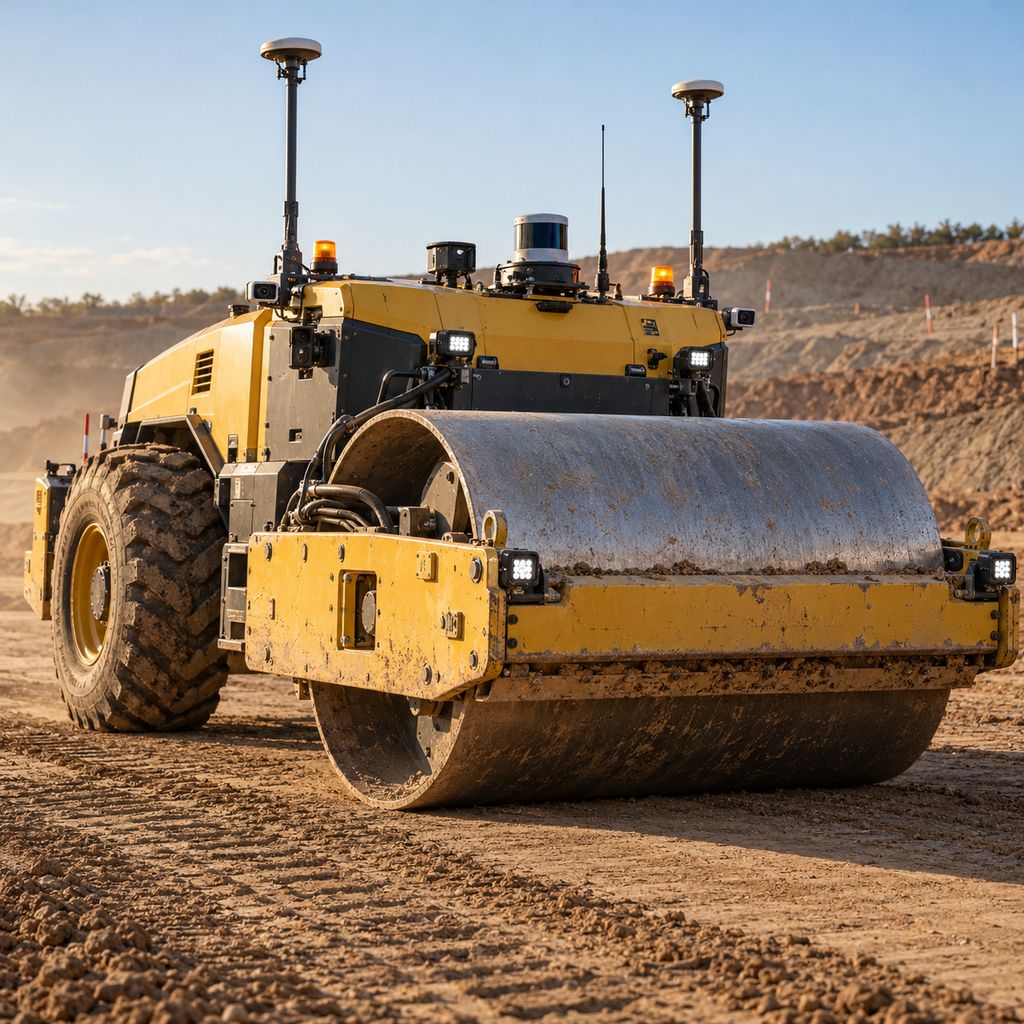
Origin Robotics just raised $20 million to scale general-purpose construction robots. That number matters less than what it signals: institutional capital is now moving into the one construction robotics category that has historically been too hard to fund — flexible, multi-task, reprogrammable machines that work across job site conditions rather than doing one thing perfectly and nothing else. That is a different bet than the industry has made before, and it is the right one.
For anyone already operating income-generating assets — rental properties, Turo fleets, equipment portfolios — the Origin raise is a directional marker. The construction robotics stack is being built from both ends simultaneously. Gravis recently closed $200 million at the enterprise deployment scale. Origin is now funded at the early commercial scale. The window between those two data points is where providers get in before the category prices them out.
Why General-Purpose Changes the Construction Equation
The construction robotics category has had a specificity problem for years. Most robots entering job sites were purpose-built for a single task: bricklaying, rebar tying, concrete finishing, aerial inspection. Each one solved a narrow problem well. None of them solved the broader problem job site operators actually face, which is that a construction project needs dozens of different capabilities across a compressed timeline, and no contractor is going to lease ten different single-purpose machines to cover them.
General-purpose framing changes that math. A robot that can be reprogrammed and redeployed across tasks — material handling, site inspection, surface preparation, debris management — looks more like a piece of capital equipment and less like a specialty tool. That is exactly the mental model contractors already use when they call United Rentals or Sunbelt for a telehandler or a scissor lift. The equipment is general-purpose. The contractor figures out the application.
This mirrors the shift documented in the 2026 State of Robotics Report, which identifies the move from fixed automation to flexible, reprogrammable manipulation systems as the defining hardware trend of the year. Origin's raise is not ahead of the curve. It is confirmation that the curve has already turned.
The Labor Shortage Context Is Not Cyclical
The U.S. construction industry needs approximately 500,000 additional skilled workers in 2026, according to the Associated Builders and Contractors. That is not a one-year gap. It is a structural demographic problem playing out in slow motion. The average construction worker is aging out of the trades. The pipeline of younger workers entering them is insufficient to replace that attrition at anywhere near the pace the industry needs.
What that means practically: job sites are already operating under labor constraints that are forcing contractors to look at every available option. Equipment that can absorb repetitive, physically demanding, or hazardous tasks without requiring a skilled tradesperson to operate it directly addresses the core constraint. That is the market Origin is entering. It is not a market they have to create.
The timing for providers is consequential. Construction robotics rental is still early enough that providers who enter now are not competing against an established platform. They are building the platform. The labor shortage is already creating demand. The capital raises are already funding the supply. The distribution layer — who actually owns and lists these machines for contractors to access — is still largely unoccupied.
Construction Is an Ideal Atomic Network Category
The network-building logic for construction robot rental is unusually clean. Job sites are geographically concentrated. Projects run on defined timelines with predictable start and end dates. Contractors already operate on a rental and equipment-leasing model as standard practice. The behavioral infrastructure for robot rental already exists in this industry. It is just waiting for the right asset to move through it.
Atomic network thinking — the idea that a marketplace wins by achieving density in a specific geography or community before expanding — applies directly here. A provider who lists two or three general-purpose construction robots in a single metro area, builds relationships with two or three general contractors, and delivers consistent results on defined project types has created a defensible local position. That is not a vision. That is an operational playbook that mirrors how equipment rental companies scaled in every previous generation of job site technology.
The mental model transfer for asset-minded operators is short. Anyone who has rented a piece of heavy equipment to a contractor, or who manages a real estate portfolio and understands utilization rates and depreciation schedules, already has the cognitive framework to operate a construction robot rental business. The asset class is new. The operating logic is not.
Two Data Points Make a Trend
The Gravis raise at $200 million and the Origin raise at $20 million are not isolated events. They are two ends of the same story. Enterprise-scale capital is funding autonomous fleet deployment. Early-stage capital is funding the general-purpose hardware those fleets will eventually be built around. When capital stacks at both ends of a category in the same cycle, that is not coincidence. That is a market forming.
Sharebot's post on the ASI and SoftBank autonomous fleet partnership established the large-scale deployment context. Origin fills in the early-stage complement: the general-purpose robot that a solo provider or small operator can realistically acquire, list, and deploy on a regional basis before the enterprise players own the whole stack. construction labor asi softbank play
The window for that kind of early positioning does not stay open indefinitely. It stays open until the equipment rental incumbents — United Rentals, Sunbelt, BlueLine — decide construction robotics is a standard product category and add it to their catalogs at scale. That has not happened yet. When it does, the provider who got in early will have utilization history, contractor relationships, and pricing data that a late entrant cannot easily replicate.
What Providers Should Be Watching
The Origin raise is a signal, not an instruction. General-purpose construction robots are still in early commercial deployment. Providers who want to position in this category now should be focused on three things: understanding which task categories are earliest to commercialize within the general-purpose framing, identifying which job site types and project sizes represent the most accessible rental demand, and building contractor relationships in a specific geography before the asset is widely available.
The 2026 RoboBusiness conference, currently in the news cycle, is one of the cleaner ways to track which platforms are moving from prototype to commercial availability and which ones are still years from deployment-ready hardware. That distinction matters for providers making capital allocation decisions.
Construction robotics is not a bet on a single company. It is a bet on the direction of a category that is being funded at every stage of the stack, in response to a labor shortage that has no near-term demographic solution. Origin's $20 million raise is the latest confirmation that the direction is set. The question for providers is not whether to enter. It is whether to enter now or later, and what the cost of later looks like when the category is no longer early.
FAQ
What is construction robot rental and how does it work?
Construction robot rental is the practice of accessing robotic equipment for job site use on a short-term or project-based basis rather than purchasing it outright. Contractors rent the robot for a defined project timeline, pay a rental rate, and return the equipment when the project phase is complete. Platforms like Sharebot are building the peer-to-peer marketplace infrastructure that allows individual robot owners to list their equipment for contractors to access on demand, similar to how equipment rental companies like United Rentals operate but with a distributed ownership model.
Why is the U.S. construction industry facing a labor shortage?
The Associated Builders and Contractors estimates a gap of over 500,000 workers needed in the U.S. construction industry in 2026 alone. The shortage is structural, not cyclical — driven by an aging skilled workforce aging out of the trades faster than younger workers are entering them. Robotics and automation are increasingly viewed as a partial solution to this gap, particularly for physically demanding, repetitive, and hazardous tasks.
What makes general-purpose construction robots different from previous construction robots?
Most construction robots deployed to date are purpose-built for a single task — bricklaying, inspection, concrete finishing. General-purpose construction robots, like those being scaled by Origin Robotics following their $20 million raise, are designed to be reprogrammable and redeployable across multiple task categories. This makes them closer in operating model to standard capital equipment, which is more compatible with how contractors already think about rental and leasing decisions on job sites.
How much does it cost to rent a construction robot?
Construction robot rental pricing varies significantly by robot type, task capability, deployment duration, and geography. Early commercial deployments for general-purpose construction robots are typically structured as project-based contracts rather than daily or weekly rates, reflecting the setup and integration time required. As the market matures and general-purpose platforms become more widely available, day-rate and week-rate pricing models similar to traditional equipment rental are expected to become standard. Sharebot is building the marketplace infrastructure where these rates will be established competitively by a distributed provider network.
Is now a good time to become a construction robot rental provider?
Based on current capital flows, labor market dynamics, and hardware development timelines, 2026 represents an early-entry window for construction robot rental providers. Two significant raises — Gravis at $200 million and Origin at $20 million — signal institutional confidence in the category at both enterprise and early commercial scale. The equipment rental mental model is already established in construction. The behavioral infrastructure for robot rental exists. The primary gap is the distributed provider network, which is exactly what platforms like Sharebot are designed to build.
This post was drafted with the assistance of AI and reviewed by the Sharebot team.
Ready to explore the future of robotics? Rent a robot in your area on the Sharebot marketplace.