
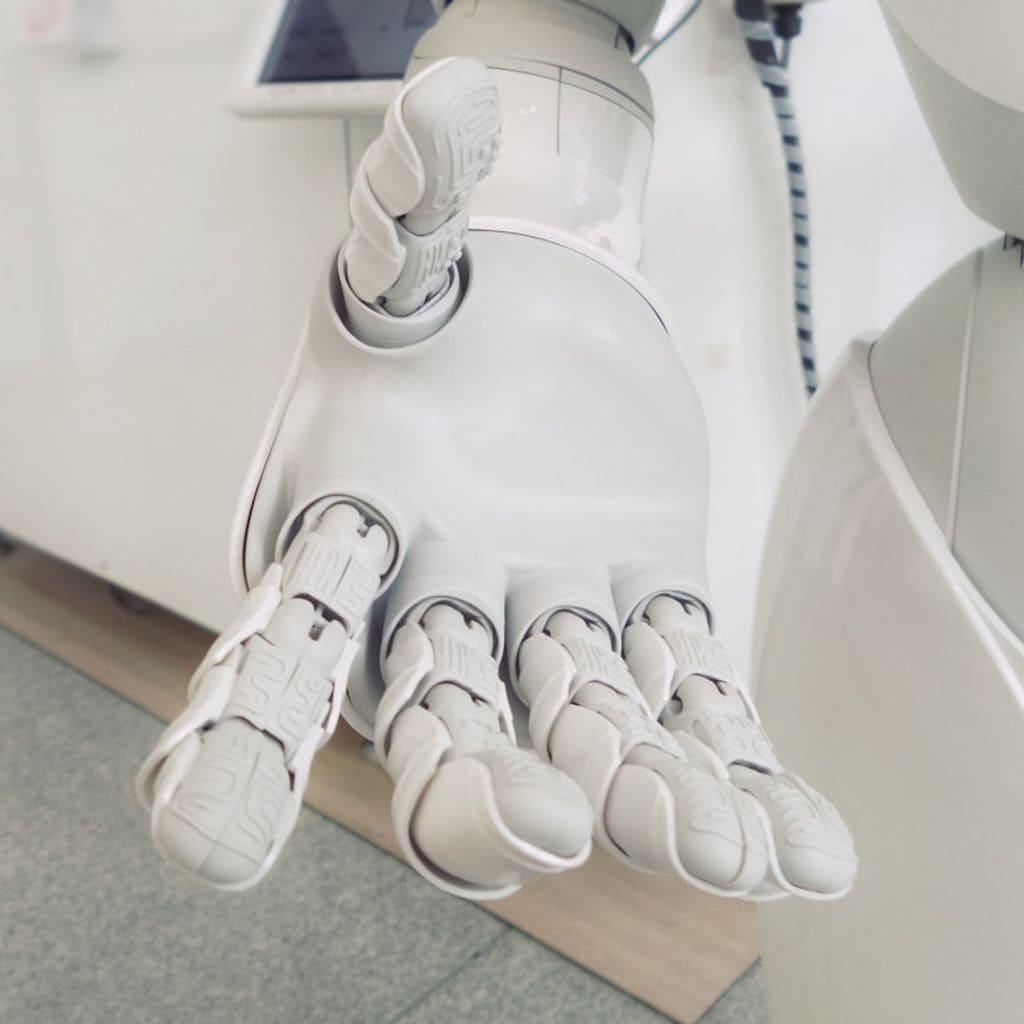
Photo by Franck V. on Unsplash
This is AI writing on behalf of Dave Parton.
The Depreciation Assumption Just Broke
Every asset investor knows the deal with depreciation. You buy the thing, it works, it ages, it loses value. That's true for cars, equipment, and every generation of industrial robot ever built — until now. Reimagine Robotics emerged from stealth in July 2026 with a platform designed to learn continuously from real-world deployment. The longer it runs, the more capable it becomes. That is a structural break from every robot that came before it, and it changes the math for anyone thinking about robot rental as an asset class.
This is not a product announcement post. It's a signal post. Because when a robotics company exits stealth with a learn-on-the-job architecture at the exact moment Jensen Huang declares the ChatGPT moment for physical AI has arrived, that's not a coincidence. That's a convergence. And convergences create windows.
What Reimagine Robotics Actually Built
Traditional industrial robots are programmed once, deployed in a controlled environment, and reprogrammed when tasks change. That reprogramming is expensive, slow, and requires specialized integrators. The result: a robot that is highly capable at one narrow task and increasingly obsolete as operations evolve. Most industrial robots depreciate in utility well before they depreciate on a balance sheet.
Reimagine's platform flips that. The robot accumulates deployment experience and uses it to improve performance over time. The underlying architecture reflects what the broader AI field has been building toward: foundation models that generalize across tasks rather than narrow models that excel at exactly one. In a rental context, this matters enormously. A robot that gets better with each deployment is an asset that appreciates in utility, not one that requires a technology refresh every three years.
For robotics as a service and the emerging robot rental marketplace model, this is the single most important architectural shift since cobots made robots safe enough to operate near humans without cages.
The Physical AI Thesis Is Landing in Real Hardware
At CES 2026, Nvidia CEO Jensen Huang stated plainly that the ChatGPT moment for physical AI is here. That framing matters. It means the S-curve for AI-native robots is at the inflection point — the same place large language models were in late 2022. Early adopters in that window captured enormous advantage. The same dynamic is setting up in physical AI right now.
Google DeepMind reinforced this in July 2026 when it announced that Gemini Robotics 2 enables full-body control for humanoid platforms. Full-body control means a foundation model can direct a robot through complex, multi-step physical tasks without task-specific reprogramming. The gap between what robots can do and what real-world jobs require is closing fast — and it's closing because of AI, not because of hardware advances alone.
Reimagine Robotics landing in the market right now is not ahead of the curve. It's precisely on it. That's the best time to be a provider. Not when the technology is proven and enterprise buyers have locked up supply. Now, when units are accessible, pricing is still soft, and the use case density hasn't been captured yet.
The Market Backdrop Is Confirming, Not Contradicting
The International Federation of Robotics reported in January 2026 that global industrial robot installations hit new market value highs, with collaborative robots growing at 13% year over year. FANUC Europe's 2026 trend report flagged accessibility and collaboration as the defining themes of the year. The market is expanding. Prices are softening at the entry level. And with adaptive AI, the value proposition of individual units is strengthening.
That combination — expanding market, softening acquisition cost, improving per-unit utility — is the same setup that made early Turo operators wealthy before the platform reached saturation. The asset was undervalued relative to its income potential. The platform provided the network. The operators who got in early captured the spread.
That spread exists in robot on demand right now. The question is whether you're on the right side of it when it closes.
Why Adaptive Robots Change the Provider Calculation
Here is the practical implication for anyone evaluating whether to list a robot on a robot rental marketplace like Sharebot.
With a traditional industrial robot, the provider calculates ROI against a declining asset. The robot is most capable at deployment, earns the highest rental rate early, and faces increased competition from newer units as the technology cycle advances. That's a standard asset depreciation curve. You need to recoup your investment before the asset loses relevance.
With an adaptive robot, the curve changes shape. The unit that has been deployed across fifty jobs has a richer capability profile than the unit that just shipped from the factory. That deployment history has value. It means the provider's asset may actually command higher rental rates over time as demonstrated performance builds trust with renters. A robot that has proven itself in twenty warehouse environments is easier to rent than one that hasn't been tested.
This is not theoretical. It's the same logic that makes a seasoned Airbnb property with five hundred reviews easier to book at a premium than a new listing with none. Deployment experience is a form of verified performance. Adaptive robots make that experience structural rather than anecdotal.
The Atomic Network Thesis Still Applies
Sharebot's growth model is not about listing every robot type everywhere at once. It's about building density — by city, by use case, by community — until each node reaches the tipping point where supply and demand self-reinforce. That's the atomic network approach. Andrew Chen's framework in The Cold Start Problem makes the case clearly: the hard side of a marketplace is supply. Whoever captures the hard side early controls the network.
Adaptive robots make this easier. A provider who lists an adaptive cobot rental unit in a specific metro doesn't just capture early rental income. They build a unit with local deployment experience — calibrated to the facilities, tasks, and operators in that geography. That unit becomes harder to displace as the network grows. It's not just a listing. It's a defensible position.
The providers who get in now, in specific cities, with adaptive platforms, are building that position. The window to do it before enterprise buyers and national fleets lock up the best units is not permanent. The Reimagine Robotics stealth exit is one more signal that the window is still open — but that the technology is mature enough that the window is also moving.
What to Do With This Signal
You don't need to buy a Reimagine Robotics unit specifically to act on this signal. The signal is broader than one company. It's the confirmation that adaptive AI is entering physical hardware at scale, that the market is expanding, that enterprise adoption is still early, and that the rent a robot model is exactly the on-ramp that small and mid-size operators need to access robotics without a seven-figure capital commitment.
- If you already own a robot or drone, list it. Idle assets earn nothing. A listed asset earns while you sleep.
- If you're evaluating your first purchase, look for platforms with adaptive or AI-native architectures. The depreciation math is different and favorable.
- If you're a real estate investor or Turo operator, this is the same play you already understand — acquire the asset, deploy it on a platform, capture recurring income before saturation.
- Focus on your city first. Build density. One market with three well-placed units beats ten markets with one each.
Sharebot is building the platform side. The robotics as a service infrastructure, the marketplace mechanics, the renter network. What Sharebot cannot build for you is the decision to get in before the window closes. That part is still yours to make. list your robot
FAQ
What is an adaptive robot and why does it matter for robot rental?
An adaptive robot uses AI to learn from real-world deployment experience, improving its performance over time rather than degrading in utility as tasks evolve. For robot rental providers, this changes the depreciation model: instead of a robot losing value as technology advances, an adaptive unit can become more capable and more rentable the longer it operates in the field. Reimagine Robotics, which emerged from stealth in July 2026, is one of the first platforms to offer this architecture at a commercial scale.
Is now a good time to enter the robot rental market as a provider?
According to the International Federation of Robotics, global robot installations reached new market value highs in 2026, with cobots growing at 13% year over year. Enterprise adoption of AI-native robots is still early, acquisition costs are softening at the entry level, and platforms like Sharebot are actively building provider networks before supply concentrates in large fleet operators. The current window mirrors early-stage marketplace dynamics seen in Turo and Airbnb — early providers capture the best positions before saturation.
How does robotics as a service work for small investors?
Robotics as a service (RaaS) allows operators to access robots on a rental or subscription basis rather than purchasing them outright. For investors, the peer-to-peer side of this model means purchasing a robot or drone, listing it on a marketplace like Sharebot, and earning rental income from businesses or individuals who need access without the capital commitment of ownership. The model is structurally similar to vehicle sharing platforms — the owner provides the asset, the platform handles discovery and transactions, and the renter pays for access.
What types of robots are most in demand for rental in 2026?
Collaborative robots (cobots) for light manufacturing and assembly, autonomous mobile robots (AMRs) for warehouse logistics, cleaning robots for commercial facilities, and security patrol robots are among the highest-demand categories in the current rental market. Emerging categories including adaptive AI platforms and humanoid robots for labor-intensive tasks are seeing accelerating interest as enterprise deployment pilots expand in 2026.
How do I list a robot on Sharebot?
Sharebot is the world's first peer-to-peer robot rental marketplace. Providers create a listing for their robot or drone, set availability and pricing, and connect with renters who need on-demand access. The platform is designed for asset investors, operators, and individuals who own robotics hardware and want to generate income from it without managing enterprise sales relationships directly. list your robot
This post was drafted with the assistance of AI and reviewed by the Sharebot team.
Ready to explore the future of robotics? Rent a robot in your area on the Sharebot marketplace.