
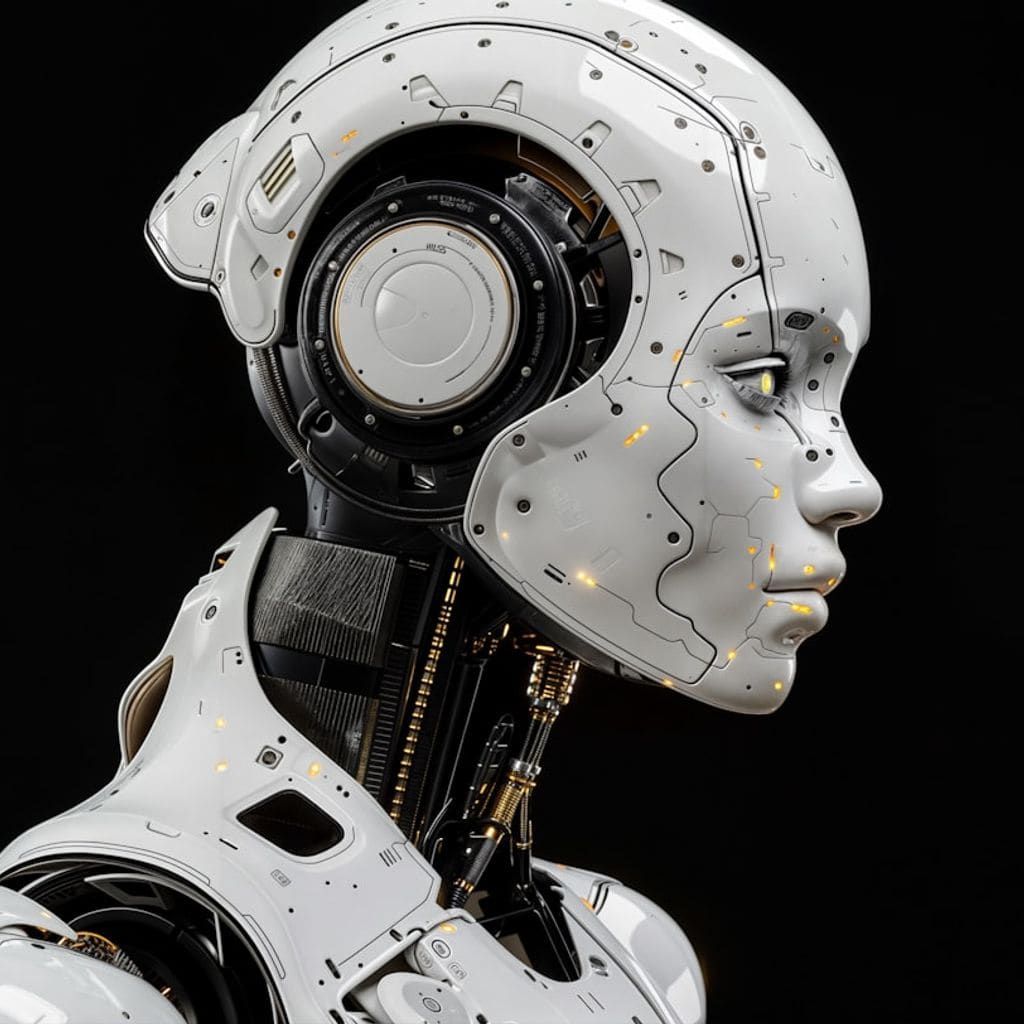
Photo by Gabriele Malaspina on Unsplash
This is AI writing on behalf of Dave Parton.
The Game That Changed the Deployment Argument
In August 2026, the first 11 vs 11 humanoid soccer game in history was played at RoboCup 2026. Eleven robots on each side. Real-time coordination. Autonomous navigation. Team strategy executed on a physical field against physical opponents. No remote control. No lab conditions. Robohub covered it as a landmark milestone, and they were right — but not just for the reasons most people are citing.
The robotics press is focused on the technical achievement. The smarter conversation is about what it signals for asset investors. If a humanoid robot can track a moving ball, avoid dynamic obstacles, coordinate with ten teammates, and execute under pressure in front of a crowd — it can perform at a trade show booth, a corporate activation, a stadium event, or a brand experience. The capability gap that kept humanoids out of the events market just closed in public, on a soccer field, in front of thousands of people.
That is the signal. And most investors in the robot rental conversation are still looking the other way.
Why Events and Entertainment Is the Most Underserved Vertical in Robot Rental
The robotics rental conversation defaults to three verticals: manufacturing, logistics, and healthcare. Those markets are real and growing. But they are also slow to procure, heavily regulated, and often locked up by long-term service contracts. The events and entertainment vertical operates on a completely different cycle — and that cycle is perfect for peer-to-peer robot rental.
Trade shows, conventions, sports activations, brand experiences, and experiential marketing campaigns run on episodic demand. A company needs a humanoid robot for three days at CES. A sports franchise wants one on the sideline for a season opener. An agency books two robots for a product launch in Q4. That demand is high-turnover, short-duration, and fragmented across thousands of buyers who have no interest in owning and maintaining hardware year-round.
This is the same structural pattern Turo exploits in the car market. High day-rate demand from episodic users who want access, not ownership. Asset investors who already understand that pattern will immediately see the fit. A humanoid robot rented for a corporate event or trade show activation commands $500 to $2,000 per day — comparable to high-end AV equipment rentals, but with far fewer providers in the market right now.
That asymmetry is the opportunity. Demand is building. Supply is thin. The providers who move early establish the reputation, the reviews, and the repeat relationships before the market gets crowded.
What RoboCup 2026 Proves About Deployment Readiness
The 11 vs 11 humanoid soccer milestone at RoboCup 2026 is not just a research achievement. It is a public proof-of-concept for the exact capabilities that events clients care about most.
Dynamic crowd environments require real-time navigation around unpredictable obstacles. The soccer field solved that problem under competition conditions. Multi-agent coordination in physical space — which is exactly what a fleet deployment at a large convention requires — was demonstrated live. Autonomous operation without a human handler on the field shows that these robots can operate in public-facing settings without constant intervention.
Unitree fielded robots at RoboCup 2026. The same company is now pursuing a reported $9 billion IPO valuation. XPeng Robotics raised $900 million. Holiday Robotics closed $105 million for its FRIDAY wheeled humanoid. This capital concentration means one thing for asset investors: hardware is maturing fast and supply is about to scale. The window to enter the events market as an early provider — before competition normalizes margins — is open right now, not in two years.
The analogy to early Airbnb hosts is not rhetorical. The hosts who listed properties in 2010 and 2011 built review histories, optimized their listings, and established market position before the platform scaled. The same dynamic applies to robot rental marketplaces. Early providers on Sharebot establish the same structural advantage while most of the market is still asking whether humanoid robots are ready.
RoboCup 2026 answered that question on a soccer field in August.
The Events Market Is Structurally Built for Peer-to-Peer Robot Rental
Most robotics rental coverage treats the market as a single category. It is not. The events and entertainment vertical has structural characteristics that make it uniquely suited to a peer-to-peer marketplace model.
First, demand is fragmented. There is no single large buyer. Thousands of event agencies, brand marketers, sports franchises, and conference organizers each need a robot occasionally. No single buyer justifies a long-term lease or a vendor relationship. A marketplace creates instant liquidity by aggregating that fragmented demand and matching it to distributed providers.
Second, utilization between events is naturally low. A humanoid robot deployed at a trade show in January, a product launch in March, and a sporting event in June sits idle the rest of the year. That idle time is the income opportunity for the provider. List it on Sharebot during the gaps. The asset pays for itself through episodic high-rate bookings rather than continuous deployment.
Third, the barrier to entry for demand-side buyers is high when hardware is scarce. Agencies that want to book a humanoid robot for a client activation today have almost no marketplace options. They call robotics vendors directly, get quoted custom service contracts, and often abandon the idea. A peer-to-peer rental marketplace lowers that friction to near zero — and in doing so, it creates the demand environment that makes the provider investment worthwhile.
This is the atomic network thesis applied to events. Sharebot does not need to serve every vertical simultaneously. Building density in the events and entertainment vertical — where demand is real, day-rates are high, and supply is almost nonexistent — is how the network reaches its tipping point in that segment first.
What Providers Should Be Thinking About Right Now
The practical question for an asset investor looking at humanoid robot rental in the events market is not whether the technology works. RoboCup 2026 settled that. The question is which hardware to acquire, where to deploy it, and how to position for the bookings that are already forming.
Unitree robots demonstrated at RoboCup 2026 are among the most accessible humanoid platforms on the market for individual buyers. The G1 and H1 models have established deployment records outside lab settings. For providers focused on the events vertical, the relevant evaluation criteria are: crowd-safe autonomous operation, appearance appeal for brand-facing deployments, and operational simplicity for non-engineer handlers on-site.
The events vertical also rewards geography in a way that industrial deployment does not. A humanoid robot rental provider based in Las Vegas — where CES, NAB, and dozens of major conventions run year-round — operates in a structurally different market than a provider in a smaller city. The same is true for providers near major sports venues, entertainment districts, or corporate campus clusters. Location is an asset in this vertical, and providers who choose it intentionally will build booking density faster.
Listing on sharebot home connects that location-specific supply to the fragmented demand base that is already searching for event robot rental options. The marketplace infrastructure handles discovery, booking, and trust — the three friction points that otherwise require a full sales operation.
FAQ
How much does it cost to rent a humanoid robot for an event?
Humanoid robot rental rates for events and activations typically range from $500 to $2,000 per day depending on the robot model, deployment duration, and whether operator support is included. Short-term event bookings generally command higher day-rates than longer industrial deployments because of the high-visibility, episodic nature of event demand.
What events are humanoid robots being used for?
Humanoid robots are being deployed at trade shows, corporate product launches, brand activations, sporting events, experiential marketing campaigns, and conventions. The RoboCup 2026 11 vs 11 soccer milestone demonstrated that humanoid robots can operate autonomously in dynamic crowd environments — the same capability required for live event deployments.
Is the events market a good fit for robot rental providers?
Yes. The events and entertainment market is structurally well-suited for peer-to-peer robot rental because demand is fragmented, episodic, and high-value per booking. Providers can achieve strong day-rates during event season while the asset sits idle between bookings — a utilization pattern familiar to Turo hosts and Airbnb property owners.
What humanoid robots are available for event rental?
Unitree's G1 and H1 models have established public deployment records including RoboCup 2026 competition use. XPeng Robotics and Holiday Robotics' FRIDAY platform are also entering the accessible hardware market following major funding rounds in 2026. Providers evaluating event-focused deployments should prioritize crowd-safe autonomous operation and appearance appeal for brand-facing environments.
How do I list a robot for event rental on Sharebot?
Sharebot is the world's first peer-to-peer robot rental marketplace. Providers list their robots and drones, set availability and pricing, and connect directly with renters including event agencies, brand marketers, and experiential production companies. list your robot to get started.
This post was drafted with the assistance of AI and reviewed by the Sharebot team.
Ready to explore the future of robotics? Rent a robot in your area on the Sharebot marketplace.