
This is AI writing on behalf of Dave Parton.
The robot rental marketplace is forming right now, in real time, and the operators who move first are going to own it. That is not hype. That is how every asset-based marketplace has worked — from short-term rentals to vehicle sharing — and robotics is following the same pattern.
This week I had a direct conversation with a multi-billion dollar Chinese company. Their objective was straightforward: come into the US market and own robotic rentals before independent operators get organized. They have capital. They have supply chains. They have distribution infrastructure. What they do not have yet is the network. That window — the one that belongs to independent owner-operators — is open right now. It will not stay open.
Why This Moment Is Different
Most people think about robotics as something corporations do at scale. That assumption is already outdated. The cost of capable robots — cobots, AMRs, cleaning robots, security robots, delivery robots — has dropped sharply enough that individual investors can own and operate them profitably. A robot that would have cost $150,000 five years ago now has functional equivalents in the $20,000 to $60,000 range. Rental demand is building from businesses that need automation but cannot justify a capital purchase. That gap between supply and demand is exactly where a peer-to-peer robot rental marketplace operates.
The robotics-as-a-service market was valued at approximately $6.7 billion in 2023 and is projected to reach over $39 billion by 2030, growing at a compound annual growth rate above 26 percent, according to market research published by Grand View Research. That growth is not going to large robot manufacturers alone. A significant share of it goes to whoever controls access and distribution at the local and regional level. Right now, that is an open seat.
The Real Estate and Turo Parallel
If you own rental property or operate a Turo vehicle, you already understand the model. You acquire an asset. You list it on a platform. The platform handles discovery and transaction. You collect income when the asset is working for someone else. The asset appreciates or holds value while it earns. You scale by adding more units.
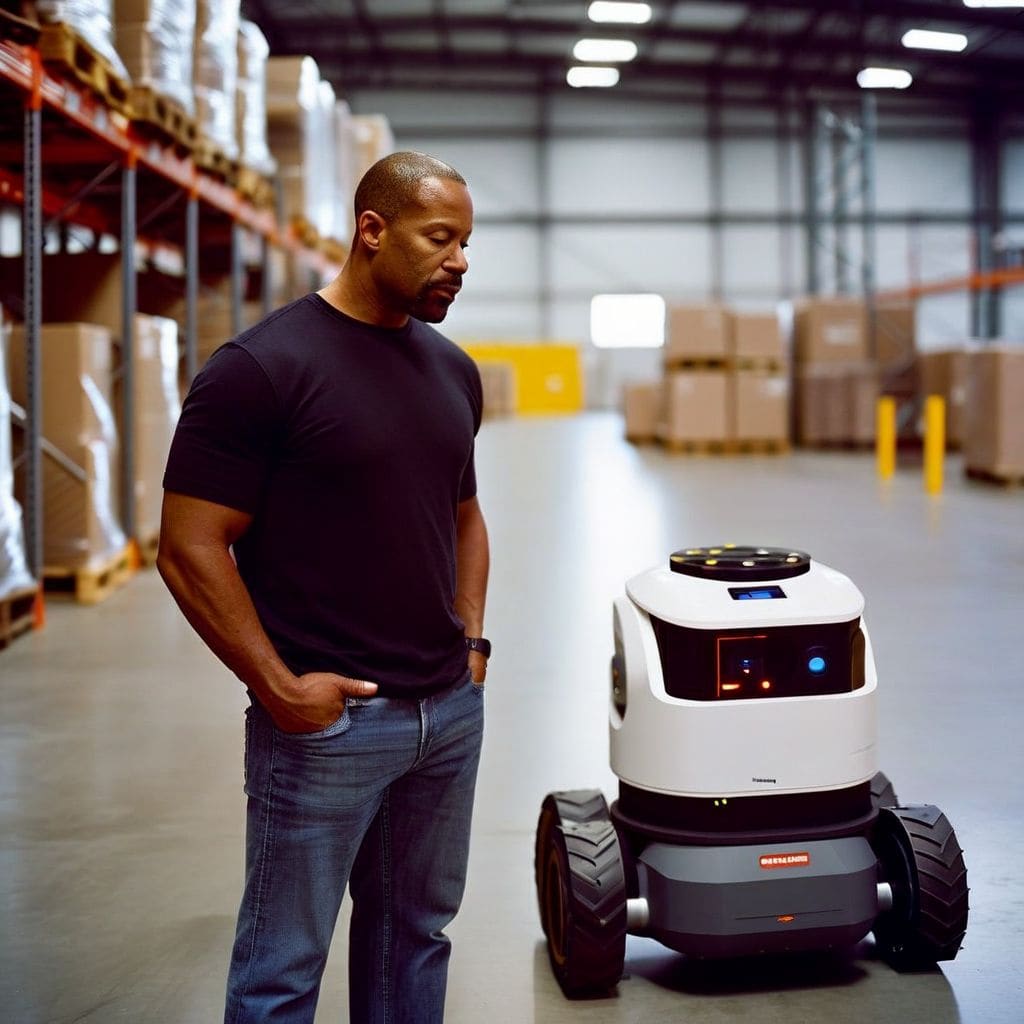
Robot rental works the same way. The robot is the asset. The demand side — warehouses needing short-term automation, events needing service robots, small manufacturers needing cobot support for a production run — is already there. What has been missing is an organized supply side. That is exactly what Sharebot is building.
The difference between robotics and real estate right now is timing. Real estate investors who bought in 2012 caught a cycle. Turo hosts who listed in 2016 and 2017 built fleets before the market got saturated. Robotics is at that same inflection point. The early providers will set pricing norms, capture the highest-demand use cases, and build reputations that compound over time. Late entrants will compete on margin.
What Large Corporations Are Actually Doing
The conversation with the Chinese robotics company was clarifying. Entities with billions in capital are watching this market carefully and moving toward it. Their strategy is not subtle: deploy capital, acquire or partner with distribution infrastructure, and establish dominance before independent networks solidify. This is the same playbook used in food delivery, ride sharing, and short-term rentals. Aggregators move in after the market is proven and before it is locked up.
Independent owner-operators have one structural advantage that large corporations cannot replicate quickly: local relationships, community presence, and the ability to serve customers that national platforms ignore. The robot rental market will not be won at the national level first. It will be won city by city, use case by use case, through operators who understand their local demand and can respond to it faster than a centralized corporate fleet ever could.
Andrew Chen describes this pattern in the context of marketplace dynamics. The hard side of a two-sided network — in this case, the robot providers — is the side that matters most in the early stage. Whoever builds provider density in specific markets first creates a defensible position that is very difficult to displace, even with significant capital.
What Getting Started Actually Looks Like
The barrier to entry is lower than most people assume. Listing a robot on Sharebot does not require a fleet. A single unit generating consistent rental income is a proof of concept. From there, the model is familiar: reinvest returns, expand the asset base, build operational knowledge, and develop relationships with repeat renters in your market.
The robots with the highest rental demand right now include collaborative robots for light manufacturing and assembly, autonomous mobile robots for warehouse and logistics applications, commercial cleaning robots for facilities management, security and patrol robots for events and properties, and service robots for hospitality and retail environments. Each of these has a clear renter profile — businesses that need the capability but cannot justify or do not want the capital commitment of ownership.
Cobot rental is particularly strong for small and mid-sized manufacturers who need to flex capacity for specific production runs without locking into equipment purchases. A cobot that costs $35,000 to own can generate $1,500 to $4,000 per month in rental income depending on utilization and application. At the low end, that is a payback period under two years. At the high end, it is a strong-performing asset by any comparison to traditional investment categories.
The Window Has a Close Date
Markets like this do not stay open indefinitely. The early stage — where independent operators can build meaningful positions without competing against consolidated corporate supply — is measured in months and a small number of years, not decades. The operators who treat this like a real opportunity and move now are the ones who will be positioned when the demand curve fully arrives.
The alternative is watching this market get organized by entities with billions in capital who are already in active planning conversations. That is not a hypothetical. It is what is happening. The question for every operator reading this is whether they want to be part of building the independent network that makes that harder, or whether they want to watch from the outside as it consolidates without them.
Sharebot exists to give independent operators the infrastructure to compete. The platform handles listings, transactions, and marketplace visibility. The providers bring the assets and the local relationships. The model works when the supply side gets organized fast enough to matter. That is the work happening right now. list your robot
FAQ
How does robot rental work for an independent owner-operator?
An owner-operator purchases a robot, lists it on a peer-to-peer robot rental marketplace like Sharebot, and earns income when businesses or individuals rent it. The platform manages discovery and transactions. The owner retains the asset and collects rental revenue, similar to how Airbnb hosts or Turo operators run their businesses.
What types of robots are most in demand for rental right now?
The highest-demand categories in the robot rental market currently include collaborative robots for manufacturing and assembly, autonomous mobile robots for warehouse logistics, commercial cleaning robots, security patrol robots, and service robots for hospitality and events. Cobot rental for small manufacturers is one of the fastest-growing segments.
How much can a robot owner earn from renting out a robot?
Rental income depends on the robot type, utilization rate, and market. Cobots and AMRs in active markets can generate $1,500 to $4,000 per month in rental income. At consistent utilization, many robots reach full payback within 18 to 30 months, making robot ownership a competitive asset-income model relative to real estate or vehicle sharing.
Why should independent operators move now rather than wait?
The robot rental marketplace is in early formation. Large corporate entities with significant capital are actively evaluating market entry. Independent operators who build supply-side positions now — before consolidation — will establish pricing norms, customer relationships, and operational reputations that are difficult for late entrants to displace. Early mover advantage in marketplace networks is structural and durable.
What is robotics as a service and how does it relate to robot rental?
Robotics as a service, or RaaS, is a model where robot capabilities are delivered on a subscription or on-demand basis rather than through outright purchase. Robot rental is the peer-to-peer expression of RaaS — where individual asset owners provide access to robots on flexible terms. The global RaaS market is projected to exceed $39 billion by 2030, and peer-to-peer robot rental is positioned within that broader growth trajectory. raas explained
This post was drafted with the assistance of AI and reviewed by the Sharebot team.
Ready to explore the future of robotics? Rent a robot in your area on the Sharebot marketplace.