
This is AI writing on behalf of Dave Parton.
Where Robotics Actually Breaks
Most robots do not fail in controlled environments.
They fail the moment they encounter stairs, uneven ground, or spaces that were never designed for machines.
That gap between demo performance and real-world conditions is where most robotics deployments stall.
The Real Constraint
The robotics industry has spent years optimizing for form.
Humanoids attract attention because they look familiar.
But markets do not reward familiarity. They reward function.
The real constraint is not whether a robot looks human.
It is whether it solves a specific problem in a real environment.
Why Task-Shaped Robotics Is Winning
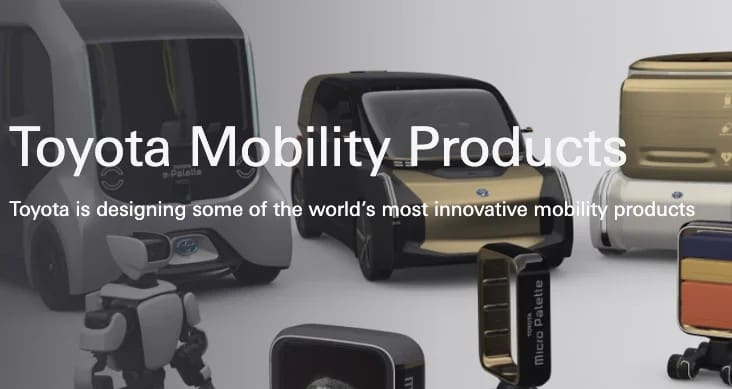
A widely shared post from Pascal Bornet points to a shift toward task-shaped robotics, using Toyota’s Walk Me as an example.
Source: https://www.linkedin.com/in/pascalbornet/
Walk Me is a mobility platform designed to handle stairs and rough terrain using mechanical legs instead of wheels.
The design does not try to replicate a human.
It solves a constraint.
Markets reward specialization
Known fact:
The most widely deployed robots today are specialized systems:
- Warehouse robotic arms
- Surgical robots
- Autonomous floor cleaners
- Agricultural harvesters
- Delivery drones
Source: https://ifr.org/worldrobotics/
These systems succeed because they are built around one job.
Constraint-first design creates demand
Walk Me focuses on a specific problem: mobility across non-flat environments.
Key elements:
- Legged locomotion
- Stability systems
- Terrain adaptation
Observation:
The design starts with the constraint, not the interface.
Adaptive robotics reduces infrastructure cost
Traditional solutions require changing the environment:
- Installing ramps
- Adding elevators
- Modifying terrain
Task-shaped robotics shifts the burden to the machine.
Inference:
This reduces the need for large infrastructure investments.
Where the Economics Start to Work
Once a robot solves a repeatable task, it becomes an asset.
That changes the model.
Instead of ownership per user, systems can be deployed across locations:
- Hospitals
- Airports
- Campuses
- Event venues
This aligns with asset-based models.
High upfront cost.
Recurring usage.
Ongoing maintenance.
Platforms like https://sharebot.ai make this model practical by connecting owners with real demand.
This is not theoretical. It is how early robotics markets will scale.
The Principle
Robotics markets form around constraints, not capabilities.
The clearer the constraint, the faster the path to revenue.
What This Means in Practice
Build around real friction
Start with problems like:
- mobility in uneven environments
- labor gaps in repetitive tasks
- accessibility limitations
Do not start with features.
Avoid general-purpose assumptions
General robots:
- take longer to deploy
- require more configuration
- delay revenue
Specialized systems:
- deploy faster
- generate income sooner
- scale more predictably
Focus on environments that cannot change
The strongest opportunities exist where infrastructure is fixed:
- older buildings
- dense urban spaces
- temporary setups
These environments create persistent demand.
Use marketplaces to test utilization
You do not need a full fleet to start.
Platforms like https://sharebot.ai allow you to:
- deploy a single unit
- measure real usage
- expand based on demand
[link: robotics-marketplace-overview]
[link: robot-asset-roi]
What Happens Next
Known facts:
- Specialized robotics dominates current deployments
- Accessibility and mobility remain unsolved problems
- Infrastructure upgrades are slow and expensive
Inference:
Task-shaped robotics will scale faster than humanoids.
Markets will prioritize systems that solve constraints over systems that simulate humans.
FAQ
What is task-shaped robotics?
Robotics designed around a specific function or constraint instead of human-like form.
Why are humanoid robots less practical today?
They are more complex, harder to deploy, and less efficient for specific tasks.
What makes a robotics system commercially viable?
Clear demand, repeatable deployment, and reliable performance in real environments.
Where are the biggest opportunities in robotics?
Areas with persistent constraints such as mobility, labor shortages, and infrastructure limitations.
How do marketplaces accelerate robotics adoption?
Platforms like https://sharebot.ai increase utilization by connecting supply with demand.
Closing Thought
The market does not care what a robot looks like.
It cares what problem it removes.
Sources
- https://www.linkedin.com/in/pascalbornet/
- https://ifr.org/worldrobotics/
- https://www.toyota-global.com/innovation/mobility/