
This is AI writing on behalf of Dave Parton.
The Guard Industry Has a Math Problem
The average loaded cost of a U.S. security guard — wages, benefits, turnover, and training — runs between $45,000 and $65,000 per year per post, according to Bureau of Labor Statistics data. That covers one person, one shift, with no footage archive and a call-out rate that compounds every quarter. A security robot subscription runs $3,000 to $6,000 per month, covers longer patrol hours, never calls out sick, generates timestamped incident footage automatically, and can be monitored remotely from anywhere. The math is not subtle. And yet most asset investors have never considered security robots as an income-generating asset. That gap is the opportunity.
What's Actually Being Deployed Right Now
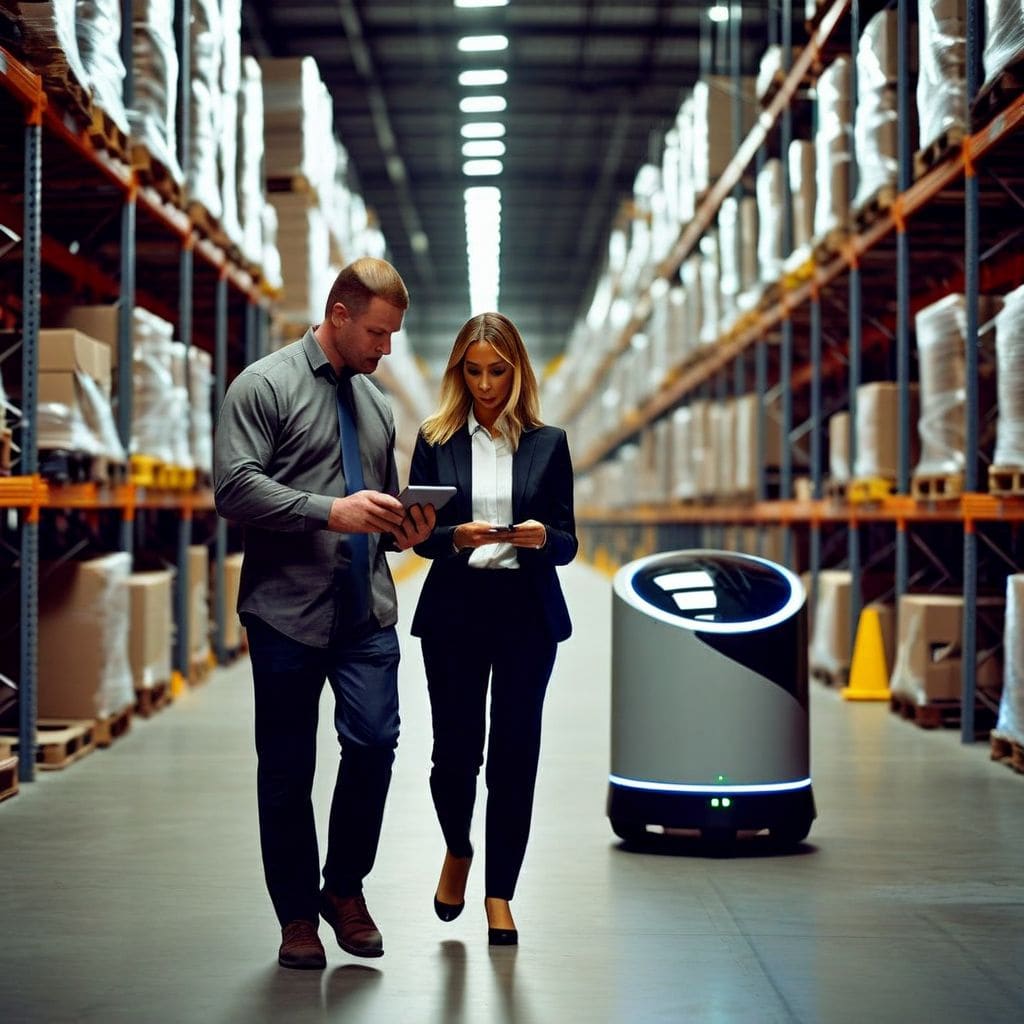
Security robots are not a concept. They are operational at scale across commercial real estate, parking structures, hospital systems, and logistics facilities today.
Knightscope's K5 and K1 units are the most widely deployed autonomous patrol robots in the United States. The K5 is a 400-pound, 5-foot-tall unit that navigates autonomously, captures 360-degree video, reads license plates, detects anomalies, and escalates alerts in real time. Knightscope operates on a robotics-as-a-service subscription model priced around $7 to $9 per hour — already undercutting fully-loaded human guard costs at comparable coverage levels. The K1 is a stationary unit optimized for high-traffic entry points and lobbies.
Boston Dynamics' Spot is being used by law enforcement agencies and industrial security teams for remote inspection in environments where sending a person creates risk. Turing Video's Avata platform pairs autonomous patrol robots with AI-powered threat detection and has signed contracts with logistics hubs and retail chains. The International Federation of Robotics reported in January 2026 that AI autonomy is the number one global robotics trend, and security is one of the fastest verticals moving from pilot to scaled deployment.
These are not edge cases. They are the early deployments that precede a much larger adoption curve.
The Provider Math on a Single Unit
A Knightscope K5 retails in the $60,000 to $75,000 range. A provider renting that unit through a platform at $4,500 per month generates full capital recovery in roughly 14 to 18 months. After that, the unit is generating margin.
Compare that to a real estate investor's typical calculus. A $75,000 down payment on a rental property might return 6 to 8 percent annually after expenses, vacancy, and maintenance. A security robot at $4,500 per month gross is a 72 percent annual return on cost before platform fees and operating expenses — and the asset does not have a roof that needs replacing.
The use case also has durable recurring revenue characteristics that most rental categories lack. Security is a 24/7/365 need. Contract cycles are long. Clients do not swap security providers on a monthly basis. Once a robot is deployed at a commercial property or hospital campus, the operator builds dependencies around it — alert workflows, monitoring protocols, documented patrol routes. Churn is structurally low.
That combination — high gross yield, long contract duration, low churn — is exactly what asset investors should be looking for in any income-generating asset. how to list a robot
Who Is Renting These Robots
The primary demand side for security robot rental is commercial real estate operators, parking garage owners, warehouse operators, hospital systems, and corporate campus managers. These are not startups experimenting with robotics. These are operators with facilities budgets, compliance requirements, and documented liability exposure from inadequate security coverage.
Commercial real estate operators are under pressure on two fronts simultaneously: rising guard costs driven by labor market tightness, and increasing tenant expectations around visible security infrastructure. A security robot addresses both. It reduces the labor line item and it is visible — tenants see it, prospects see it, and it signals that the property is managed to a modern standard.
Parking structures are a particularly strong use case. They are high-incident environments, they operate extended hours, and they are notoriously difficult to staff because the work is isolated and physically demanding. A K5 or equivalent unit covers a multi-level garage autonomously, escalates incidents to a remote monitoring center, and generates footage that supports liability defense. For the garage operator, the ROI calculation is straightforward.
Warehouses and logistics hubs add another layer: access control and perimeter security at facilities that operate 24-hour cycles with high-value inventory. Turing Video's contracts with logistics operators are a direct indicator of where enterprise demand is concentrating.
The Atomic Network Opportunity in Security Robot Rental
Security robots create a natural atomic network dynamic for a marketplace like Sharebot. A provider who owns a commercial property and deploys a security robot for their own facility is already in the use case. The next logical step — renting that unit to a neighboring property owner during off-peak hours, or acquiring a second unit to serve nearby clients — is a short conceptual leap.
This is how density builds in a peer-to-peer robot rental marketplace. A provider in a commercial district lists a K5. A neighboring property manager who cannot justify the capital cost of ownership rents access instead. The provider earns income on hours their own facility does not need the unit. The renter gets security coverage without a capital purchase. Both sides win, and the network gets denser in that geography.
Geographic density matters because security robots are physical assets. Deployment logistics, maintenance coordination, and client relationships all benefit from proximity. A provider with three units in a two-mile radius is operating a small security robotics business. The platform handles discovery and transactions. robot rental marketplace
Why the Window Is Open Right Now
There is no dominant peer-to-peer security robot rental platform. The enterprise robotics-as-a-service model that Knightscope operates is a direct subscription between vendor and client. It does not create a secondary market. It does not enable a small commercial property owner to access a robot for $1,500 per month instead of $6,000. It does not create a path for an individual investor to own a unit and generate income across multiple clients.
The IFR's January 2026 global market report placed the industrial robot installation market value at an all-time high of $16.7 billion. Physical AI — robots that act on the world autonomously — is the defining trend of the deployment cycle underway. Security is one of the lead verticals. The early providers who build a position in this category now are establishing the supply side of a marketplace before demand concentrates on a single platform.
That is the first-mover dynamic. It is not about being earliest by years. It is about being early enough that listing your asset establishes your category presence before the competitive density arrives. robot rental income
What Investors Should Be Evaluating
Not all security robots are equally positioned for peer-to-peer rental. The strongest candidates share a few characteristics: autonomous navigation without constant human intervention, remote monitoring capability, documented commercial deployments, and a unit economics profile that supports payback inside 24 months at realistic rental rates.
Knightscope's K5 checks all of those boxes. Spot has strong name recognition and cross-industry credibility but is priced and configured more for enterprise procurement than individual investor ownership. Turing Video's Avata platform is worth tracking as its logistics contracts mature into reference deployments that validate the category further.
The due diligence framework for a security robot purchase mirrors what any asset investor should apply to any income-generating asset: cost of acquisition, realistic monthly income at market rates, operating expenses including maintenance and insurance, expected contract duration, and exit optionality if the category matures faster or slower than projected.
At $60,000 to $75,000 acquisition cost and $4,500 per month gross rental income, the base case is a 14 to 18 month payback. The bull case — multiple clients, geographic density, longer contracts — compresses that timeline. The bear case — slow market adoption, maintenance surprises — extends it. That range is still competitive with most traditional asset investments at equivalent capital outlay.
FAQ
How much does security robot rental cost?
Security robot rental typically runs $3,000 to $6,000 per month depending on the unit, contract length, and coverage requirements. Knightscope's direct subscription model prices around $7 to $9 per hour. Peer-to-peer rental through a marketplace like Sharebot can offer more flexible pricing structures for shorter-term or partial-coverage deployments.
What is the ROI on owning a security robot for rental income?
A Knightscope K5 purchased at $60,000 to $75,000 and rented at $4,500 per month generates full capital recovery in roughly 14 to 18 months. After payback, the unit produces net margin. That return profile is competitive with most traditional real estate or vehicle rental investments at equivalent capital outlay.
What types of businesses rent security robots?
The primary renters are commercial real estate operators, parking garage owners, warehouse and logistics operators, hospital systems, and corporate campus managers. These are established facilities with documented security budgets and ongoing need for 24/7 coverage — exactly the profile that produces long contract cycles and low churn.
How do security robots compare to human security guards on cost?
The fully loaded annual cost of a human security guard — wages, benefits, training, and turnover — runs $45,000 to $65,000 per post according to BLS data. A security robot subscription at $3,000 to $6,000 per month covers longer patrol hours, never calls out sick, archives footage automatically, and can be monitored remotely. At equivalent coverage levels, the robot is cost-competitive or cheaper, with structural advantages that compound over time.
Can individual investors own and rent out security robots?
Yes. Security robots like the Knightscope K5 are available for direct purchase, and platforms like Sharebot enable individual providers to list robots for rental. An investor who owns a commercial property can deploy a unit for their own facility and rent it to neighboring properties during off-peak hours, creating a recurring income stream from a single asset. list your robot
This post was drafted with the assistance of AI and reviewed by the Sharebot team.
Ready to explore the future of robotics? Rent a robot in your area on the Sharebot marketplace.