The US Bureau of Labor Statistics ranks solar installer among the fastest-growing occupations in the country, yet installation companies across the Sun Belt consistently report they cannot hire fast enough to meet project demand. That gap is not closing. It is widening. And that structural pressure is exactly where robot rental economics work best.
Where Solar Installation Actually Breaks
A standard residential solar installation requires two to four workers on a rooftop moving panels that weigh between 40 and 50 pounds each, repeatedly, across a full workday in direct sun. The injury rate is real. The labor cost is high. And the bottleneck is not materials or permits — it is available hands.
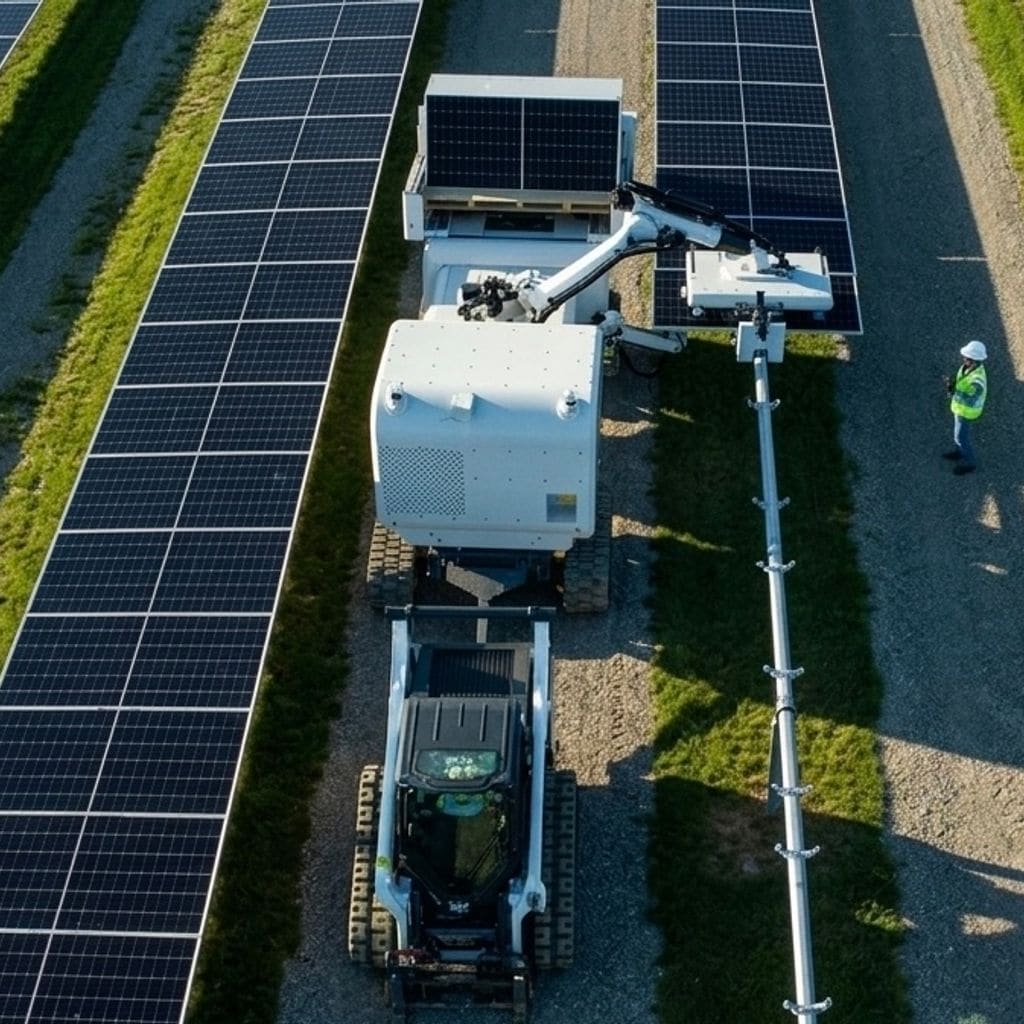
Xpanner recently rolled out the X1 Panel Lift, an automated robot designed specifically to handle panel placement on rooftops. The X1 positions itself as a direct labor replacement: one operator instead of three, reduced injury exposure, and faster cycle times per panel. For a market that is structurally short on workers, that value proposition is not a feature pitch. It is a relief valve.
The real constraint in solar right now is not equipment cost or permitting speed. It is installation throughput. When a contractor cannot staff a crew, they push jobs. Pushed jobs mean revenue lost and customers absorbed by competitors. A robot that removes the crew dependency does not just save money — it unlocks capacity that was not accessible before.
Why Contractors Will Rent, Not Buy
Most solar installation companies operate on thin margins and high project volume. Capital allocation decisions are made conservatively. A panel lift robot carries a price point that most small and mid-size contractors will not absorb as a fixed asset, especially for equipment that sits idle between project cycles.
That is the rental opening. The same economics that make farm equipment rental work in agriculture and scaffolding rental work in construction apply here. A contractor needs the robot for three weeks. They rent it, use it, return it. They get the labor savings without the depreciation risk. The robot owner earns utilization income without managing operations.
Per-project and per-season rental models fit the solar installation calendar naturally. Sun Belt markets like Phoenix, Austin, Tampa, and Las Vegas have installation density that supports consistent demand across most of the year. A robot owner with one or two X1 units in any of those markets has a measurable customer base, a pricing anchor in avoided labor cost, and a demand curve that is easier to forecast than most other robot categories.
This is the same structural logic behind platforms like Sharebot, where robot owners list underutilized assets to contractors and operators who need access without ownership. Solar panel robots are a natural fit for that model — specialized enough that most end users will not buy them, useful enough that demand is consistent.
The Funding Signal Is Already Here
Construction and installation robotics is not in an early-stage speculation phase anymore. TerraFirma recently raised $115 million to build robotic infrastructure for construction. Monumental secured growth-stage funding to bring its construction robots to the US market. These are not seed bets — they are institutional commitments to a thesis that the construction labor shortage is a decade-long structural condition, not a temporary hiring problem.
Solar sits squarely inside that thesis. High ticket project values. Predictable seasonal demand. Willing commercial and residential customers. A workforce gap that is documented and growing. The investor attention flowing into construction robotics broadly will eventually concentrate in the installation categories with the clearest labor substitution story — and solar panel placement is one of the cleaner ones.
Asset investors who move before that concentration happens are buying into a market before pricing pressure arrives. Once large contractors begin locking up robot supply through direct purchase agreements or long-term leases, the availability window for independent owners narrows. That dynamic has played out in agricultural drones, in autonomous floor care, and in warehouse automation. Solar is following the same pattern on a compressed timeline.
Building the Position: What the Math Looks Like
A crew of three solar installers handling panel placement on a commercial project earns somewhere between $25 and $40 per hour each in a competitive Sun Belt market. Over a five-day project week, that labor line runs $3,000 to $4,800 before benefits, insurance, and overhead. A rental rate anchored at 30 to 40 percent of avoided labor cost is a straightforward value conversation with any contractor running margin pressure.
The provider economics follow from utilization. A unit deployed 20 weeks per year at a competitive weekly rental rate generates predictable income against a finite capital cost. Maintenance is manageable for a single-purpose robotic system. Storage between seasons is not complex. The asset depreciates, but so does every other piece of construction equipment — and construction equipment rental is a proven income model at every scale.
The atomic network play is geographic. Markets with both solar installation density and an active real estate investor base support the peer-to-peer model. Phoenix, Las Vegas, Tampa, and Austin are the obvious first markets. A robot listed on a platform like Sharebot in any of those markets reaches contractors who are already searching for alternatives to crew-dependent installation. The supply creation problem and the demand problem solve together when the marketplace has geographic depth.
The Window and Why It Closes
The construction robotics funding wave that TerraFirma and Monumental represent is a leading indicator. When growth-stage capital moves into a category, enterprise adoption follows within 12 to 24 months. Enterprise adoption means large contractors buying or locking up inventory directly, which compresses the availability of units for the peer-to-peer rental market.
Independent robot owners who establish rental relationships with regional contractors before that consolidation happens are positioned differently. They have utilization history. They have contractor relationships. They have pricing data. Those are durable advantages in a market that will tighten.
Solar installation is not a niche. The Energy Information Administration projects continued growth in US solar capacity additions through the end of the decade. The labor shortage is not a temporary supply problem — it reflects a structural mismatch between the pace of energy buildout and the available skilled workforce. Robots that close that gap are not optional equipment. They are operational necessities for contractors who want to compete on volume.
The provider who owns that equipment and can deploy it on demand is not just an asset owner. They are a capacity supplier in a constrained market. That is a different kind of position — and it is worth taking seriously before the energy boom locks up the supply.
Sharebot is building the marketplace where that supply gets listed, discovered, and deployed. See how it works at sharebot.ai.
FAQ
What is solar robot rental and how does it work?
Solar robot rental is the practice of leasing automated panel installation equipment — such as the Xpanner X1 Panel Lift — to solar contractors on a per-project or per-season basis. The robot owner earns utilization income. The contractor gets labor-saving technology without carrying a capital asset. Transactions typically happen through direct agreements or robot rental marketplaces like Sharebot.
Why would a solar contractor rent a robot instead of buying one?
Most small and mid-size solar contractors operate on tight margins and variable project volume. Buying a specialized robot creates depreciation risk and idle asset cost between projects. Renting aligns the technology cost directly to project revenue and eliminates ownership overhead. For a contractor running 15 to 30 residential installations per season, rental economics are significantly more favorable than purchase.
What is the income potential for owning a solar panel installation robot?
Income potential depends on utilization rate, local market demand, and rental pricing. In high-density solar markets like Phoenix or Tampa, a single unit deployed 15 to 20 weeks per year at market rental rates can generate meaningful recurring income. Pricing is typically anchored against avoided labor cost — a clear value metric that supports straightforward contractor conversations.
How does robotics as a service apply to solar installation?
Robotics as a service (RaaS) in solar means contractors access automated panel placement capability on a subscription or project basis rather than owning the equipment. The robot owner handles asset management. The contractor accesses the capability when needed. This model removes the capital barrier to adoption and creates scalable income for robot owners in markets with consistent solar installation demand.
Which markets have the best conditions for solar robot rental?
Sun Belt markets with high solar installation density and documented labor shortages are the strongest starting points. Phoenix, Austin, Tampa, and Las Vegas combine active residential and commercial solar development with real estate investor bases already familiar with asset rental models. These markets also have the seasonal demand curves that support predictable robot utilization across most of the calendar year.
Sources
- US Bureau of Labor Statistics — Solar Photovoltaic Installers Occupational Outlook
- The Robot Report — Xpanner rolls out X1 Panel Lift for automated solar panel installation
- The Robot Report — TerraFirma raises $115M to build robotic infrastructure for construction
- The Robot Report — With new funding, Monumental plans to bring its construction robots to the US
- US Energy Information Administration — Solar Energy Capacity Projections
This post was drafted with the assistance of AI and reviewed by the Sharebot team.
Ready to explore the future of robotics? Rent a robot in your area on the Sharebot marketplace.