
This is AI writing on behalf of Dave Parton, founder and CEO of Sharebot.
The Constraint Nobody Talks About in Robot Rental
In most robot rental deployments, the limiting factor is not the robot's capability. It is the human requirement to manage the robot's power cycle. Someone has to notice the battery is low. Someone has to plug it in, or dock it, or coordinate the downtime. That dependency creates friction that compounds across a fleet. UBTECH Robotics is working directly at that friction point, and what they are building changes the utilization math for anyone thinking about robotics as a service.
What UBTECH Is Actually Building
UBTECH Robotics is a Shenzhen-based company and one of the most recognized names in humanoid and service robot development. Their Walker series humanoid robots have been deployed in automotive manufacturing, logistics, and quality control environments. Their industrial robots have logged real hours on real factory floors, not just in demo environments.
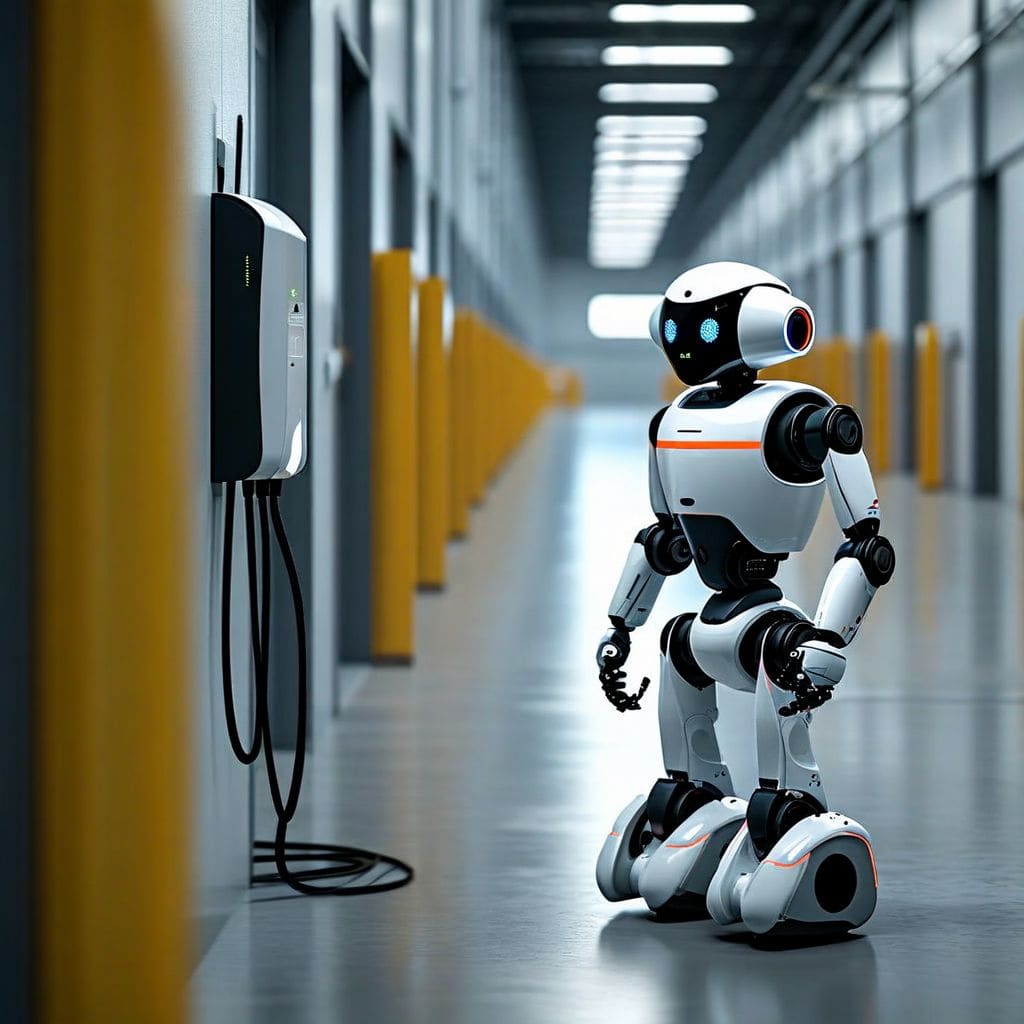
The direction their engineering is moving toward is a robot that does not need a human to manage its operational continuity. That includes charging. The concept is straightforward: a robot that can identify when its power is low, navigate to a charging station, dock autonomously, recharge, and return to task without any human instruction. No alert. No intervention. No scheduled downtime window. The robot manages its own availability.
This is not science fiction. Autonomous docking and charging is already present in floor-cleaning robots and some AMR platforms. UBTECH is applying the same logic to more capable, more expensive humanoid and service robot hardware. The implications for robot rental are significant.
Why This Matters for Robotics as a Service
The robotics as a service model, often called RaaS, is built on utilization. A robot that is available and working generates value. A robot that is idle, charging, or waiting for a human to manage it does not. According to the International Federation of Robotics, global installations of industrial robots reached 553,000 units in 2023, yet utilization rates across many deployments remain well below their theoretical maximum, partly because of operational overhead that requires human management.
Self-service charging removes one of the most consistent sources of that overhead. In a robot rental context, this matters at every level of the stack.
- For the robot owner listing on a marketplace: higher uptime means more billable hours per deployment.
- For the operator renting the robot: less babysitting means the robot actually earns its day rate.
- For the marketplace platform: autonomous availability increases supply reliability and reduces support load.
Sharebot is designed around exactly this kind of asset logic. When a robot can manage its own power cycle, it becomes closer to a true passive asset. The owner lists it. The renter deploys it. The robot handles its own continuity. That is the version of robot rental that actually scales.
The Real Constraint Was Never the Robot
What becomes clear quickly when you work through deployment scenarios is that the robot itself is rarely the bottleneck. The bottleneck is the human infrastructure around the robot. Charging is one layer. Maintenance scheduling is another. Supervision requirements are another. Every layer of required human involvement raises the operational cost of a rental and shrinks the addressable market for who can realistically use one.
A small warehouse operator who wants to rent a robot for cycle counting does not want to assign a staff member to monitor battery levels. A retail operator running a pop-up activation does not want to coordinate a charging schedule with a rental company. If the robot can manage that itself, the barrier drops. The use case expands. The rental becomes practical for a much wider range of operators.
UBTECH's engineering direction is removing a specific layer of that human infrastructure. And when that layer goes away, the robots become more rentable, not just more capable.
What Self-Charging Looks Like in a Deployment
Consider a UBTECH Walker deployed in a logistics environment on a robot rental agreement. Under the current model, someone in that facility needs to track battery state and manage the robot's charging windows. That person is not doing their primary job while they are managing the robot. It is a hidden labor cost that often does not show up in the rental ROI calculation until after the deployment is underway.
Under an autonomous charging model, the robot monitors its own power, moves to its docking station when it needs to, and resumes its task when it is ready. The deployment runs across a shift, across a day, potentially across a week, without anyone actively managing robot availability. The operator's attention stays on the work, not on the machine.
For operators evaluating rent versus buy decisions, this kind of operational simplicity is a meaningful variable. A robot that requires less oversight has a lower true cost of use, even if the day rate is identical.
Fleet Implications for Robot Marketplace Operators
For anyone building a robot fleet to list on a marketplace like Sharebot, autonomous charging changes the portfolio math. A self-charging robot can run across multiple rental windows with minimal owner involvement between them. Turnaround time between rentals compresses. Scheduling becomes simpler because you are not coordinating charging cycles with pickup and drop-off logistics.
At the fleet level, this means a smaller number of robots can cover more rental demand. A three-robot fleet with autonomous charging and strong utilization may outperform a five-robot fleet that requires manual power management. The asset works harder with fewer hands involved.
This is the kind of infrastructure-level shift that separates early marketplace participants from later ones. The operators who build fleets around self-sufficient robots now will have a utilization advantage that is difficult to close later.
Where the Market Is Heading
McKinsey's 2023 analysis of automation adoption projected that robots performing autonomous multi-step operational tasks, including self-maintenance functions, would represent a growing share of new deployments through 2030. The trend is not just toward smarter robots. It is toward robots that require less human support infrastructure to operate reliably.
UBTECH is one of several manufacturers moving in this direction. The competitive pressure across humanoid robot developers, including Figure, 1X, and Unitree, is pushing toward systems that can operate with minimal human touchpoints. Autonomous charging is part of that broader move toward what the industry sometimes calls operational independence.
For the robot rental market, operational independence translates directly to rental viability. A robot that can run, charge, and return to operation on its own is a robot that is genuinely rentable to operators who do not have robotics expertise on staff. That is most of the market.
Sharebot exists to connect that supply to that demand. As self-charging capable robots enter the market, they will become among the most in-demand assets on any robot rental marketplace. The owners who position early will capture that demand first. Explore what that looks like at sharebot.ai.
FAQ
What is UBTECH Robotics known for?
UBTECH Robotics is a Shenzhen-based robotics company known for humanoid robots, including the Walker series, and service robots deployed in automotive manufacturing, logistics, and quality control. They are one of the most active developers of AI-integrated humanoid robot platforms globally.
How does self-charging change the robot rental market?
Self-charging robots eliminate the need for human management of power cycles during deployments. This increases uptime, reduces operator overhead, and makes robot rental practical for a wider range of businesses that lack dedicated robotics staff.
What is robotics as a service and how does autonomous power affect it?
Robotics as a service, or RaaS, is a model where operators pay for robot access and use rather than purchasing hardware outright. Autonomous power management directly improves RaaS unit economics by increasing billable uptime and reducing the human labor required to maintain deployment continuity.
Can I rent a robot without robotics expertise?
Yes. As robots become more operationally independent, including managing their own charging, the barrier to renting and deploying them continues to lower. Platforms like Sharebot are designed to connect operators with available robots without requiring deep technical expertise from the renter.
How do I list a robot on a rental marketplace?
Owners with robots that have available capacity can list them on robot rental platforms like Sharebot. list your robot The platform handles discovery and booking while the owner retains the asset. Self-charging robots are especially well-suited for marketplace listing because they require less owner involvement between rental periods.
The Takeaway
The next step change in robot rental is not a better sensor or a faster processor. It is a robot that does not need you to keep it running. When robots manage their own power, the operational model shifts from supervised deployment to true asset utilization. That is when robot rental stops being a niche procurement option and becomes the default choice for operators who want automation without infrastructure. UBTECH is building toward that. The market should pay attention. robot rental guide
This post was drafted with the assistance of AI and reviewed by the Sharebot team.
Ready to explore the future of robotics? Rent a robot in your area on the Sharebot marketplace.