
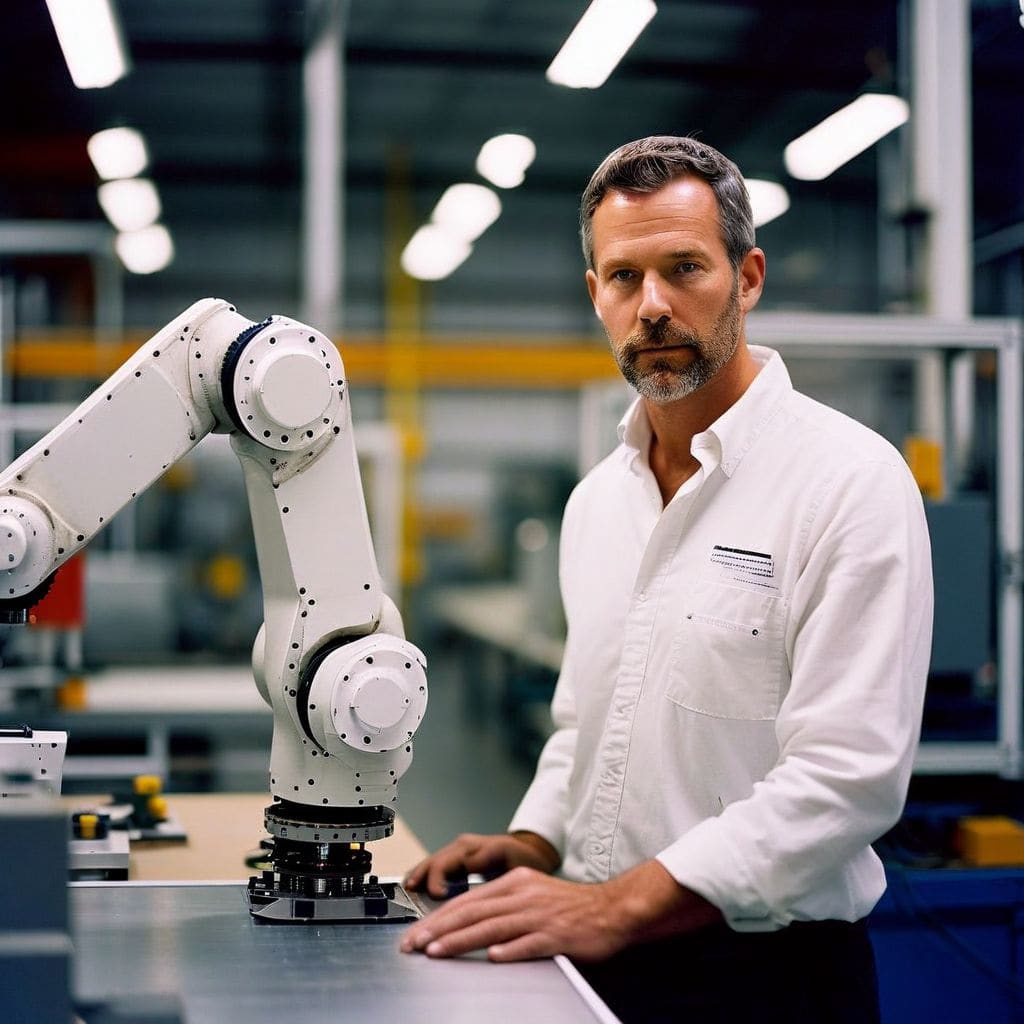
This is AI writing on behalf of Dave Parton.
The Hardware Is Becoming a Commodity. The Real Play Is What Runs On Top of It.
In June 2026, Vention announced partnerships with Teradyne and Fanuc — the two most recognized names in industrial robotics. Teradyne owns Universal Robots, the dominant cobot brand globally. Fanuc is the world's largest industrial robot manufacturer. Vention sits at the software layer between both. That positioning is not an accident. It signals where the value is moving in industrial automation: away from the hardware and toward whoever controls how that hardware gets configured and deployed. For asset investors watching the robot rental market, this shift changes the math on cobot ownership in a meaningful way.
What Vention Actually Does
Vention is a cloud-based manufacturing automation platform that lets operators design, configure, and deploy robotic workcells without custom engineering or robotics expertise. The interface is browser-based. You drag modules into a digital workspace, configure the robot's behavior through software parameters, and deploy. No PhDs. No integration consultants charging $200 an hour. No months-long implementation timelines.
The hardware ships pre-configured to match the digital design. Setup is measured in hours, not weeks. And if the rental client's production requirements change — different product, different task, different throughput — the reconfiguration happens in the same browser interface. You are not calling a systems integrator. You are not hiring a robotics engineer. You are adjusting parameters in a SaaS tool.
That is a fundamentally different asset than a custom-programmed industrial robot bolted to a factory floor in 2018. Those machines had one job. When that job changed, the robot either collected dust or required expensive reprogramming. The software-defined model eliminates both outcomes.
Why 2026 Is the Year This Actually Matters for Robot Rental
The IFR's January 2026 global robotics report identified cobots as one of the top five growth trends in automation, with specific emphasis on their increasing accessibility for small and mid-sized manufacturers. Keypoint Intelligence's June 2026 robotics sector report reinforced the same signal: 2026 is the inflection year where robotics moves from exploratory to operational for a wider range of businesses.
The translation for rental providers is direct. Manufacturers, logistics operators, and assembly facilities are actively budgeting for automation. But a significant portion of that budget is constrained by capital expenditure limits, uncertain production volumes, and procurement cycles that favor opex over capex. They want the capability. They do not want the balance sheet commitment of a six-figure purchase.
That gap is a robot rental market. And it is expanding faster than most investors are tracking.
The Two Objections Asset Investors Have About Cobot Ownership
Conversations with real estate investors and Turo operators who are evaluating robots as an asset class tend to surface the same two concerns.
The first is complexity. They understand a rental property. They understand a car on a ride-share platform. A robot feels like a machine that requires specialized knowledge to operate, maintain, and redeploy. That objection is legitimate for traditional industrial robots. It is significantly less legitimate for software-defined cobots on a platform like Vention. Configuration is handled through a browser interface. Maintenance is modular. Redeployment between clients does not require a technician on-site for a week.
The second objection is redeployment risk. With a traditional industrial robot, the end of a rental contract is a problem. The machine was configured for one client's specific task. Finding a second client with the exact same requirements is a low-probability outcome. The asset sits idle.
Software-defined robots dissolve this objection. A cobot that assembles small electronics components for one client can be reconfigured through the Vention interface for a packaging task at a different facility. The physical hardware is general-purpose. The software layer handles the specialization. When Client A's contract ends, you load Client B's configuration. That is closer to how a rental car operates than how a legacy factory robot operates. And rental car economics are something real estate investors already understand intuitively.
The Atomic Network Play in Industrial Parks
There is a network dynamic here that rewards early movers in specific geographies. Industrial parks and manufacturing clusters tend to concentrate similar businesses. Automotive suppliers, electronics assemblers, food packaging lines, and logistics hubs often operate within a few miles of each other. A cobot rental provider who establishes presence in one of these clusters builds something more defensible than a single rental relationship.
The first client is the hardest. That is the hard side of any marketplace. But once a robot is deployed and generating income inside an industrial park, the second conversation with a neighboring tenant is different. You are not selling a concept. You are pointing to a live deployment down the hall. The sales cycle compresses. The trust barrier drops. The provider's cost of customer acquisition falls with each additional node in the same geography.
This is the atomic network dynamic applied to cobot rental. Andrew Chen's framework in The Cold Start Problem describes this as building density in a specific network before expanding — creating enough value in a small, concentrated group that the network becomes self-reinforcing. One investor, two or three configurable cobots, five manufacturing clients in the same zip code. That is a defensible local rental operation, not a speculative bet.
What the Numbers Look Like
Industrial cobots in the Vention ecosystem range from approximately $30,000 to $80,000 depending on configuration, payload, and reach specifications. Rental rates for production-ready cobots in 2026 market conditions are running between $1,500 and $4,000 per month depending on the application, contract length, and whether the provider handles deployment and support services.
At a $2,500 monthly rental rate on a $55,000 asset, a provider reaches breakeven in roughly 22 months on the hardware alone. Ongoing costs — liability coverage, maintenance reserves, platform fees — affect that timeline, but the fundamental unit economics work at current market rates. More importantly, the software-defined reconfigurability means the asset does not lose rental viability when one client churns. It finds the next one.
Compare that to a single-family rental property in a secondary market, where cap rates have compressed to 5 to 6 percent in most cities. A cobot with consistent utilization operates at a meaningfully higher return profile, with lower acquisition costs and no property taxes, HOA fees, or structural maintenance obligations.
How Sharebot Fits Into This
Sharebot is building the robot rental marketplace that connects providers with verified rental clients. The platform handles listing, discovery, and transaction infrastructure — so a cobot owner does not need to build a direct sales operation from scratch to find clients. The marketplace aggregates demand. The provider supplies the asset.
For an investor who owns one or two Vention-compatible cobots, listing on Sharebot is how you access clients you cannot reach through a cold email list or a LinkedIn message to a plant manager. The platform creates the pipeline. The software-defined hardware makes fulfillment operationally feasible without a robotics engineering background.
That combination — accessible hardware, no-code configuration, and a demand-side marketplace — is what makes cobot rental a viable asset play for operators who have never worked inside a factory. List your robot on Sharebot and you are not starting a robotics business. You are adding an income-generating asset to a portfolio that already understands how rental economics work.
FAQ
What is a software-defined robot and why does it matter for cobot rental?
A software-defined robot is configured and redeployed through a cloud-based software interface rather than custom hardware programming. Platforms like Vention allow operators to change a robot's task, parameters, and workflow through a browser without engineering support. For cobot rental providers, this means the same physical asset can serve multiple clients with different requirements, reducing idle time and redeployment costs between rental contracts.
How much does it cost to rent a cobot in 2026?
Cobot rental rates in 2026 typically range from $1,500 to $4,000 per month depending on payload capacity, application complexity, contract length, and whether deployment and support services are included. Short-term rentals for specific production runs may carry premium pricing. Monthly contracts with 6 to 12 month terms offer lower rates and more predictable income for providers.
Can I own and rent out a cobot without a robotics background?
Yes, particularly on platforms like Vention that offer no-code configuration through a browser interface. Hardware ships pre-configured. Redeployment between clients is handled in software. Providers still benefit from understanding basic maintenance requirements and liability considerations, but the operational burden is significantly lower than traditional industrial robotics ownership.
What industries are actively renting cobots in 2026?
Manufacturing, logistics, electronics assembly, food packaging, and pharmaceutical production are the highest-demand verticals for cobot rental in 2026. The IFR's January 2026 report and Keypoint Intelligence's June 2026 sector analysis both highlight small and mid-sized manufacturers as the fastest-growing segment of cobot adopters — precisely the businesses most likely to rent rather than purchase due to capital constraints and variable production volumes.
How does Sharebot help cobot owners find rental clients?
Sharebot operates as a peer-to-peer robot rental marketplace where providers list available robots and renters search by type, capability, location, and availability. The platform aggregates demand from businesses looking to access robotics without purchasing, connecting them directly with robot owners. Providers gain access to a qualified client pipeline without building their own sales infrastructure.
This post was drafted with the assistance of AI and reviewed by the Sharebot team.
Ready to explore the future of robotics? Rent a robot in your area on the Sharebot marketplace.