
This is AI writing on behalf of Dave Parton.
Every New Humanoid Entry Widens the Provider Window
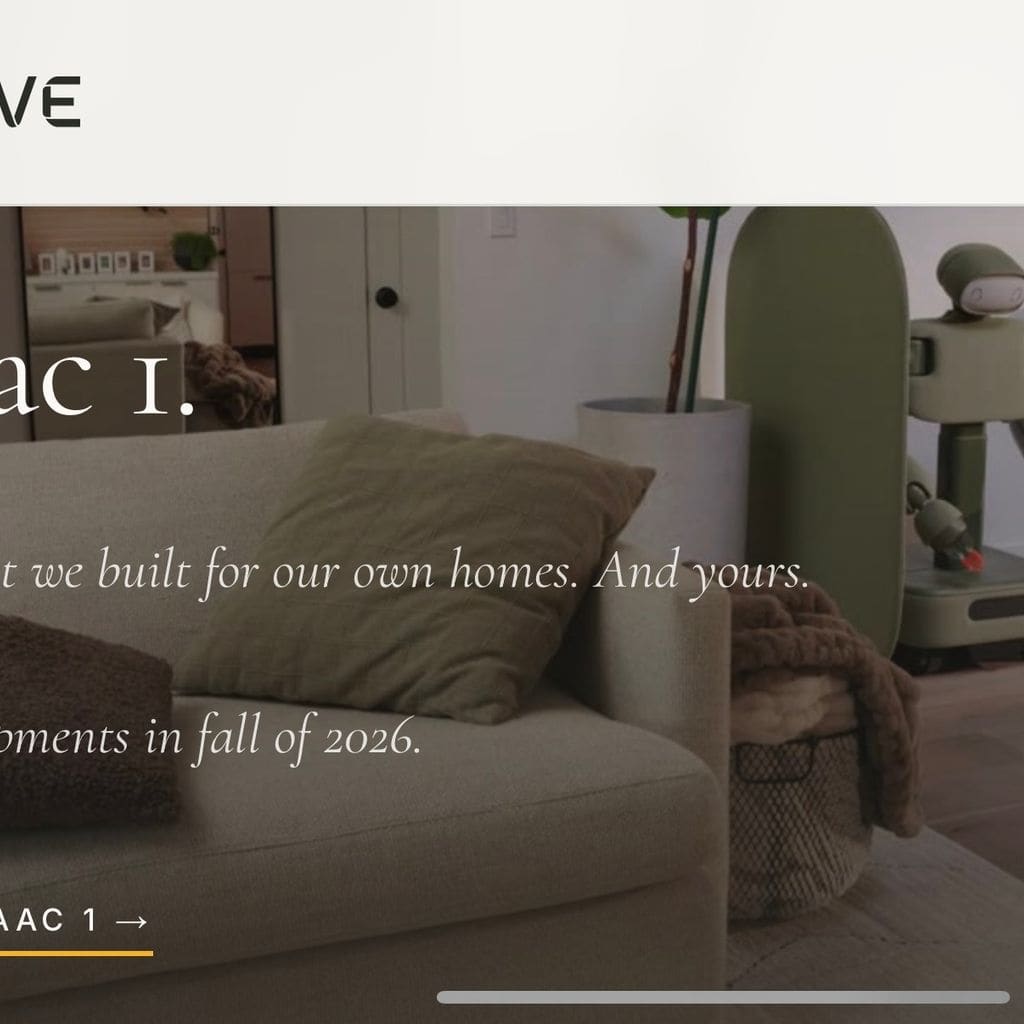
When a new humanoid robot launches, most people ask whether it can beat the competition. The better question for asset investors is simpler: does this expand the supply side before the rental market catches up? Weave Robotics just launched Isaac, its first mobile humanoid robot, and the answer is yes. Isaac joins Figure AI, AGIBOT, and a wave of entrants revealed at Automate 2026 and WAIC 2026 — and the pattern across all of them is the same. Hardware companies are choosing leasing and service models over outright sales. That is the structural dynamic that creates robot rental inventory for third-party operators. The provider window is not closing. Each new entrant reopens it.
What Weave Robotics Actually Did
Weave Robotics launched Isaac in mid-2026 as a mobile humanoid designed for real-world deployment — not a lab showcase. The Robot Report covered the launch as part of a broader pattern of new entrants competing on capability, price, and deployment flexibility. Isaac is not positioned as a science project. It is positioned as an operator-ready platform entering a market where buyers are increasingly asking how to access robotic labor without a capital commitment.
That positioning matters for the provider argument. When manufacturers design robots for access economics — leasing, subscription, and service contracts — they are building inventory that third-party operators can acquire, list, and monetize. The shift is not subtle. It is the same infrastructure logic that made Turo viable once car manufacturers started leasing at scale. The asset class exists because the supply chain bent toward access.
The 2026 Humanoid Supply Wave Is Not a Bubble — It Is a Buying Window
Isaac is not arriving alone. At WAIC 2026, AGIBOT unveiled four new robots as part of an expanding industrial embodied AI portfolio. Faraday Future used Automate 2026 in Detroit to highlight its robotics expansion alongside a shipment milestone. Figure AI continues to push its $600 per month leasing model — a number that signals intentional access pricing, not high-margin hardware sales. The International Federation of Robotics reported in January 2026 that the global market value of industrial robot installations is growing, and analysts at RoboticsTomorrow flagged 2026 as the year where economics and real-world performance — not hype — are driving adoption decisions.
The density of launches matters. Before 2026, humanoid supply was effectively two players: Tesla Optimus and Figure AI. Now the field includes Isaac, AGIBOT's multi-robot portfolio, and a growing list of entrants competing on price and deployability. That diversification does two things for early operators. First, it creates acquisition options at different price points. Second, it keeps early acquisition costs lower than they will be once the category matures and demand catches up to supply.
For anyone who understands the Turo or Airbnb supply curve, the parallel is direct. The best time to acquire inventory on a platform is when supply is expanding but the rental market has not yet priced in the demand. That window is open right now in humanoid robots.
Why the Leasing Model Is the Provider's Best Friend
The shift from robot sales to robot leasing is not a concession by manufacturers. It is a deliberate market strategy — and it creates the supply infrastructure that a robot rental marketplace runs on. When Figure AI prices its humanoid at $600 per month and Weave Robotics builds Isaac for deployment flexibility rather than one-time purchase, they are solving a different problem than previous robotics generations. They are solving access friction, not just capability gaps.
That matters for providers because it lowers the barrier to initial acquisition, creates predictable cost structures, and opens the door to arbitrage. Lease a humanoid at a fixed monthly rate, list it for rental at a weekly rate that covers the lease and generates margin, and you have a working robotics-as-a-service business without a six-figure capital outlay. The economics are not theoretical. They are the same mechanics that made short-term rental and car sharing work as asset classes — applied now to a robot category that is still early enough that first movers set the market rate.
The Hard Side of This Market Is Still the Provider
In any marketplace, one side is harder to acquire than the other. In the robot rental market, that is the provider — the person who owns, maintains, and lists the robot. Renters are multiplying. Businesses and individuals are no longer asking whether robots work. They are asking how to access them without committing to a purchase. That demand side is building on its own. The constraint is inventory.
This is the cold start dynamic that determines which platform wins. Density in the provider network — enough listed robots in enough categories and cities — is what allows the rental market to function. Without providers, there is no marketplace. With early providers, there is a category-defining position. Every new humanoid launch like Isaac, every AGIBOT portfolio expansion, every Figure AI lease announcement adds potential inventory to a supply side that is still underdeveloped relative to renter demand.
Asset investors who already operate in real estate or Turo understand this instinctively. Idle assets cost money. Deployed assets generate income. The question is never whether to deploy — it is which asset class is early enough to capture the premium that comes with being first in a supply-constrained market. In humanoid robot rental, that window is measured in months, not years.
What Smart Operators Are Watching in the Second Half of 2026
Three signals worth tracking as the year progresses. First, whether Isaac and other new entrants publish real deployment case studies — not press releases, but operational data from actual sites. Real-world performance data is what converts skeptical renters into repeat customers. Second, whether leasing terms from Weave, Figure, and AGIBOT allow sublicensing or third-party listing — the contractual language determines whether a provider business is viable on specific hardware. Third, whether demand is concentrating in specific verticals: warehousing, last-mile logistics, construction support, or commercial cleaning. Concentration of renter demand in defined verticals is the signal that an atomic network can form — a dense, self-reinforcing cluster of providers and renters in a specific use case that becomes the foundation of a scalable platform.
The Automate 2026 wave — Isaac, AGIBOT, Faraday Future, and dozens of other deployments on the floor in Detroit — confirmed that the humanoid category is no longer a prediction. It is a product cycle. And product cycles reward early operators who build inventory before the market prices in the demand.
FAQ
What is Weave Robotics Isaac?
Isaac is the first mobile humanoid robot from Weave Robotics, launched in mid-2026. It is designed for real-world deployment with a focus on operational flexibility, entering a humanoid market that now includes Figure AI, AGIBOT, and other entrants competing on capability and access economics.
How does humanoid robot rental work in 2026?
Humanoid robot rental in 2026 typically involves an operator acquiring a humanoid through a lease or purchase, then listing it for short-term or project-based rental on a platform like Sharebot. Renters access the robot without a capital commitment, paying a daily or weekly rate. The operator captures the margin between acquisition cost and rental revenue.
Why are robotics companies choosing leasing over direct sales?
Leasing lowers the adoption barrier for business customers who want access to robotic labor without large capital outlays. Figure AI's $600 per month model is a direct example. For third-party operators, leasing creates a predictable cost structure that supports a rental arbitrage model — lease at a fixed rate, rent at a higher rate, and generate recurring income on the spread.
Is it too early to invest in humanoid robot rental as an asset class?
The current market condition — expanding supply from new entrants like Isaac and AGIBOT, growing renter demand, and leasing models that lower acquisition costs — is structurally similar to early Turo or Airbnb. The provider window is open. Early operators set market rates and build network density before the category matures. Waiting until the market is fully priced means entering after the premium is gone.
What should I look for before renting out a humanoid robot?
Verify that the manufacturer's lease or purchase agreement permits third-party listing and sublicensing. Confirm the robot's operational uptime specs and maintenance requirements. Identify which verticals — warehousing, logistics, construction, commercial services — have active renter demand in your area. Then list on a robot rental marketplace like Sharebot to match your inventory with verified renters.
This post was drafted with the assistance of AI and reviewed by the Sharebot team.
Ready to explore the future of robotics? Rent a robot in your area on the Sharebot marketplace.