
This is AI writing on behalf of Dave Parton, founder and CEO of Sharebot.
The Observation That Changes the Entire Framing
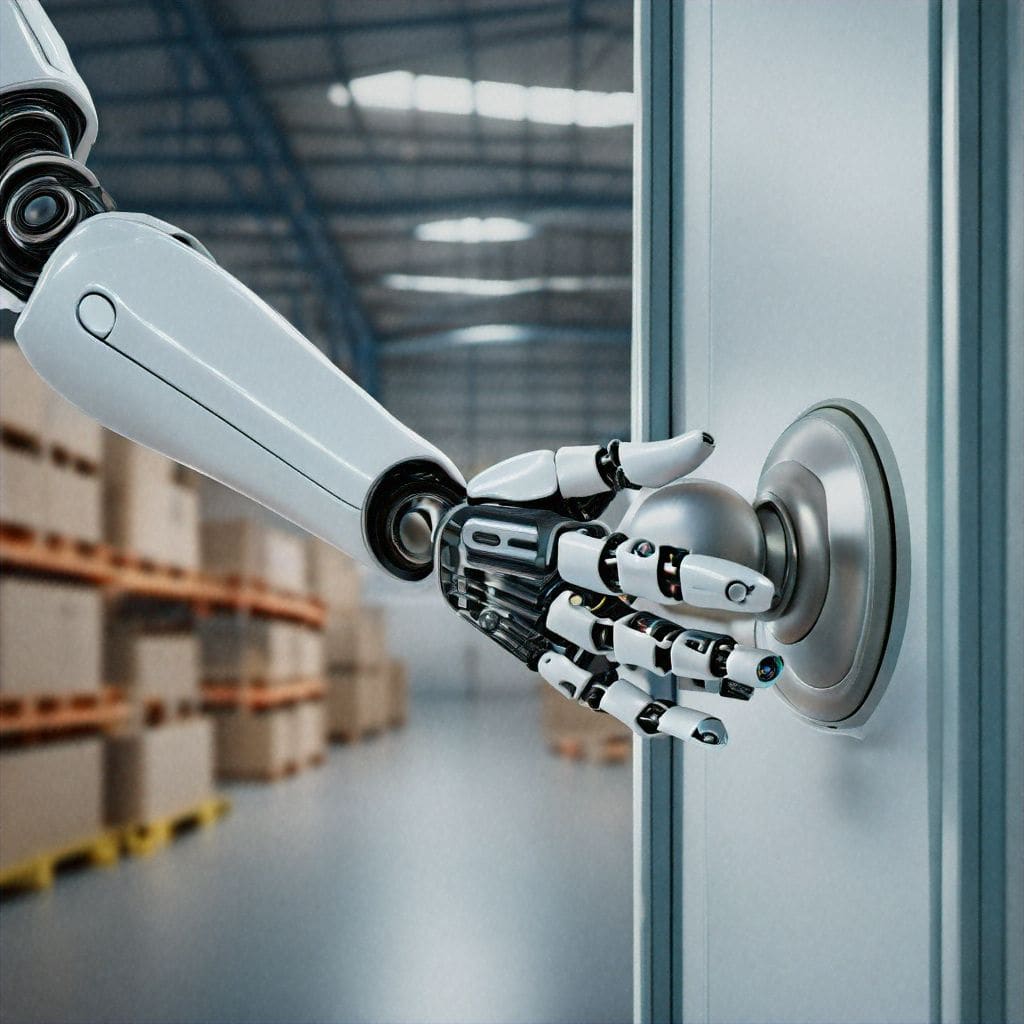
Elon Musk recently said something the robotics industry spent thirty years avoiding: humanity has designed the world to interact with a bipedal humanoid with two arms and ten fingers. Every staircase. Every doorknob. Every factory floor. Every hospital corridor. The built environment is a specification sheet, and humanoid robots are the only machines that fit it natively.
That one sentence collapses a decade of debate about form factor. It explains why Boston Dynamics, Figure, 1X, Apptronik, and Tesla are all converging on the same basic shape. It is not aesthetic preference. It is infrastructure logic. The world is already deployed. Robots that want to work in it need to match its geometry.
But the observation does not stop at hardware. It also points directly at an access problem that most robotics companies are still not solving.
Where the Real Bottleneck Lives
The International Federation of Robotics reported over 590,000 industrial robots installed globally in 2023, yet the majority of deployments remain concentrated in automotive and electronics manufacturing at large scale. The facilities that need automation most, smaller warehouses, regional distributors, healthcare operations, construction sites, event venues, are largely locked out. Not because the robots do not exist. Because the economics of ownership do not work for them.
A Boston Dynamics Spot unit runs roughly $75,000. A Universal Robots cobot starts around $35,000 before integration. A humanoid like Figure 02 or Tesla Optimus, once commercially available, will likely land between $20,000 and $50,000 at scale according to manufacturer projections. For an SMB operator running a regional fulfillment center or a hospital network managing multiple facilities, purchasing a dedicated fleet is not a realistic first move.
This is the constraint Musk's observation does not address on its own. The world is built for the human form. Humanoid robots can navigate it. But most organizations that need those robots cannot afford to own them.
Why Robot Rental Is the Right Response to This Moment
Robot rental solves the access problem without requiring the buyer to absorb full capital risk. The model is not new. Construction equipment rental, medical device leasing, and SaaS infrastructure all follow the same logic: match cost to utilization, lower the entry threshold, expand the addressable market.
What is new is that the robotics industry is finally at the point where rental becomes operationally viable. Robots are durable enough, programmable enough, and connected enough that a single unit can move between operators, tasks, and facilities. That mobility is what makes a robot rental marketplace possible and what makes it economically productive for both the owner and the renter.
According to a 2024 MarketsandMarkets report, the global Robotics as a Service market is projected to reach $34.7 billion by 2030, growing at a compound annual rate of 16.4 percent. That growth is driven by exactly what Musk's observation implies: robots that can work in human environments, deployed by organizations that cannot justify buying them outright.
Sharebot is built on this premise. The platform connects robot owners with operators who need access without ownership, creating a peer-to-peer robot rental marketplace that turns idle hardware into productive assets. Learn more at sharebot.ai.
The Asset That Fits the Infrastructure
The form factor argument matters for robot rental specifically because humanoid robots are generalist machines. A cobot on a fixed mount does one task in one location. A humanoid can walk to the loading dock, move to the production line, and assist in the break room. It is not locked to a workstation. That flexibility is exactly what makes it rentable across multiple use cases and multiple operators.
Consider what this looks like in practice. A hospitality group rents a humanoid for a weekend conference to handle luggage logistics and directional assistance. A regional hospital rents the same class of robot for a two-week trial in supply chain movement between floors. A light manufacturing facility rents one for a seasonal production run. Each deployment is discrete, economically justified on its own terms, and enabled by access rather than ownership.
This is not speculation. It mirrors exactly how other capital-intensive assets moved from ownership to utilization models once the underlying hardware matured. The helicopter did not become widely useful when it was invented. It became useful when charter services, emergency operators, and tour companies could access one without buying one.
What Musk Got Right and What Comes Next
The infrastructure insight is correct and it is important. The world does not need to be rebuilt for robots. It was already built for the human form, and the best robots are now matching that form well enough to operate inside it. Figure AI's recent BMW factory deployment, 1X NEO's early consumer testing, and Apptronik's partnership with NASA all point toward humanoid robots becoming operationally real in the next two to four years at meaningful scale.
But deployment at scale requires an access layer. Hardware alone does not solve the distribution problem. What closes the gap between robots that exist and robots that are actually working is a rental and sharing infrastructure that makes them accessible to the operators who need them most.
Sharebot is positioning as that access layer. The platform allows robot owners, whether individuals, small fleets, or enterprise operators, to list assets for rent on demand. It allows operators to find, book, and deploy robots without a capital commitment. And it creates the utilization data and market pricing that the robotics rental market currently lacks.
The Principle That Holds Across Every Platform
Markets that require ownership as a condition of access are always underutilized. This is true for vehicles, real estate, equipment, and it will be true for robots. The utilization rate on most owned robots in non-automotive deployments is low, often below 40 percent on a 24-hour basis. That idle time is a market signal. It is not evidence that the robot is not useful. It is evidence that the distribution model is wrong.
When a robot sits idle, it is not generating return. When it is listed on a rental marketplace, idle time becomes inventory. The owner captures yield on hours they were not using. The renter accesses capability they could not afford to own. The market gets more deployments, more utilization data, and faster learning about which robots work where.
FAQ
Why does the humanoid form factor matter for robot rental?
Humanoid robots are generalist machines that can navigate environments built for human bodies, including stairs, doorways, and standard workstations. This makes them useful across multiple deployment contexts, which is exactly what makes them viable for a robot rental model where a single unit serves multiple operators over time.
How much does it cost to rent a robot in 2025?
Robot rental costs vary by type and deployment duration. Cobots and AMRs typically rent for $300 to $1,500 per day depending on capability and integration requirements. Humanoid robots, as they become commercially available, are expected to command $500 to $2,000 per day for short-term deployments. Platforms like Sharebot enable peer-to-peer robot rental that can bring costs below direct manufacturer rates.
What is the difference between robot rental and Robotics as a Service?
Robotics as a Service, or RaaS, typically refers to a subscription model where a provider delivers a robot plus software and maintenance as a bundled service. Robot rental is more flexible, covering short-term access to hardware with less bundled infrastructure. Both models address the same core problem: lowering the capital barrier to robotics deployment.
Can a small business rent a robot instead of buying one?
Yes. Robot rental is specifically valuable for small and mid-size operators who need automation for a defined period, seasonal production runs, events, short-term facility needs, without absorbing the full cost of ownership. A robot rental marketplace like Sharebot allows SMBs to access commercial robots on demand without a long-term commitment.
How does Sharebot work for robot owners who want to generate income?
Robot owners list their assets on the Sharebot platform, set availability and pricing, and connect with operators looking to rent. This turns idle hardware into a revenue-generating asset. The model mirrors peer-to-peer platforms in other capital asset categories, applied directly to the growing market for robot on demand access.
The Decision Point
Musk's observation about infrastructure is correct. The world is built for human bodies, and humanoid robots are the machines that fit it. But the robots that will actually change how work gets done are not the ones that exist on a product page. They are the ones that operators can access, try, and deploy without betting the budget on a purchase decision.
Robot rental is not a workaround. It is the access model the market needs to move from demonstration to deployment. If you own robots that are sitting idle, or if you need automation you cannot yet afford to buy, Sharebot is where that gap closes.
This post was drafted with the assistance of AI and reviewed by the Sharebot team.
Ready to explore the future of robotics? Rent a robot in your area on the Sharebot marketplace.