Airbnb, Turo, and Uber didn't just build companies — they gave power to people. Sharebot is doing the same thing for robotics. You already know how this works.
This is AI writing on behalf of Dave Parton, founder and CEO of Sharebot.
FieldAI develops foundation models for robots, enabling autonomous operation in unstructured, unpredictable environments without pre-mapped routes or human remote control. In 2024, the company raised over $400 million in funding to scale its technology across industrial sectors, including construction, energy, defense, and logistics. The partnership with NVIDIA accelerates deployment through access to edge computing hardware and AI inference infrastructure at the robot level.
This is not incremental. Most autonomous robots today still depend on pre-mapped environments. They know the warehouse because someone spent weeks teaching them the warehouse. Change the layout, add a pallet in the wrong place, or move them to a new facility and performance degrades fast. FieldAI attacks that constraint directly. The robot adapts. It reasons through unfamiliar terrain in real time using onboard AI, not a cloud call or a human operator.
The NVIDIA partnership is the technical backbone. NVIDIA's Jetson and Isaac platforms give FieldAI the processing power to run large foundation models at the edge, meaning the robot computes locally, responds faster, and operates in environments with limited connectivity. For industrial deployment, that matters. Construction sites, offshore platforms, and defense installations do not have reliable wireless infrastructure. A robot that needs the cloud to think is a robot that stops thinking when the signal drops.
The real constraint in autonomous robotics has never been the hardware. Actuators, sensors, and mobility platforms have matured significantly. The International Federation of Robotics reported 553,052 industrial robot installations globally in 2023, a figure that continues to climb. The bottleneck is intelligence, specifically the ability to reason about novel situations without human intervention.
In most deployments, this bottleneck shows up at the edge of the known map. A robot handling pallets in a distribution center performs reliably when conditions match training. But introduce a spill, a misplaced obstruction, or an unfamiliar object and the robot halts, flags for human review, or makes a bad decision. Operators build workarounds. Those workarounds add labor cost back into a system that was supposed to reduce it.
FieldAI's foundation model approach borrows from the same logic that made large language models generalize across text. Instead of training a robot for a specific task in a specific location, the model learns broadly and adapts at deployment. The robot arrives at a new site, observes the environment, and begins operating. No weeks of mapping. No site-specific retraining. That changes the economics of deployment in a fundamental way.
The term getting used in early coverage is hive mind robotics, and it is worth being precise about what that means in FieldAI's context. The company's architecture allows robots operating in the field to contribute observations back to the shared model, improving system-wide performance over time. A robot that encounters a novel obstacle in one location shares that learning across the fleet.
This is not robots communicating in real time like a swarm. It is more accurate to describe it as distributed model improvement, a feedback loop where field experience makes the shared intelligence better. The practical effect is that a robot deployed in month six of a contract performs meaningfully better than a robot deployed on day one, and both robots benefit from what the entire fleet has learned.
For operators evaluating robotics as a service, this changes the calculus. The value of the robot increases with time and deployment volume. That is the opposite of traditional capital equipment, which depreciates from the moment it ships. A robot running on a self-improving foundation model is an asset that gets better as it works.
The robotics as a service market is projected to reach $34.7 billion by 2028, according to MarketsandMarkets, driven by demand for flexible deployment without capital commitment. FieldAI's approach accelerates the core value proposition of robot rental: deploy fast, remove friction, pay for performance.
The current friction in robot rental is site preparation. A business that wants to rent a robot for a warehouse application still has to invest time in mapping, integration, and operator training before the asset generates value. If that setup cost approaches the cost of the rental itself, the economics collapse. FieldAI's model shortens that setup window dramatically. A robot that can navigate an unmapped environment on arrival is a robot that can be rented, dropped, and running within hours instead of weeks.
This matters directly for platforms like Sharebot, where the robot rental marketplace model depends on fast, repeatable deployment across diverse environments. The harder it is to deploy a robot at a new location, the harder it is to build a peer-to-peer robot rental platform at scale. Foundation model robots reduce that friction. They make the robot on demand model viable across a wider range of use cases and locations.
There are three immediate implications for anyone operating in or adjacent to the robot rental market:
NVIDIA's involvement deserves a separate frame. The company's Isaac robotics platform, Omniverse simulation tools, and Jetson edge compute hardware have become the infrastructure layer for a growing segment of robotics development. When NVIDIA partners with a company like FieldAI, it is not just a capital relationship. It is an accelerant to deployment speed, developer adoption, and hardware availability.
For the robot rental market specifically, NVIDIA's infrastructure push means more capable robots reach the market faster. Manufacturers building on NVIDIA's stack gain access to simulation environments that reduce development time, edge hardware that enables field deployment without connectivity dependence, and a developer ecosystem that accelerates software improvement. That pipeline increases the supply of high-performance rental-ready robots.
Supply creation is one of the foundational challenges in building a robot rental marketplace. list your robot The robots need to exist, be deployable, and be maintained at a quality level that supports a commercial rental transaction. NVIDIA-backed development ecosystems accelerate all three. What FieldAI is building, with NVIDIA's infrastructure underneath it, is exactly the kind of supply that makes a platform like Sharebot more useful and more competitive over time.
The builders who should be watching FieldAI most closely are not just robotics engineers. They are operators who currently run fleets of robots with meaningful idle time, entrepreneurs evaluating which robot categories to acquire for rental income, and enterprises that have been waiting for autonomous capability to mature before committing to deployment.
The idle fleet problem is real. A robot that cannot operate reliably outside its trained environment sits when it is not in its trained environment. That is idle time that generates no revenue. Foundation model robots reduce that idle risk by expanding the environments where the robot can operate confidently. An owner who lists a robot on Sharebot benefits directly. The robot can go to more renters in more locations without the setup overhead that previously limited rental viability.
how robot rental works For enterprises, the calculation shifts too. Renting before buying makes more sense when the rented asset gets smarter with every deployment. A pilot that starts as a cost test becomes a capability test and a data-gathering exercise simultaneously. The enterprise learns what the robot can do in its specific environment before committing capital.
FieldAI develops AI foundation models that enable robots to operate autonomously in unstructured environments without pre-mapped routes or remote human control. The company raised over $400 million in 2024 and partners with NVIDIA to deploy its technology in industrial sectors including construction, energy, and defense.
FieldAI's approach reduces deployment setup time significantly, which improves the unit economics of robot rental. A robot that can navigate an unmapped environment on arrival is easier to deploy across diverse locations, which makes the robotics as a service model viable for a wider range of use cases.
The global robotics as a service market is projected to reach $34.7 billion by 2028, according to MarketsandMarkets. Growth is driven by demand for flexible, capital-light access to robotics across warehousing, logistics, manufacturing, and field services.
A standard autonomous robot is trained for a specific environment and degrades in performance when conditions change. A foundation model robot generalizes from broad training and adapts to novel environments in real time, similar to how large language models generalize across text tasks rather than being locked to one domain.
Owners who list robots on a robot rental marketplace benefit from reduced setup friction, broader deployment environments, and assets that improve in capability over time. Lower deployment barriers mean more rental transactions and less idle time between bookings.
FieldAI is not building a robot. It is building the intelligence layer that makes robots deployable at scale. Combined with NVIDIA's infrastructure and a $400 million capital base, the company is positioned to define what autonomous capability means across industrial robotics for the next decade.
For anyone operating in the robot rental market, the signal is clear. The robots coming to market in the next two to three years will deploy faster, operate in more environments, and improve over time. The platforms and operators who build access infrastructure now, before those robots are widely available, are the ones who capture the value when the supply arrives.
Sharebot exists to be that access layer. The robot on demand model works when robots are deployable, findable, and transactable. What FieldAI is building makes all three of those easier. That is not hype. That is the system working the way it should.
This post was drafted with the assistance of AI and reviewed by the Sharebot team.
Ready to explore the future of robotics? Rent a robot in your area on the Sharebot marketplace.

FieldAI raised $400M to build autonomous robot brains without pre-mapped routes. Here's what that means for the robotics as a service market.
This is AI writing on behalf of Dave Parton, founder and CEO of Sharebot.
In 2008, Brian Chesky and Joe Gebbia put three air mattresses on the floor of their San Francisco apartment and charged strangers $80 a night. Most people thought it was a bad idea. The people who listed their homes on Airbnb in 2009 and 2010, before it was a household name, before the press coverage, before your parents understood what it was, those people built something that still pays them today. They became Superhosts with hundreds of five-star reviews, loyal repeat guests, and income streams that required no new capital. The platform scaled around them. The demand found them. Their only real advantage was timing.
That pattern has repeated often enough that it no longer looks like luck.
A new peer-to-peer marketplace launches. The concept sounds strange. A small group of early adopters ignores the skeptics, lists their asset, and starts earning. The platform scales. Demand catches up. The early community captures disproportionate value because they built reputation and listing history before the competition arrived. Then the window closes, not because the platform stops working, but because it gets crowded.
Turo followed the same arc. The first hosts listed their personal cars when most people thought you were reckless for letting a stranger drive your Honda Accord. Those hosts had no competition in their city. They set the prices. They accumulated reviews from day one. By the time Turo crossed 160,000 active listings, the people who listed in year one had a two-year head start on trust, ratings, and category dominance in their local market.
Uber ran the same pattern. The first drivers signed up when the app was invite-only and nobody outside San Francisco had heard of it. They earned on routes with zero driver competition. They built their rating profiles before the supply caught up to demand. The earliest participants in every peer-to-peer marketplace share one trait: they showed up before it was obvious.
Right now, robots and drones are sitting idle in garages, storage units, and equipment closets across the country. Unitree Go2 Pros. DJI Matrice 4E drones. Roborock commercial units. Advanced inspection, survey, and automation hardware owned by individuals and small businesses who used it for one project, one season, or one client, and then let it sit.
These are not cheap assets. A capable cobot costs between $20,000 and $150,000. A commercial inspection drone can run $10,000 to $30,000. They depreciate whether they are running or not. And the people who need them, contractors, filmmakers, inspectors, researchers, municipalities, small manufacturers, cannot always justify buying them outright for a single job or short-term deployment.
The access gap is real. The idle asset problem is real. The peer-to-peer model that solves both has been validated three times by three of the most valuable companies of the last two decades. What has not existed until now is a robot rental marketplace built to connect these two sides.
Sharebot is the world's first peer-to-peer robotics and drone rental marketplace. how it works It connects owners of robots, drones, and autonomous devices with the individuals and businesses who need access to them, and it keeps the economic value of that exchange inside the community rather than routing it through a large equipment corporation.
The model is not new. The asset class is.
Robotics as a service, commonly called RaaS, is already a recognized category in enterprise deployments. The global RaaS market was valued at approximately $5.6 billion in 2023 and is projected to grow at a compound annual growth rate above 16 percent through 2030, according to Grand View Research. What that market has lacked is a platform that brings robot rental access down to the operator level, where a small manufacturer can rent a cobot for a four-week production run, or a property manager can hire a cleaning robot for a seasonal contract, without signing a multi-year enterprise agreement.
That is the gap Sharebot fills. list your robot
The early Sharebot hosts are the ones who list today. Before their city gets competitive. Before the category fills with reviews. Before the demand that is clearly building for on-demand robotics access catches up with available supply.
Consider what is already in motion. The International Federation of Robotics reported that global robot installations hit a record 553,052 units in 2022, up 5 percent year over year. Humanoid robot deployments are accelerating. Warehouse automation is expanding into mid-size operations. Drone use cases in inspection, agriculture, and logistics are multiplying. The installed base of rentable robotics hardware is growing faster than any centralized rental company can absorb.
Peer-to-peer supply creation is how that installed base becomes accessible. And the hosts who build their listing profiles, accumulate verified rentals, and establish pricing authority in their category and region right now will hold a structural advantage that cannot be bought back later.
The people who thought Airbnb was a strange idea in 2009 had another chance to list in 2011. Some of them took it. Most waited until it was undeniably obvious, which means they waited until the early-mover advantage was already gone.
If you own a robot, a commercial drone, or any autonomous device that sits idle between jobs, listing it on a robot rental marketplace is a direct path to recovering carrying costs and building an income stream from a depreciating asset.
If you need robotic capability for a short-term project, renting instead of buying removes the capital commitment, the maintenance burden, and the risk of buying hardware that becomes obsolete. Robot rental vs. purchase is not a close call for most single-project use cases.
The economics work in both directions. That is what makes a peer-to-peer robot sharing platform durable, not just a tech trend.
Robot rental pricing varies by device type, capability, and rental duration. Entry-level service robots and commercial drones typically rent for $100 to $500 per day on peer-to-peer platforms. Cobots and advanced autonomous mobile robots can range from $500 to $2,000 per day or more, depending on specifications and included support. RaaS enterprise contracts generally run on monthly subscription models starting around $1,500 per month for basic units.
Based on current deployment trends, warehouse and logistics robots, commercial cleaning robots, inspection and survey drones, and cobots for short-run manufacturing are the highest-demand categories. Security robots and event robots are growing rental use cases as well. Humanoid robot rentals are an emerging category as hardware availability increases.
On Sharebot, owners create a listing that includes device specifications, availability, rental terms, and pricing. The platform handles discovery, booking coordination, and community trust infrastructure. Listing is the first step to turning idle hardware into a recurring income source.
For most single-project or seasonal use cases, renting a robot is significantly more cost-effective than purchasing. Buying a capable cobot or commercial drone requires capital outlay of $10,000 to $150,000 plus maintenance, storage, and obsolescence risk. Renting provides the same capability at a fraction of the cost with no long-term commitment.
Robotics as a service, or RaaS, is a deployment model where users pay for robotic capability on a subscription or usage basis rather than owning hardware outright. Traditional RaaS is enterprise-focused, offered by manufacturers and large integrators. Peer-to-peer robot rental extends the RaaS model to smaller operators by enabling individual robot owners to offer their hardware directly to renters through a marketplace like Sharebot.
The sharing economy is not a trend. It is a fundamental shift in who captures value from ownership and access. Airbnb redirected over $180 billion to regular homeowners instead of hotel chains. Turo turned idle vehicles into income. The ride-sharing market built a $91 billion industry on the premise that a regular person with their own car could serve demand more efficiently than a regulated monopoly.
Every one of those platforms rewarded early participants with something that cannot be purchased after the fact: a head start on reputation, pricing, and category authority.
Robot rental is not the future of this model. It is the present. The hardware exists. The demand is building. The marketplace is live at sharebot.ai.
The only question is whether you are in it from the beginning, or reading about it later.
This post was drafted with the assistance of AI and reviewed by the Sharebot team.
Ready to explore the future of robotics? Rent a robot in your area on the Sharebot marketplace.

The robot rental marketplace is open now. Early hosts on Sharebot can build reputation before demand peaks. Here is what that window looks like.
Women launched 49% of all new businesses in the United States last year. That is a 69% increase since 2019 and the highest share ever recorded. Women business owners now average $1.1 million in investable assets. A 2025 Wells Fargo Investment Institute report found that women's risk-adjusted investment returns outperform men's, and that women-led accounts outperform male-led accounts on an absolute basis.
The entrepreneurial gap seems to be closing fast.
And yet most women have still not entered private markets. A 2026 Fortune survey found that 67% of women beginning to invest in private opportunities say their comfortable check size is between $25,000 and $49,000. That is a perfect entry point for the right opportunity.
The question is not whether women will move into new asset classes. They already are. The question is which women identify the right one early enough to own it.
That opportunity is robotics rental. And the window is open right now.
The numbers tell a story that mainstream business media has been slow to catch up with.
Women of color now represent 47% of all women entrepreneurs in the United States, with revenue for African American women-owned firms growing 102.8% between 2019 and 2024. Women are projected to control $34 trillion in assets by 2030, up from $10 trillion today. And according to the International Council for Small Business 2026 trends report, women are reshaping entrepreneurial ecosystems.
What's driving this? Three things are converging at once. Capital access is improving. Digital platforms have collapsed the cost and complexity of starting a business. And a generation of women in their 35 to 55 prime earning years has accumulated the experience, savings, and confidence to act.
She is not looking for a lottery ticket. She is looking for a cash flow opportunity with a clear entry point, a manageable learning curve, and a market that is not yet saturated.
That description fits robotics rental precisely.
Sharebot is a peer-to-peer rental marketplace for robots and drones. You own a robot, you list it on the platform, and you earn cash flow every time it rents. Think of the early days of Airbnb, before everyone on the block figured out how to do it. The hosts who moved first set the pricing norms, built the reviews, and established the operational templates everyone else copied later.
The robots on Sharebot are not factory arms or science fiction machines. They are inspection drones, delivery bots, security robots, lawn automation equipment, and AI-powered commercial tools that small businesses, event organizers, and research teams need but cannot justify owning outright. The demand is real and growing. The supply side is still being built.
Entry does not require a large syndication buy-in or a securities license. A robot that generates rental income can be acquired for under $10,000 in many categories, and a small diversified portfolio can be assembled for well under $50,000. The platform is live on iOS and Android and has already facilitated real rental transactions.
Browse current listings at sharebot.ai to see exactly what is available right now.
Here is the honest reality about where robotics rental sits in 2026: nobody has fully written the playbook yet.
Pricing models are still being tested. Maintenance logistics are still being refined. Insurance structures, listing strategies, customer communication workflows, damage protocols, seasonal demand patterns. All of it is being built in real time by the earliest operators in the market.
That is an invitation for the right entrepreneurs to dominate.
The person who wins here is not the one who builds the platform from scratch. That work is already done. Sharebot asked the questions nobody else was asking, built the marketplace infrastructure, and created the system that makes robotics rental accessible to anyone ready to operate within it. What the earliest operators get is not a problem to solve. It is a first-mover advantage inside a platform that is already running.
According to SoFi's 2025 research on women and investing, women are more likely to create a financial plan and stick to it, more likely to identify operational inefficiencies early, and more likely to build the kind of customer trust that drives repeat business. The detail-oriented operator who treats a two-robot portfolio like a serious business is the one still generating cash flow in year five when everyone else has sold.
This asset class is emerging, the rules are still being written, and the woman who moves now does not follow the template. She creates it.
The strategies that built generational wealth in real estate portfolios, car rental fleets, and equipment leasing businesses translate directly to robotics rental. Men who have already proven these models know exactly how to evaluate cash flow potential, manage asset depreciation, build a rental pipeline, and scale a portfolio systematically. Those instincts do not need to be reinvented. They need to be redirected toward an emerging market where the entry costs are low and the competition has not arrived yet.
The most exciting version of what Sharebot becomes is not a women's platform or a men's platform. We are just targeting those who get stuff done. We just built a marketplace where experienced operators of every background recognize a proven model in a new asset class and move on it together.
That's how markets grow into something worth being early to.
Do I need to understand how robots work to make money renting them?No. You need to understand how a rental business works. Sharebot handles the marketplace infrastructure. Your job is managing your listing, pricing strategy, availability, and customer communication. The same organizational skills that make you effective in your career are exactly what make this work.
What does it cost to get started?Entry-level robots that generate real rental income start under $10,000. A small diversified portfolio of two or three units can be assembled for well under $50,000. Most operators start with one robot, learn the market, and expand from there.
What happens if a renter damages my robot?Sharebot's platform includes damage protection frameworks, and the insurance market for robotics rental is actively developing alongside the industry. Getting your coverage structure right early is one of the key advantages that separates disciplined operators from casual ones.
How do I find renters?The Sharebot marketplace connects you with renters who are already searching for the equipment you own. Operators who invest in strong listing descriptions, quality photos, and fast response times consistently outperform those who do not. The platform provides the audience. Your presentation determines how much of it you capture.
Is there real demand for this right now?Yes. The platform is live and processing real transactions. Businesses, researchers, event organizers, and municipalities are actively renting equipment they cannot justify purchasing outright. According to the Global Entrepreneurship Monitor 2025 report, the global startup ecosystem is growing at 21% annually, with technology-adjacent rental markets expanding alongside it.
What is my realistic time commitment?Similar to managing a single Airbnb listing. The heavy lifting is front-loaded: setting up your listing, establishing your pricing model, arranging maintenance relationships, and completing your first transactions. Once that infrastructure is in place, ongoing management is light. This is designed to generate cash flow alongside your existing career, not replace it.
Every asset class has a moment when the earliest operators are writing the rules and everyone who arrives later is playing by a system someone else built. The women who got into e-commerce in 2012, short-term rentals in 2011, and digital consulting in 2015 did not need a proven template. They needed clarity, discipline, and the willingness to move before the crowd arrived.
This is that moment for robotics rental.
The entrepreneurial gap is closing. The data says so. The momentum says so. And the next asset class is sitting wide open for the woman who is ready to stop watching and start owning.
That woman gets to be you.
Ready to take the first step? Browse available robots and learn more at sharebot.ai.
Sources
Meta Summary (155 characters):Women are closing the entrepreneurial gap fast. Here's why robotics rental is the low-entry asset class built for women who think in systems.
Keywords:women entrepreneurs 2026, robotics rental, new asset class, peer-to-peer robot rental, women in business, entrepreneurial gap, cash flow investment, Sharebot, women investing, low entry investment, female founders, robot rental income, passive income women, women wealth building, early adopter advantage
Image Generation Prompt:A confident woman in her early 40s standing in a modern minimalist workspace, slight smile, looking directly into the camera with quiet authority, a sleek robot or drone softly visible in the blurred background, warm golden hour light streaming through large windows, shot on 35mm film, soft bokeh, muted earth tones with hints of warm amber, editorial portrait style, natural makeup, business casual attire, empowering but approachable mood, photorealistic, high resolution

Women are closing the entrepreneurial gap in 2026. Here's why robotics rental is the low-entry asset class built for women who think in systems.
Before Airbnb, the idea of sleeping in a stranger's home was absurd. You didn't do that. You booked a hotel. You paid the corporation. You gave your money to a brand that owned the building, employed the staff, and kept the margin. We dealt with the secondhand smoke, the dated bathrooms, and the stained sinks. They had no competition at the various price points and so they set the rules. Then Airbnb came along and said: what if the person down the street has a spare room, and what if you trusted them?
Millions of people said yes.
Today, Airbnb hosts have collectively earned over $180 billion.² Not Hilton. Not Marriott. Not a board of executives sitting in a San Francisco high-rise. Regular people. Homeowners. Families. People with an asset they weren't fully using, who found a marketplace willing to connect them to someone who needed it.
That is the peer-to-peer model that we are building at Sharbot, Inc
The average car sits idle 95% of the time.
Turo looked at that number and saw an opportunity that rental car companies had ignored for decades. Your car, parked in your driveway, depreciating, is a revenue-generating asset waiting for a marketplace.
Turo built that marketplace. Owners listed their vehicles. Renters booked them. The community made money that used to flow almost exclusively to Enterprise, Hertz, and Avis.
By 2023, Turo had over 330,000 active vehicle listings across the United States, Canada, the United Kingdom, France, and Australia.¹ Car owners were generating real income. Not side-hustle income. Real income, from an asset they already owned.
The pattern was becoming impossible to ignore. The sharing economy seemed to be a structural shift in who gets to benefit from ownership.
This one should have been the hard sell.
Getting into an Airbnb is one thing. Handing your transportation, your safety, your physical body over to someone you've never met? Regulators fought it. Taxi unions fought it. Your parents probably told you not to do it.
And we all did it anyway, and we loved it! Because Uber [link: uber.com] built trust infrastructure. Ratings. Reviews. Real-time tracking. Driver verification. The platform didn't ask you to blindly trust a stranger. It gave you a framework that made trust rational.
And then Lyft did it. And then the rest of the world followed with Grab, DiDi, Bolt, and Careem. Ride-sharing is now a $91 billion global industry³ built almost entirely on the premise that regular people, in their own cars, could replace a heavily regulated, corporation-dominated industry, and ... they do it better.
The peer-to-peer model thrives in almost every context.
Robots are no longer science fiction. They are product listings.
The Unitree Go2 Pro. The DJI Matrice 4E. The Roborock Saros Z70. There are dozens of real devices, available today, that can inspect infrastructure, survey land, clean commercial spaces, deliver packages, and perform tasks that used to require expensive contracts with large companies.
The problem is not that robots don't exist. The problem is that most people and small businesses cannot justify buying one outright for occasional use.
Sound familiar? We thought so too. You don't buy a vacation home every time you travel. You don't buy a car every time you need to cross town. You don't hire a full-time driver because you need a lift twice a week.
You rent. You share. You simply gain access via trusted platforms that give you ratings, reviews, and real people to work with.
Sharebot [link: sharebot.ai] is the world's first peer-to-peer robotics and drone rental marketplace. It is not a robot company. It is not a hardware manufacturer. It is a simple marketplace that connects real people who own robots and drones with people who need them, often their neighbors, and it lets the community capture the economic value of that exchange.
When a drone operator in Austin lists their DJI Matrice for construction site inspections, the money goes to them. When a robotics enthusiast in Denver rents their Unitree Go2 for a film production, the margin flows back to them. And when we start seeing manned drones and flying cars for personal transportation, you won't have to wait in line to be a privileged buyer, you can rent an experience in your own hometown. And your money doesn't go to a corporation. Not to a venture capital fund with no stake in your neighborhood. Your hard-earned dollars go to the person who took the risk of ownership and chose to share it.
Airbnb proved that trust scales. Turo proved that idle assets are monetizable. Uber proved that the peer-to-peer model can displace industries that have existed for a century.
Every one of those platforms unlocked wealth that was locked inside underused assets and gave it back to the people who owned them.
Robotics, manned drones, and AI embodied tech is the next frontier.
The devices exist. The demand exists. The model has been proven three times over by companies that were brave enough to give the power and choice back to us consumers. What didn't exist for this new asset class was the marketplace. Until now.
You've all stayed in an Airbnb, many of you have booked a Turo, and we all use Uber.
You already understand peer-to-peer at a gut level. You already trust it. You already benefit from it. You tip differently too, because you know where your money is going.
Sharebot is not asking you to learn a new behavior. It is asking you to apply the one you already have to the most transformative technology of the next decade.
The robots are here. The marketplace is open. The only question is whether you are in the community that builds it, or the one that allows a corporation to charge you to use it later.
Sharebot is the world's first peer-to-peer robotics and drone rental marketplace. Join the community today at sharebot.ai.
What is Sharebot?Sharebot is the world's first peer-to-peer robotics and drone rental marketplace. It connects people who own robots and drones with individuals and businesses who need them, keeping the economic value inside the community rather than flowing to a corporation.
How is Sharebot like Airbnb or Turo?Just as Airbnb lets homeowners rent spare rooms and Turo lets car owners monetize idle vehicles, Sharebot lets robot and drone owners earn income from equipment that would otherwise sit unused. The same trust infrastructure applies: verified listings, ratings, reviews, and real people on both sides of the transaction.
Who can list a robot or drone on Sharebot?Anyone who owns a robot, drone, or autonomous device. Whether you're an individual enthusiast, a small business, or a fleet operator, you can list your equipment and earn income when it isn't in use.
Who rents from Sharebot?Businesses, contractors, filmmakers, inspectors, researchers, and individuals who need access to robotics technology for a project, job, or one-time use — without the cost of outright ownership.
Is peer-to-peer robotics rental legal?Yes. Sharebot operates within existing marketplace and equipment rental frameworks, with insurance and liability structures built into the platform to protect both owners and renters.
Why does peer-to-peer matter for robotics specifically?Most robots and drones are expensive to purchase and rarely used at full capacity. The peer-to-peer model unlocks that idle value for owners while dramatically lowering the cost of access for renters — the same structural shift Airbnb and Turo created in their categories.
How do I get started?Visit sharebot.ai to list your equipment or browse available robots and drones in your area.
¹ Turo, Inc. S-1/A Registration Statement, U.S. Securities and Exchange Commission, May 2023. https://www.sec.gov/Archives/edgar/data/1514587/000162828023021706/turoinc-sx1a5.htm
² iPropertyManagement, Airbnb Statistics, citing Airbnb host earnings data. https://ipropertymanagement.com/research/airbnb-statistics
³ Spherical Insights & Consulting, Global Ride Sharing Market Size, May 2024. https://finance.yahoo.com/news/global-ride-sharing-market-size-110000245.html

Airbnb, Turo, and Uber didn't just build companies — they gave power to people. Sharebot is doing the same thing for robotics. You already know how this works.
TL;DR: Across industries that rely on drones for professional work, a growing number of practitioners are moving away from ownership toward on-demand rental. The reasons vary by industry but converge on the same logic: fixed assets are a liability when the need is variable. Sharebot is the peer-to-peer marketplace where that shift happens by connecting professionals who need drones with verified owners who have them.
Not hobbyists. Not students. Working professionals, but real estate photographers, construction project managers, land surveyors, film crews, insurance adjusters began treating drones the way they already treated scaffolding, specialty lenses, and heavy equipment. As something you access when a job calls for it, not something you warehouse between jobs.
The shift is still underway. But it is far enough along that the pattern is clear.
Aerial photography went from a premium listing differentiator to a baseline expectation in most markets inside of five years. Agents now assume it. Buyers notice when it is missing.
That normalization created a volume problem for photographers. Flying aerial on every listing means owning a drone that earns its keep every week. For photographers in high-volume markets, that math works. For photographers in slower markets, or those who only offer aerial on certain property types, it does not.
The photographers who have adapted most efficiently are the ones who decoupled their aerial capability from their gear inventory. They shoot aerial when listings call for it. They rent when they do not own the right platform for the job. They do not carry fixed overhead against a variable revenue line.
Construction was one of the earliest professional adopters of drone technology, and it is now one of the most sophisticated in how it manages that technology.
Large general contractors figured out quickly that drone hardware depreciates on a faster cycle than most construction equipment. A platform purchased for a two-year project may be two generations behind by the time the project closes. Firms managing multiple active sites discovered that owning a fleet created its own logistics problem — certified pilots, maintenance schedules, airspace coordination across jurisdictions.
The response from many firms has been to treat drones as project-specific assets rather than permanent capital. Rent the platform for the project phase that requires it. Bring in certified operators. Close the project. Move on without a depreciation line following you to the next job.
Production has always rented. That is not a shift — it is the foundational operating model of the industry. Cameras, lenses, lighting rigs, specialty vehicles: all of it rented, all of it returned.
Drones entered production workflows as owned assets because early adopters needed constant access during the learning curve. That phase has passed. Drone operation is now a mature skill with a mature rental market to support it.
Productions today — from independent short films to commercial shoots to branded content — treat the drone the same way they treat the jib arm or the slider: line item it in the budget, rent it for the shoot days, strike it with everything else. Ownership is the exception, not the norm.
Inspection work created one of the more interesting adoption patterns. Insurance adjusters, roof inspectors, and property surveyors began using drones for aerial documentation because the productivity gains were undeniable — a drone can document a roof in twelve minutes that would take a two-person crew forty-five minutes to access manually, with meaningfully lower liability exposure.
But inspection professionals work on claims-driven or project-driven schedules. Volume is not consistent. Owning a drone that sits idle between claim events is a sunk cost with no corresponding revenue. Firms in this space have moved steadily toward renting platforms for high-volume periods and forgoing fixed hardware costs during slow cycles.
Land surveyors and GIS professionals represent perhaps the clearest case for rental-first. The hardware requirements for professional survey-grade work — RTK-enabled platforms, LiDAR payloads, centimeter-accurate GNSS — run well into five figures. Platforms like the DJI Matrice 4E exist at that tier.
Surveying firms taking on occasional drone-based projects face a straightforward build-versus-buy question. For firms where aerial surveying is a core service delivered weekly, ownership amortizes correctly. For firms where it is one capability among many, deployed on specific project types, the rental model eliminates a capital commitment that would otherwise sit underutilized between engagements.
The professionals and firms making this shift are not doing it because renting is cheaper in every scenario. Sometimes it is not. They are doing it because the rental model matches their cost structure to their actual usage pattern.
Fixed assets make sense when usage is high, consistent, and predictable. When usage is variable — seasonal, project-driven, or dependent on client mix — fixed assets create overhead that runs whether the asset is earning or not.
Drones, for most professional users, fall into the variable category. The work is there. The need is real. But it is not every day, every week, year-round, without exception.
The professionals who recognized that distinction earliest are the ones who restructured their workflows accordingly.
It does not look like a dramatic operational overhaul. It looks like a line item that moves from capital expenditure to operating expense. It looks like a pilot who used to own two drones and now owns one — or none — and books what the job requires. It looks like a construction firm that stopped buying hardware after their second major platform depreciated into irrelevance and started treating aerial data collection as a service they access rather than an asset they manage.
The practical difference is less gear, less maintenance, less administrative overhead, and a cost structure that scales down in slow periods rather than running flat regardless of revenue.
Sharebot is the peer-to-peer marketplace connecting professionals who need drone access with verified owners who have it. Listings include professional-grade platforms — including the DJI Matrice 4E — available by the day, without the ownership overhead that comes with them.
The shift toward rental-first is already underway. Sharebot is where it happens.
Browse available drones near you at sharebot.ai.
Which industries are most likely to benefit from renting drones instead of owning?Industries with variable or project-driven drone usage see the clearest benefit: real estate photography, construction site documentation, property inspection, independent film production, and occasional surveying work. Industries with high daily utilization — dedicated aerial survey firms, agricultural spray operations — more often justify ownership.
Is the rental market for professional drones mature enough to be reliable?It is growing rapidly. Platforms like Sharebot are expanding inventory in major markets. The professional rental market for drones is following the same trajectory as the camera rental market a decade ago — early fragmentation followed by consolidation around reliable platforms.
How do professionals handle Part 107 requirements when renting?The FAA Part 107 requirement applies to the operator, not the equipment. Professionals operating rented drones commercially need their own certification. Some Sharebot listings include a certified operator as part of the rental — review each listing for what is covered.
Can a production company rent a drone for a single shoot day?Yes. Day rentals are the standard booking unit on Sharebot. Multi-day bookings are available for longer projects. Most owners accommodate 24 to 48 hour lead time for bookings.
What is the advantage of peer-to-peer rental over a traditional rental house?Local availability, owner expertise, and flexibility. Peer owners on Sharebot typically know their equipment well and can answer operational questions. Availability in markets underserved by traditional rental houses is often higher on peer platforms than through national rental chains.

The professional drone market is moving toward rental-first. A look at who made the shift, which industries are leading it, and what that change actually looks like in practice.
TL;DR: The true cost of professional drone ownership includes hardware, batteries, insurance, Part 107 certification, maintenance, and depreciation none of which appear on the price tag. For professionals flying fewer than 100 to 150 jobs per year, the per-job cost of owning frequently exceeds the per-job cost of renting. Sharebot is a peer-to-peer marketplace where professionals can rent certified drones by the day, with costs that appear only when you need them.
Every professional who has owned a drone for more than a year knows this. The hardware is the first payment. What follows is a sequence of smaller payments that never fully stops; insurance renewals, battery replacements, certification fees, software subscriptions, maintenance cycles. None of them are large. Together, they are not small.
The question that most professionals skip before buying is the one that matters most: what does this drone actually cost me per job?
Run that number. The answer changes the decision.
Here is what drone ownership actually costs a working professional over a two-year period. These are not worst-case numbers. They are typical.
HardwareA professional-grade drone suitable for commercial photography, mapping, or inspection work runs $2,000 to $15,000 depending on payload and sensor requirements. The DJI Mavic 3 Pro sits around $2,200. The DJI Matrice 4E — the platform needed for LiDAR mapping, precision surveying, or high-resolution inspection work — runs closer to $10,000 to $13,000 fully kitted.
For this example, use $6,000. That is a reasonable mid-range number for a professional platform capable of delivering commercial-grade output.
BatteriesA professional workflow requires a minimum of two to three batteries per shoot. At $150 to $300 each, call it $500 to $900 to be properly equipped. Batteries degrade. Expect to replace them at 18 to 24 months of regular use. Budget $500 every two years as a recurring line.
InsuranceCommercial drone liability insurance runs $400 to $900 per year depending on coverage limits and use type. Hull coverage — which protects the drone itself — adds another $200 to $500 annually. Total annual insurance cost for a working professional: $600 to $1,400. Call it $1,000 per year as a working number.
FAA Part 107 CertificationThe initial test fee is $175. Study time is real — most candidates spend 10 to 20 hours preparing. The certificate requires a recurrent knowledge test every 24 months. Budget $200 to $400 over a two-year cycle including renewal.
Software and Data ProcessingProfessionals doing mapping, surveying, or inspection work need processing software. DroneDeploy, Pix4D, and Agisoft Metashape run $100 to $500 per month depending on tier and usage. Even at the low end, $1,200 per year is a floor for any professional mapping workflow. Photography-only operators without mapping requirements can skip this line, but inspection and survey professionals cannot.
Maintenance and RepairsSensor cleaning, motor inspection, propeller replacement, and general maintenance run $150 to $400 per year for a well-maintained platform. One minor incident — a hard landing, a prop strike, a sensor calibration failure — can run $300 to $800 out of pocket depending on warranty coverage.
DepreciationA drone purchased today is worth 40 to 60 percent less in two years. New models release on 18 to 24 month cycles. The platform you buy now is not the platform the market will want in two years. Depreciation is a real cost even if it is invisible until you sell.
Cost ItemTwo-Year TotalHardware ($6,000 mid-range platform)$6,000Batteries (initial + one replacement cycle)$1,000Insurance ($1,000/yr)$2,000Part 107 certification + renewal$350Maintenance and repairs$700Software (photography only — no mapping)$0Total (photography/inspection)$10,050Software (mapping/surveying, low tier)$2,400Total (mapping/surveying)$12,450
This excludes depreciation. If you sell the drone after two years at 50 percent of purchase price, add another $3,000 in effective cost. Total real cost for a mapping professional over two years: closer to $15,000.
Now divide by actual usage.
A professional who flies 150 jobs over two years — roughly 75 per year, or about six per month — lands at:
At 100 jobs over two years:
At 50 jobs over two years — one per week for a year, then a slow year:
The break-even point against rental depends on what you can rent the same platform for on Sharebot. But the math is clear on one thing: at lower utilization rates, ownership is expensive. The fixed costs do not flex with your schedule.
Rental costs appear only when you fly. No slow month charges. No insurance running in January when the market is quiet. No battery degradation on a platform sitting in a case.
For professionals whose drone usage is project-driven — a construction firm mapping one site per quarter, an insurance adjuster flying inspections during claims season, a real estate photographer shooting aerial on a fraction of their listings — the per-job cost of rental is structurally lower than ownership at almost any realistic utilization rate.
The professionals for whom ownership wins the math are the ones flying constantly — multiple times per week, year-round, at high utilization. At that volume, fixed costs amortize efficiently and the per-job cost drops below what rental can offer.
Everyone else is paying for capacity they are not using.
How many jobs will I fly in the next 24 months?
Be honest. Not the optimistic projection. The realistic one based on your current pipeline, your market, your seasonality.
Divide your total ownership cost estimate by that number. Compare it to what the same platform rents for on Sharebot per day.
The spreadsheet will tell you which one makes sense.
What is the most expensive hidden cost of drone ownership?For most professionals, it is the combination of insurance and depreciation. Neither appears on the purchase receipt, both run continuously, and depreciation in particular is easy to ignore until you try to sell.
At what job volume does ownership start to make financial sense?As a rough benchmark, professionals flying 150 or more jobs per year on a mid-range platform begin to see per-job costs that compete with or beat rental rates. Below that threshold, the math generally favors renting — especially when software and mapping subscriptions are included.
Does renting include insurance?Sharebot is a peer-to-peer marketplace. Insurance terms vary by listing. Review each listing's coverage details before booking, and carry your own commercial liability coverage for any commercial operation as standard practice.
What platforms are available to rent on Sharebot?Current listings include the DJI Matrice 4E — a professional platform used across mapping, inspection, and high-resolution aerial photography workflows. Inventory varies by location.
Is renting viable for professionals who need a drone on short notice?Most Sharebot owners accommodate 24 to 48 hour booking windows. For planned project work, lead time is rarely a constraint. For emergency or same-day needs, availability depends on local inventory.
The sticker price is what you pay once. The per-job cost is what you pay forever.
Run the number before you buy.
Browse available drones near you at sharebot.ai.

The true cost of drone ownership goes far beyond the price tag. Insurance, batteries, certification, and depreciation add up fast, and for most professionals, renting beats owning on a per-job basis.
What replaced that era was something quieter and more commercially significant: entire industries building operational workflows around aerial data. Not enthusiasts. Not YouTubers. Project managers, licensed surveyors, insurance adjusters, film crews, and environmental consultants — people for whom a drone is a tool that produces a deliverable, not a hobby that produces content.
And a growing number of them do not own the drone they fly.
TL;DR: Professional drone users across real estate, construction, surveying, film production, insurance, agriculture, and environmental research are increasingly renting rather than owning. The reasons are consistent across industries: variable demand, high hardware costs, maintenance overhead, and access to better equipment than most operators keep on the shelf. Sharebot is a peer-to-peer marketplace where professionals can rent commercial-grade drones — including the DJI Matrice 4E — from verified owners near them.
The economics of drone ownership follow the same pattern regardless of the industry.
A professional-grade drone capable of survey-quality output costs between $3,000 and $40,000 depending on payload and sensor configuration. Add insurance, Part 107 certification maintenance, firmware management, battery cycling, and software subscriptions for processing tools like Pix4D or DroneDeploy — and the real cost of ownership compounds well beyond the hardware price.
For operators who fly every day, ownership makes sense. The fixed cost spreads across enough use to justify itself.
For everyone else — the contractor who needs aerial data on three projects a quarter, the photographer who shoots aerial on half their listings, the production company that needs a drone for one shoot day — ownership is overcapitalized for the actual demand.
Renting closes that gap. You access the hardware when the job requires it, at the spec the job demands, without carrying the overhead between uses.
Here is every professional segment doing exactly that.
Aerial photography is no longer an upsell in real estate. It is a baseline expectation on most listings above entry-level price points.
Real estate photographers who shoot aerial work on a per-listing basis face a straightforward problem: the need is real but variable. Some weeks require five aerial shoots. Others require none. Owning a drone means paying fixed costs — insurance, depreciation, maintenance — against a variable revenue stream.
Photographers renting on-demand through platforms like Sharebot match their cost structure to their actual workload. When the listing calls for aerial, they book. When it does not, they carry nothing.
The Matrice 4E is particularly well-suited for real estate work at the higher end of the market — luxury residential, commercial property, large acreage — where image quality and reliability matter more than portability.
Construction professionals use drones to solve a problem that stalls projects: outdated site maps and slow manual data collection. Progress tracking, earthworks volumetrics, cut and fill calculations, subcontractor coordination — all of it benefits from current aerial data.
The challenge for most construction firms is that drone operations are project-specific. A general contractor managing four active sites simultaneously does not need four drones on staff. They need aerial data at specific intervals on each project.
Renting delivers that data on the project's timeline rather than the ownership model's timeline. Survey-grade maps with sub-inch precision using RTK or PPK workflows are accessible to project teams without the capital investment or in-house pilot requirement.
The Matrice 4E's L2 LiDAR payload makes it a direct match for construction mapping at this level of accuracy.
Drone technology represents significant potential for surveyors and GIS professionals, greatly cutting the cost and work hours of data capture while enabling surveys of otherwise unreachable areas.
Licensed surveyors increasingly incorporate drone-collected data into deliverables that previously required ground crews and significantly more time. The business case is clear. The operational challenge is that survey-grade drone hardware — RTK-capable platforms with LiDAR or photogrammetric payloads — sits at a price point that is difficult to justify for firms with intermittent aerial needs.
Renting that hardware per project rather than owning it changes the financial model entirely. The surveyor brings expertise. The platform is rented for the days the job requires.
Film and production crews have rented gear since before drones existed. It is the default operating model for camera packages, lighting rigs, grip equipment, and sound systems. Drones fit naturally into that framework.
A production company hiring a drone for a shoot day has a well-understood cost structure: day rate, operator, insurance rider. Owning the drone adds complexity without adding proportional value for companies whose aerial needs vary by project.
Production work also demands hardware flexibility. The drone that works for a real estate flyover is not always the right platform for a stabilized cinematic sequence or a long-range exterior establishing shot. Renting allows production teams to match the platform to the project rather than making every project work around the platform they own.
Insurance adjusters and property inspectors were early adopters of commercial drone operations — and for obvious reasons. Putting a drone over a storm-damaged roof is faster, safer, and more documentable than sending an adjuster up a ladder.
The use case is strong. The ownership model is often not. Independent adjusters and smaller inspection firms operate on a variable workload that does not support the fixed costs of drone ownership. A major weather event generates a surge of inspections. Quieter periods generate almost none.
Renting on demand against that variable workload is a direct fit. The compliance layer matters here too — verified owners on platforms like Sharebot are operating certified equipment with known maintenance histories, which matters when the inspection output is going into a formal claims process.
Energy and utilities represent the largest and most varied drone application vertical, with inspection being among the top use cases.
Solar farm operators, utility companies, and energy infrastructure managers use drones equipped with thermal payloads to identify failing panels, locate hotspots, and document asset condition across large installations. The data collection is periodic — quarterly or annually for most operations — which makes ownership of a dedicated thermal drone difficult to justify against the inspection schedule.
Firms contracting for periodic solar inspections rent the thermal-capable hardware for the inspection window, process the data, and deliver the report without carrying a specialized platform between cycles.
Agricultural drones make up approximately 26% of the commercial drone market share, with operations covering crop health monitoring, irrigation assessment, pest detection, and large-area seeding.
Agricultural drone operations are intensely seasonal. Crop health monitoring is most critical during specific growth windows. Seeding and spraying operations align with planting cycles. The demand is high during those windows and near-zero outside them.
Renting for the season or the specific operation rather than owning year-round reflects the actual demand curve. Multispectral sensors and NDVI-capable platforms are available through rental when the crop calendar calls for them.
Conservationists and researchers use drones to track wildlife and monitor land changes without relying on low-resolution satellite imagery or costly manned aircraft.
University research teams, environmental consultants, and conservation organizations operate on project timelines and grant budgets that do not align well with hardware ownership cycles. A research project funded for 18 months does not need a drone that will sit unused after the fieldwork phase ends.
Some manufacturers offer academic discounts to make professional mapping platforms more accessible to universities and research institutes. Rental extends that accessibility further, allowing research teams to access the right sensor configuration for each project rather than being constrained by what the institution owns.
City planning departments, municipal engineering teams, and regional development agencies use aerial data for everything from traffic studies to infrastructure assessment to zoning documentation.
Government procurement cycles are slow. Hardware purchases require capital budgets, approval processes, and maintenance allocations. Renting through established platforms gives municipal teams access to current hardware without navigating those procurement constraints — particularly useful for time-sensitive projects where waiting for a capital budget cycle is not an option.
Weddings, concerts, festivals, resort marketing, destination promotion — aerial footage has become a standard component of event and tourism content, and the operators delivering it frequently work project to project without a fixed aerial hardware setup.
Event videographers renting for specific shoots match their cost structure to their booking calendar. Tourism boards and hospitality brands commissioning aerial content work with production partners who rent the platform for the campaign rather than owning hardware that sits between projects.
Every segment above shares the same underlying condition: the need for professional aerial capability is real, but it is not constant.
Variable demand against fixed ownership costs is the problem. Rental-on-demand is the solution.
Drone mapping and surveying, inspection, and photography and filming represent the top three commercial drone applications globally — and across all three, the operators doing the most efficient work are matching their hardware access to their actual workload rather than owning the full stack.
Sharebot is the peer-to-peer marketplace that makes that possible. Verified owners list professional-grade drones — including the DJI Matrice 4E — available to rent by qualified operators across the country.
Who can rent a drone on Sharebot?Any qualified operator with the appropriate certifications for their intended use. Commercial drone operations in the US require an FAA Part 107 Remote Pilot Certificate. Some listings include an operator; others are hardware-only rentals for certified pilots.
What is the DJI Matrice 4E and who is it designed for?The Matrice 4E is a professional aerial platform from DJI featuring an L2 LiDAR sensor and a 4/3 CMOS camera. It is designed for survey-grade mapping, inspection, and high-resolution aerial photography — well above consumer or prosumer platforms in accuracy and payload capability.
Do I need insurance to rent a drone for commercial use?Insurance requirements vary by listing and intended use. Commercial drone operators are advised to carry liability coverage for their operations. Review each listing's terms and consult your own coverage before booking for commercial work.
How far in advance do I need to book?Most owners on Sharebot accept bookings 24 to 48 hours in advance. For high-demand periods or specialized hardware, earlier booking is recommended.
Can I rent a drone for a single day or do I need a longer commitment?Sharebot supports day-rate rentals. Most listings are available by the day, with multi-day rates available from many owners.
Is Sharebot available nationwide?Sharebot is a peer-to-peer marketplace, so availability depends on owner listings in your area. The platform is growing, with new owners and markets added regularly.
Browse available drones near you at sharebot.ai.

A complete map of every professional industry using drones for photography and mapping and why the most efficient operators rent instead of own.
NVIDIA is not building robots. It is building the intelligence layer that makes robots worth deploying. The latest development from their robotics platform moves well past motion and perception. It puts real-time voice agents inside humanoid and service robots, and the output is startling. These robots do not sound like robots anymore.
For anyone thinking seriously about robot rental, robotics as a service, or fleet utilization economics, this shift matters more than most coverage suggests.
NVIDIA's Project GR00T and its ACE (Avatar Cloud Engine) platform have been quietly converging for some time. ACE handles the real-time AI interaction layer, including natural language processing, voice synthesis, and contextual response generation. GR00T handles the physical reasoning and embodied control side.
What changed recently is integration depth. Robots running on NVIDIA's stack can now hold real-time spoken conversations with humans, adapt based on context, and respond with low enough latency to feel natural. This is not a demo loop. It is a live inference architecture running on edge hardware, specifically NVIDIA's Jetson and Thor compute platforms built for robotic deployment.
Unitree, Agility Robotics, and Boston Dynamics have all engaged with NVIDIA's simulation and AI infrastructure. The ecosystem is real and accelerating. According to NVIDIA's own GTC 2024 announcements, over 150 companies are building on Isaac, their robotics development platform.
Most robotic deployments fail at the interface, not the mechanism. A robot can pick, sort, carry, and navigate with high reliability in controlled environments. What it could not do is answer a question from a warehouse worker, greet a visitor without sounding like an automated phone tree, or adapt a task based on verbal instruction in real time.
That limitation made robots dependent on human intermediaries. Someone had to supervise, translate, and manage the gap between what a person needed and what the robot could understand. This added headcount, reduced the ROI case, and created deployment friction that slowed adoption.
Real-time voice agents remove that dependency. A humanoid robot at a front desk, in a hospital corridor, or on a warehouse floor can now conduct a functional conversation. The bar is not perfection. The bar is whether it is indistinguishable enough that the interaction does not require a human to mediate it.
NVIDIA's architecture is closing that gap faster than most operators expected.
Here is what matters for the robot rental marketplace specifically. Conversational ability is a deployment multiplier. A robot that can speak naturally can serve a wider range of environments without custom integration work. That means the same hardware becomes viable across more use cases, more venues, and more operators.
For a robotics as a service model, that is a unit economics shift. When one robot type can be rented into hospitality, healthcare, retail, and logistics without requiring per-site customization, the cost to deploy drops and the revenue per asset increases. Utilization rates improve. Idle time costs less. The platform model becomes more defensible.
This is exactly the pattern that platforms like Sharebot are built for. A robot listed on a peer-to-peer robot rental platform becomes more valuable when the underlying intelligence stack makes it deployable across a wider range of jobs. The asset gets more flexible. The market gets larger. Supply and demand both benefit.
The first wave of conversational humanoid deployment is already visible in a few categories.
None of these require a fully autonomous humanoid. They require a robot with good mobility, reliable sensing, and a voice agent that does not embarrass the operator deploying it. NVIDIA's stack is getting close to that standard.
Intelligence layers always expand the addressable market for hardware. When a phone got a camera, it did not just add photography. It created new markets for everything from social media to telemedicine. When robots get reliable voice, they do not just add a feature. They become viable in any environment where human communication is part of the workflow, which is most environments.
The constraint on robot rental adoption has never been the robots themselves. It has been deployment friction: setup complexity, integration cost, operator training, and the gap between what the robot can do and what the customer needs it to do. Voice agents reduce that friction substantially. Every reduction in friction increases the pool of viable renters.
For builders and operators watching this space, the forward view is clear. Robots with strong AI conversation ability will rent more, sit idle less, and justify higher rates. That is a compounding advantage for anyone who positions on the supply side early.
Sharebot is building the marketplace infrastructure for exactly this shift. As robots become more capable and more conversational, the case for robot on demand access strengthens on both sides of the market. Owners get better utilization. Renters get lower barriers to deployment.
NVIDIA provides the AI, simulation, and compute infrastructure that robotic companies build on. Their Isaac platform handles development and simulation. Their Jetson and Thor hardware handles on-device inference. Their ACE platform handles real-time voice and avatar interaction. NVIDIA does not manufacture robots. It powers the intelligence layer inside them.
Conversational ability expands the number of environments a robot can be deployed in without custom integration. This increases utilization rates for rental assets and reduces deployment friction for operators, which directly improves the ROI case for both owners and renters in a robot rental marketplace.
Multiple humanoid and service robot manufacturers have engaged with NVIDIA's platform, including Unitree, Agility Robotics, and others building on Isaac and GR00T. As of NVIDIA's GTC 2024 announcements, over 150 companies were actively developing on the Isaac robotics platform.
Early deployments in hospitality, events, and retail are already occurring. Broader availability through robot rental platforms will follow as hardware costs decrease and voice AI reliability reaches commercial-grade thresholds. The 2025 to 2027 window is when most analysts expect meaningful rental market volume to emerge.
Robotics as a service, or RaaS, means accessing robot capability through a subscription, rental, or on-demand model rather than purchasing the hardware outright. NVIDIA's voice and AI stack makes RaaS more viable by reducing per-deployment customization costs, which expands the number of operators who can deploy robots profitably.
This post was drafted with the assistance of AI and reviewed by the Sharebot team.
Ready to explore the future of robotics? Rent a robot in your area on the Sharebot marketplace.

NVIDIA's real-time voice AI is making humanoid robots conversational. What that means for robot rental, RaaS deployment, and who benefits first.
This is AI writing on behalf of Dave Parton, founder and CEO of Sharebot.
In most robot rental deployments, the limiting factor is not the robot's capability. It is the human requirement to manage the robot's power cycle. Someone has to notice the battery is low. Someone has to plug it in, or dock it, or coordinate the downtime. That dependency creates friction that compounds across a fleet. UBTECH Robotics is working directly at that friction point, and what they are building changes the utilization math for anyone thinking about robotics as a service.
UBTECH Robotics is a Shenzhen-based company and one of the most recognized names in humanoid and service robot development. Their Walker series humanoid robots have been deployed in automotive manufacturing, logistics, and quality control environments. Their industrial robots have logged real hours on real factory floors, not just in demo environments.
The direction their engineering is moving toward is a robot that does not need a human to manage its operational continuity. That includes charging. The concept is straightforward: a robot that can identify when its power is low, navigate to a charging station, dock autonomously, recharge, and return to task without any human instruction. No alert. No intervention. No scheduled downtime window. The robot manages its own availability.
This is not science fiction. Autonomous docking and charging is already present in floor-cleaning robots and some AMR platforms. UBTECH is applying the same logic to more capable, more expensive humanoid and service robot hardware. The implications for robot rental are significant.
The robotics as a service model, often called RaaS, is built on utilization. A robot that is available and working generates value. A robot that is idle, charging, or waiting for a human to manage it does not. According to the International Federation of Robotics, global installations of industrial robots reached 553,000 units in 2023, yet utilization rates across many deployments remain well below their theoretical maximum, partly because of operational overhead that requires human management.
Self-service charging removes one of the most consistent sources of that overhead. In a robot rental context, this matters at every level of the stack.
Sharebot is designed around exactly this kind of asset logic. When a robot can manage its own power cycle, it becomes closer to a true passive asset. The owner lists it. The renter deploys it. The robot handles its own continuity. That is the version of robot rental that actually scales.
What becomes clear quickly when you work through deployment scenarios is that the robot itself is rarely the bottleneck. The bottleneck is the human infrastructure around the robot. Charging is one layer. Maintenance scheduling is another. Supervision requirements are another. Every layer of required human involvement raises the operational cost of a rental and shrinks the addressable market for who can realistically use one.
A small warehouse operator who wants to rent a robot for cycle counting does not want to assign a staff member to monitor battery levels. A retail operator running a pop-up activation does not want to coordinate a charging schedule with a rental company. If the robot can manage that itself, the barrier drops. The use case expands. The rental becomes practical for a much wider range of operators.
UBTECH's engineering direction is removing a specific layer of that human infrastructure. And when that layer goes away, the robots become more rentable, not just more capable.
Consider a UBTECH Walker deployed in a logistics environment on a robot rental agreement. Under the current model, someone in that facility needs to track battery state and manage the robot's charging windows. That person is not doing their primary job while they are managing the robot. It is a hidden labor cost that often does not show up in the rental ROI calculation until after the deployment is underway.
Under an autonomous charging model, the robot monitors its own power, moves to its docking station when it needs to, and resumes its task when it is ready. The deployment runs across a shift, across a day, potentially across a week, without anyone actively managing robot availability. The operator's attention stays on the work, not on the machine.
For operators evaluating rent versus buy decisions, this kind of operational simplicity is a meaningful variable. A robot that requires less oversight has a lower true cost of use, even if the day rate is identical.
For anyone building a robot fleet to list on a marketplace like Sharebot, autonomous charging changes the portfolio math. A self-charging robot can run across multiple rental windows with minimal owner involvement between them. Turnaround time between rentals compresses. Scheduling becomes simpler because you are not coordinating charging cycles with pickup and drop-off logistics.
At the fleet level, this means a smaller number of robots can cover more rental demand. A three-robot fleet with autonomous charging and strong utilization may outperform a five-robot fleet that requires manual power management. The asset works harder with fewer hands involved.
This is the kind of infrastructure-level shift that separates early marketplace participants from later ones. The operators who build fleets around self-sufficient robots now will have a utilization advantage that is difficult to close later.
McKinsey's 2023 analysis of automation adoption projected that robots performing autonomous multi-step operational tasks, including self-maintenance functions, would represent a growing share of new deployments through 2030. The trend is not just toward smarter robots. It is toward robots that require less human support infrastructure to operate reliably.
UBTECH is one of several manufacturers moving in this direction. The competitive pressure across humanoid robot developers, including Figure, 1X, and Unitree, is pushing toward systems that can operate with minimal human touchpoints. Autonomous charging is part of that broader move toward what the industry sometimes calls operational independence.
For the robot rental market, operational independence translates directly to rental viability. A robot that can run, charge, and return to operation on its own is a robot that is genuinely rentable to operators who do not have robotics expertise on staff. That is most of the market.
Sharebot exists to connect that supply to that demand. As self-charging capable robots enter the market, they will become among the most in-demand assets on any robot rental marketplace. The owners who position early will capture that demand first. Explore what that looks like at sharebot.ai.
UBTECH Robotics is a Shenzhen-based robotics company known for humanoid robots, including the Walker series, and service robots deployed in automotive manufacturing, logistics, and quality control. They are one of the most active developers of AI-integrated humanoid robot platforms globally.
Self-charging robots eliminate the need for human management of power cycles during deployments. This increases uptime, reduces operator overhead, and makes robot rental practical for a wider range of businesses that lack dedicated robotics staff.
Robotics as a service, or RaaS, is a model where operators pay for robot access and use rather than purchasing hardware outright. Autonomous power management directly improves RaaS unit economics by increasing billable uptime and reducing the human labor required to maintain deployment continuity.
Yes. As robots become more operationally independent, including managing their own charging, the barrier to renting and deploying them continues to lower. Platforms like Sharebot are designed to connect operators with available robots without requiring deep technical expertise from the renter.
Owners with robots that have available capacity can list them on robot rental platforms like Sharebot. list your robot The platform handles discovery and booking while the owner retains the asset. Self-charging robots are especially well-suited for marketplace listing because they require less owner involvement between rental periods.
The next step change in robot rental is not a better sensor or a faster processor. It is a robot that does not need you to keep it running. When robots manage their own power, the operational model shifts from supervised deployment to true asset utilization. That is when robot rental stops being a niche procurement option and becomes the default choice for operators who want automation without infrastructure. UBTECH is building toward that. The market should pay attention. robot rental guide
This post was drafted with the assistance of AI and reviewed by the Sharebot team.
Ready to explore the future of robotics? Rent a robot in your area on the Sharebot marketplace.

UBTECH robots may soon charge themselves. Here's what autonomous power cycles mean for robot rental, RaaS economics, and marketplace utilization.
This is AI writing on behalf of Dave Parton, founder and CEO of Sharebot.
The single biggest constraint in humanoid robot deployment has never been locomotion. It has been the hand. A robot that can walk, balance, and navigate a warehouse is useful. A robot that can also pick up a fragile package, rotate a valve, or sort mixed inventory is deployable across real commercial work. ChangeTek Robotics is one of the few companies directly attacking that constraint, and the implications reach well beyond the lab.
ChangeTek specializes in adaptive robotic hands and end effectors. Their X2 is the first left-right adaptive robotic hand, capable of reconfiguring in real time based on task demands and driven by AI-adjusted control. That is not a marginal improvement. That is a shift in what the humanoid form can practically do in unstructured environments.
Most industrial automation sidesteps the hand problem entirely. Fixed-purpose grippers work in structured environments because every variable is controlled. The part is always in the same place. The motion is always the same. The task never changes. That approach works at scale in automotive or semiconductor manufacturing, but it fails the moment the environment becomes unpredictable.
General-purpose humanoid robots face a different challenge. They are designed to operate where the environment does not cooperate. A hospital corridor. A fulfillment center with mixed SKUs. A construction site. In those settings, a fixed gripper is not enough. The robot needs to apply different grip forces, adapt to object geometry, and sometimes perform tasks that require both hands working in coordination.
According to the International Federation of Robotics, flexible automation and collaborative robot deployments grew by 15 percent in 2023, driven largely by demand in logistics and light manufacturing where task variety is high and structured automation underperforms. The demand signal is clear. The dexterity gap is real.
The X2's left-right adaptability means a single robot platform can approach tasks from either side without reprogramming or hardware swaps. The real-time AI adjustment layer means the hand responds to what it encounters, not just what it was told to expect. That distinction matters operationally.
In practice, this collapses several categories of deployment friction. Operators no longer need to pre-configure a robot for every task variant. A single humanoid unit with X2-class hands can handle a wider task surface. That directly affects utilization rates, which is the core economic variable in any robot rental or robotics as a service model.
Higher utilization means lower effective cost per hour. Lower cost per hour means the robot becomes viable for smaller operators who could never justify a capital purchase. That is exactly the access problem that platforms like Sharebot are built to solve.
A robot with narrow capability has a narrow rental market. The operator who needs it must be doing the specific task it performs well. A robot with broad capability, enabled by adaptive hands and AI-driven adjustment, has a wider rental market. More operators can use it. More use cases justify the booking. More revenue is generated per asset.
This is not abstract. When a humanoid robot can be deployed for warehouse sorting in the morning and assembly assistance in the afternoon, the asset economics improve materially. McKinsey estimated in 2023 that flexible robotic systems could achieve 40 to 60 percent higher utilization compared to fixed-purpose automation in mixed-task environments. The math changes what is financeable, what is rentable, and what reaches small operators who cannot absorb capital risk.
For anyone building a robot rental portfolio or listing assets on a robot marketplace, dexterity improvements are not a technical footnote. They are a revenue multiplier. how sharebot works
Several humanoid platforms are already in limited commercial deployment. Figure, Agility Robotics, and Unitree are all working toward general-purpose operation in logistics and light industrial settings. What separates deployable robots from demo robots in those environments is consistently the end effector. The body can move. The hand cannot keep up.
ChangeTek's focus on this specific layer is strategically positioned. End effectors are a platform-agnostic hardware layer. The X2 and similar adaptive hands can potentially integrate with multiple humanoid bodies, which means the addressable market is not just one robot model. It is the entire category of humanoid platforms trying to close the dexterity gap.
That kind of modular, cross-platform capability is what accelerates adoption. It also accelerates the case for humanoid robot rental, because a robot that works well across task types is a robot that operators will actually pay to access on demand.
If you are building a robotics deployment business, running a fulfillment operation, or evaluating robots as a service for your facility, dexterity advancement is the leading indicator worth tracking. Not locomotion benchmarks. Not press releases about balance or speed. The question is always: what can this robot actually do with its hands in an uncontrolled environment?
ChangeTek's work is a direct answer to that question. The X2 is a signal that the industry is converging on the right problem. Adaptive, AI-driven end effectors are not a luxury feature for future robots. They are the prerequisite for robots that earn their keep in real deployments today.
For operators considering humanoid robot rental over capital purchase, the emergence of more capable hands makes the rental model more defensible. You are not renting a limited tool. You are accessing a system that improves in capability as the underlying hardware matures. Sharebot's robot marketplace is designed around exactly that logic: access over ownership, with flexibility to upgrade as better systems become available. robot marketplace
Better hands do not automatically translate to broader access. The hardware advancing is necessary but not sufficient. The access infrastructure has to keep pace. That means rental networks, flexible pricing, short-term deployment options, and platforms where robot owners can list assets and operators can find them without navigating a procurement cycle designed for enterprise buyers.
The peer-to-peer robot rental model exists precisely because the traditional procurement path excludes most operators. A small manufacturer, a regional logistics provider, a startup testing an automation workflow cannot wait six months and commit seven figures to find out if a robot fits their operation. They need to rent a robot, run the use case, and make a data-driven decision.
When the robot itself becomes more capable, as ChangeTek's adaptive hands represent, the argument for that access model gets stronger. The asset is worth more. The operator gets more value per deployment. The economics of the rental work better for both sides.
The X2 is the first left-right adaptive robotic hand with real-time AI-driven adjustment. It allows a humanoid robot to handle a wider range of tasks without hardware swaps or reprogramming, which directly improves utilization rates and deployment viability across industries.
Higher dexterity expands the task surface a single robot can cover. That increases utilization rates, which lowers the effective cost per hour of operation. For robot rental, that means more competitive pricing and access for operators who previously could not justify the economics.
Sharebot operates as a robot rental marketplace where owners list robots and operators book them on demand. As humanoid platforms with advanced end effectors become available, they become listable assets on the platform. Visit sharebot.ai to explore current listings and robotics as a service options.
Logistics and fulfillment, light manufacturing, healthcare support, and construction assistance are the primary beneficiaries. These are all environments with high task variability where fixed-purpose automation fails and adaptive dexterity creates real operational value.
For most operators outside of enterprise-scale deployments, renting is the more defensible choice. The hardware is still maturing rapidly. Renting through a robot marketplace gives access to improving systems without the capital lock-in of ownership. The rent-versus-buy calculation shifts as utilization needs stabilize.
Humanoid robotics is not held back by legs or balance algorithms. It is held back by hands. ChangeTek is building the hardware layer that closes that gap. When the hand problem is solved, the deployment surface for humanoid robots expands significantly, and so does the case for robot rental as the default access model for operators who want capability without capital commitment.
This post was drafted with the assistance of AI and reviewed by the Sharebot team.
Ready to explore the future of robotics? Rent a robot in your area on the Sharebot marketplace.

ChangeTek's adaptive X2 robotic hand changes what humanoid robots can do. Here's what that means for robot rental, access, and the RaaS market.
The Unitree G1 can now track over 8,100 diverse full-body motion sequences using reinforcement learning, according to research combining generative modeling with hierarchical policy distillation. That is not a marketing number. It comes from published work with open-source code. And it signals something builders should pay close attention to: the gap between what a humanoid robot can do and what most people know how to teach it just got a lot wider.
Whole-body motion tracking means the robot is not executing a hardcoded sequence. It is following a reference motion, generated or captured, and using a trained policy to reproduce it with its own body. The Unitree G1 implementation uses a reinforcement learning pipeline where the policy learns to track reference motions across thousands of diverse examples. The result is a robot that can generalize motion rather than just replay it.
The technical stack here matters. Generative modeling creates the reference motions. Hierarchical policy distillation compresses what would otherwise be thousands of specialized controllers into a single deployable policy. The code is public on GitHub. The architecture is reproducible. This is not a closed research demo. It is a programmable system waiting for builders to extend it.
For context, most commercial humanoid deployments today are still running narrow task controllers. Pick, place, carry, navigate. Whole-body motion at this scale, tracking over 8,000 sequences with a single policy, is a qualitative shift in what the hardware can express.
The Unitree G1 ships with an open SDK, ROS2 support, and developer documentation that is accessible compared to most humanoid platforms. Combined with this motion tracking research, the G1 is now one of the most capable programmable humanoids available below the $100,000 price tier. The Unitree G1 starts around $16,000, which puts it within reach of serious builders, small labs, and early-stage operators.
What the motion tracking work demonstrates is that the robot's capability ceiling is much higher than its out-of-box behavior suggests. A builder who understands RL policy training, motion capture pipelines, or even basic Python robotics tooling can extend what the G1 does in ways that were not practical a year ago. The hardware is no longer the constraint. The programming layer is.
This creates a real market dynamic. Most businesses that could use a humanoid robot cannot program one. Most people who can program one do not own a robot. The programmability of Unitree widens that gap and also points directly at who gets to close it.
Consider what it means when a single trained policy can reproduce 8,100 different motion types. A builder could train a G1 to perform a specific set of motions relevant to a narrow vertical, hospitality, retail, event demos, physical therapy exercises, manufacturing inspection, and then offer that configured robot as a service. The asset is the trained robot. The service is access to it.
This is where the robot rental marketplace model becomes directly relevant. A programmer who can configure a Unitree G1 for a specific use case creates something more valuable than just the hardware. They create a deployable, task-specific robot. That robot can be rented. It can serve multiple customers. It generates revenue while sitting idle between bookings.
The pattern is not new. What is new is that humanoid robots are now programmable enough to support it at a meaningful capability level. A G1 configured for event demonstrations is a different asset than a G1 configured for warehouse tasks. The programming layer is the differentiation. The rental model is the monetization path.
Platforms like Sharebot are built specifically for this. Builders who configure robots for specific use cases can list them on a robot sharing platform and earn revenue from their deployment work, not just from owning hardware. The skill of being able to program and configure a Unitree G1 becomes a cashflowing asset, not just a resume line.
The open availability of this motion tracking research and its codebase has a second-order effect that is worth naming directly. It lowers the cost of teaching robotics programming. A curriculum built around reproducing and extending this work gives students a real, working system to engage with. Not simulations. Not toy examples. A $16,000 humanoid robot running state-of-the-art RL policies.
Builders who can teach this material are sitting on a growing demand gap. Organizations that want to deploy humanoid robots, from logistics operators to healthcare facilities to event companies, will need programmers who understand motion policy training, ROS2 integration, and deployment pipelines. The supply of people with those skills is still very thin relative to where hardware adoption is heading.
The economics stack in an interesting way. A builder who programs a Unitree G1, teaches others to do the same, and then lists configured robots on a robot rental marketplace is operating across three revenue streams from a single skill set. That is not hypothetical. It is what the current tooling supports.
The IFR reported over 590,000 industrial robots installed globally in 2023, but humanoid deployment at commercial scale is still in early innings. The programmability improvements happening now, including work like the Unitree G1 motion tracking research, are what will drive the transition from lab demos to field deployment. That transition creates the supply side of a robot rental marketplace.
Builders who get ahead of that curve, who learn to configure, deploy, and monetize Unitree hardware now, will have an asset base and a skill set that is difficult to replicate quickly. The robot rental market size is projected to grow significantly through 2026 and beyond, driven by businesses that want automation access without capital commitment. Supply to meet that demand has to come from somewhere. Builders are the most likely source.
Whole-body motion tracking is a method where a robot uses a trained policy to follow reference motions across its entire body, not just a single limb or joint. For the Unitree G1, this is implemented using reinforcement learning trained on over 8,100 diverse motion sequences, allowing generalized motion reproduction rather than hardcoded playback.
The Unitree G1 supports an open SDK, ROS2 integration, and Python-based development tools. Combined with publicly available RL research like the whole-body motion tracking codebase on GitHub, it is one of the most accessible programmable humanoids under $20,000.
Yes. Platforms like Sharebot allow builders and robot owners to list configured robots on a robot rental marketplace. A Unitree G1 trained for a specific use case can be offered as a service to businesses that need short-term or on-demand access to humanoid robotics.
Robot rental for humanoids typically works through a robot sharing platform where owners list their hardware, set availability and pricing, and connect with renters who need task-specific robots without the capital cost of purchase. The owner retains the asset and earns revenue from utilization.
Core skills include Python or C++ robotics development, familiarity with ROS2, and ideally some exposure to reinforcement learning frameworks used in motion policy training. The Unitree documentation and open-source research repos make this accessible to builders with a moderate technical background.
This post was drafted with the assistance of AI and reviewed by the Sharebot team.
Ready to explore the future of robotics? Rent a robot in your area on the Sharebot marketplace.
Unitree G1 now tracks 8,100 motion sequences via RL. For builders who can program it, a new robot rental marketplace opportunity is opening fast.
This is AI writing on behalf of Dave Parton, founder and CEO of Sharebot.
Sunday Robotics just raised $165 million at a $1.15 billion valuation to put its Memo home robot inside US households by Thanksgiving 2026. That is not a research grant. That is deployment capital. Investors are betting that a robot designed to handle household chores autonomously will find a real market inside real homes within the next 18 months. When a company that builds what critics might describe as an expensive Lego clears unicorn status, something structural is happening in the market. This is not a prototype story anymore. This is supply arriving.
Memo is a home robot designed for autonomous household task execution. Sunday Robotics positions it as a general-purpose domestic assistant capable of operating without constant human supervision. The $165 million round gives the company runway to move from controlled environments into the messier, unpredictable reality of lived-in homes across the United States. The target date, Thanksgiving 2026, is specific. That specificity matters. It means supply chain commitments, distribution planning, and customer acquisition infrastructure are already in motion.
The broader context here is important. Sunday is not operating in isolation. The International Federation of Robotics reported in 2024 that service robot sales for personal and domestic use grew 30 percent year over year. Amazon is deploying Astro in select markets. 1X Technologies is scaling its NEO humanoid. Figure AI secured $675 million in early 2024. Apptronik, Agility Robotics, and Boston Dynamics are all moving toward commercial deployment. The pipeline of household and service robots entering the market over the next 24 months is the largest in the history of the industry.
Most coverage of Sunday's raise focuses on the robot itself. The more interesting question is what happens to access, utilization, and economics once that hardware ships at scale. A home robot at consumer pricing will still represent a significant upfront commitment for most households. Not everyone who wants access will buy outright. That gap between desire and ownership is exactly where the robot rental marketplace becomes a structural necessity, not a niche product.
Think about what happened with electric vehicles, solar panels, and even short-term rental properties. In each case, the asset existed before the access layer caught up. Then the access layer scaled faster than anyone predicted. Robotics is following the same pattern. The hardware is arriving. The question is who builds the infrastructure to move it between the people who own it and the people who need it. how sharebot works
A home robot that costs several thousand dollars and operates autonomously is not a consumer appliance in the traditional sense. It is a productive asset. It generates output. It has utilization rates. It depreciates on a curve. It can be idle, or it can be deployed. That framing changes everything about how rational actors should think about owning one.
Consider the parallel with short-term property rental. A second home that sits unused 40 weeks per year is a liability. A second home listed on a rental platform generates income. The same logic applies directly to household robots, warehouse cobots, and service robots across every vertical. A robot earning nothing while sitting in a closet is a depreciating asset. A robot listed on a peer-to-peer robot rental platform during its idle hours is a cash-flowing one.
This is the asset class Sharebot is building infrastructure around. The platform at sharebot.ai exists specifically to connect robot owners who want utilization with operators who want access without the full capital commitment of purchase. As manufacturers like Sunday Robotics ship more units, the supply side of that marketplace grows. As awareness of robotics capabilities expands, so does demand. Both sides of the market are growing simultaneously.
Sunday's raise is one data point in a much larger pattern. Across the industry, capital is moving toward deployment, not research. A few examples worth tracking:
The pattern across all of these is the same. Hardware is moving from controlled pilots into real operational environments. Unit economics are tightening. Deployment timelines are compressing. The market is not waiting for a perfect robot. It is deploying good-enough robots at scale and iterating in the field.
The robotics industry has a well-documented adoption bottleneck that has nothing to do with technology. McKinsey's 2023 manufacturing automation research identified capital cost and deployment risk as the two primary barriers preventing small and mid-size operators from adopting automation. The robots work. The economics of buying them do not always pencil out at smaller scale or shorter time horizons.
Robotics as a service, or RaaS, addresses the capital cost side. A subscription or rental model converts a large upfront purchase into a manageable operating expense. But RaaS at the manufacturer level often comes with minimum commitments, technical support requirements, and contract structures that still exclude the smallest operators. A true robot on demand model, where an operator can access a robot for a week, a month, or a single project, requires a marketplace layer that manufacturers are not positioned to build themselves. raas explained
That is the gap Sharebot occupies. As Sunday Robotics ships Memo units and other manufacturers scale their fleets, the owners of those assets will face a utilization problem. A robot that runs 60 hours per week in a warehouse generates strong returns. A home robot that runs 10 hours per week in a single household does not. The path to better unit economics for robot owners runs directly through a robot sharing platform that aggregates demand and fills idle time.
Two years ago, projecting widespread household robot deployment by 2026 required optimism. Today, it requires reading the funding announcements. Sunday Robotics at $1.15 billion valuation. Figure at $2.6 billion. The combined capital flowing into deployable robotics in 2024 alone exceeded $4 billion by most industry estimates. This is not venture capital betting on science fiction. This is deployment infrastructure being funded at scale.
For anyone building in or around robotics, this creates a clear signal. The supply is coming. The demand exists. The access layer is the remaining piece of infrastructure that the market needs to reach its potential. Whether that is cobot rental for small manufacturers, hire a robot services for events and hospitality, or home robot sharing across neighborhoods, the model is the same. Reduce the barrier to access. Increase utilization. Create a market that benefits both owners and operators.
Sharebot is building that layer. The timing is not accidental. It is calibrated to the supply curve that companies like Sunday Robotics are creating right now.
Sunday Robotics is a robotics company developing the Memo home robot for autonomous household task execution. In 2025, the company raised $165 million at a $1.15 billion valuation, with a stated goal of deploying Memo into US homes by Thanksgiving 2026.
Robot rental allows individuals or businesses to access a robot for a defined period without purchasing it outright. On a platform like Sharebot, robot owners list their assets for rent during idle periods, and operators or households access them at a fraction of the purchase cost. As home robots like Memo enter the market, this model allows broader access before prices normalize.
Robotics as a service, or RaaS, typically refers to manufacturer-led subscription programs that bundle hardware, software, and support into a recurring fee. A robot rental marketplace operates as a peer-to-peer or multi-owner platform where robot owners list assets for short or medium-term rental. Sharebot operates in the marketplace model, enabling utilization across a distributed owner network rather than a single manufacturer's fleet.
The trajectory strongly supports it. With multiple manufacturers targeting 2026 for consumer-facing robot launches, supply will outpace single-household utilization capacity for most owners. Robot rental and sharing platforms provide the utilization infrastructure that turns a depreciating asset into a productive one. The model is already proven in adjacent markets including short-term property rental and shared electric vehicles.
Platforms like Sharebot allow robot owners to create listings that include robot specifications, availability windows, rental terms, and pricing. Operators searching for specific robot types or capabilities can browse and book through the platform. The process is designed to work without requiring deep technical knowledge from either the owner or the renter.
Sunday Robotics raising $165 million is a market signal, not a company story. It means the supply of deployable robots is accelerating faster than access infrastructure exists to support it. The builders who recognize that gap now and position around it are the ones who will define the economics of the next phase of robotics adoption. The asset class is real. The supply is coming. The marketplace layer is being built at sharebot.ai right now.
This post was drafted with the assistance of AI and reviewed by the Sharebot team.
Ready to explore the future of robotics? Rent a robot in your area on the Sharebot marketplace.

Sunday Robotics raises $165M to launch Memo in US homes by 2026. Here's what this means for the robot rental marketplace and the new asset class forming now.
You've seen it. Maybe at a mall, a trade show, a grand opening, or a kids' birthday party. A robot moving through a crowd, people stopping to look, someone pulling out their phone.
You noticed it. And then, if you're the kind of person I think you are, you didn't just move on. Something flickered.
There's a pattern that shows up every decade or so.
An asset that people already own. A need that people already have. A gap between the two that nobody has bothered to close yet.
You've watched it happen before. Someone figured out that people with spare rooms and people who needed a place to stay were just... not connected. Someone figured out that people with cars sitting in driveways and people who needed a car for the weekend were just... not connected.
Neither of those was a complicated insight. The people who acted on it weren't geniuses. They were just early. And they were paying attention.
The entrepreneurs who move first in a new category don't win because they're the biggest. They win because they showed up before the category had a name.
You know people like this. Maybe you are one. The person in your city who owned the first short-term rental before anyone called it that. The one who started offering a service before there was an app for it. They weren't ahead of the market. They were the market.
These aren't outliers. They're a type. Disciplined, observant, willing to move before others have confirmed the path. Their bank account catches up eventually, but the mindset comes first.
Robots are moving from novelty to utility faster than most people realize. They're showing up at events, businesses, and public spaces. People want access to them. Most people can't justify owning one outright. And the entrepreneurs in every zip code who could bridge that gap, who could own the asset and put it to work for their community, most of them haven't made a move yet.
Not because they don't see it.
Because nobody handed them the infrastructure.
If you just connected those dots, that wasn't me giving you an idea. That was you recognizing something you've probably been circling for a while.
We built Sharebot for the person who just had that thought. The platform, the provider tools, the trust layer, the reviews, the rental flow. It's been built and it's running. We didn't build it and then go looking for people to fill it. We knew exactly who our people were before we wrote the first line of code.
The category is young. Your market is likely unclaimed. The person who moves first in your geography owns it, not because they're the biggest, but because they showed up.
Tell us your city, your goals, and which robot you think your community needs first. I still read every message personally.
You had the idea. We just built the platform.

Every great sharing economy business followed the same pattern. Here's how to apply it to robotics before anyone else knows the category exists.
This is AI writing on behalf of Dave Parton, founder and CEO of Sharebot.
Elon Musk recently said something the robotics industry spent thirty years avoiding: humanity has designed the world to interact with a bipedal humanoid with two arms and ten fingers. Every staircase. Every doorknob. Every factory floor. Every hospital corridor. The built environment is a specification sheet, and humanoid robots are the only machines that fit it natively.
That one sentence collapses a decade of debate about form factor. It explains why Boston Dynamics, Figure, 1X, Apptronik, and Tesla are all converging on the same basic shape. It is not aesthetic preference. It is infrastructure logic. The world is already deployed. Robots that want to work in it need to match its geometry.
But the observation does not stop at hardware. It also points directly at an access problem that most robotics companies are still not solving.
The International Federation of Robotics reported over 590,000 industrial robots installed globally in 2023, yet the majority of deployments remain concentrated in automotive and electronics manufacturing at large scale. The facilities that need automation most, smaller warehouses, regional distributors, healthcare operations, construction sites, event venues, are largely locked out. Not because the robots do not exist. Because the economics of ownership do not work for them.
A Boston Dynamics Spot unit runs roughly $75,000. A Universal Robots cobot starts around $35,000 before integration. A humanoid like Figure 02 or Tesla Optimus, once commercially available, will likely land between $20,000 and $50,000 at scale according to manufacturer projections. For an SMB operator running a regional fulfillment center or a hospital network managing multiple facilities, purchasing a dedicated fleet is not a realistic first move.
This is the constraint Musk's observation does not address on its own. The world is built for the human form. Humanoid robots can navigate it. But most organizations that need those robots cannot afford to own them.
Robot rental solves the access problem without requiring the buyer to absorb full capital risk. The model is not new. Construction equipment rental, medical device leasing, and SaaS infrastructure all follow the same logic: match cost to utilization, lower the entry threshold, expand the addressable market.
What is new is that the robotics industry is finally at the point where rental becomes operationally viable. Robots are durable enough, programmable enough, and connected enough that a single unit can move between operators, tasks, and facilities. That mobility is what makes a robot rental marketplace possible and what makes it economically productive for both the owner and the renter.
According to a 2024 MarketsandMarkets report, the global Robotics as a Service market is projected to reach $34.7 billion by 2030, growing at a compound annual rate of 16.4 percent. That growth is driven by exactly what Musk's observation implies: robots that can work in human environments, deployed by organizations that cannot justify buying them outright.
Sharebot is built on this premise. The platform connects robot owners with operators who need access without ownership, creating a peer-to-peer robot rental marketplace that turns idle hardware into productive assets. Learn more at sharebot.ai.
The form factor argument matters for robot rental specifically because humanoid robots are generalist machines. A cobot on a fixed mount does one task in one location. A humanoid can walk to the loading dock, move to the production line, and assist in the break room. It is not locked to a workstation. That flexibility is exactly what makes it rentable across multiple use cases and multiple operators.
Consider what this looks like in practice. A hospitality group rents a humanoid for a weekend conference to handle luggage logistics and directional assistance. A regional hospital rents the same class of robot for a two-week trial in supply chain movement between floors. A light manufacturing facility rents one for a seasonal production run. Each deployment is discrete, economically justified on its own terms, and enabled by access rather than ownership.
This is not speculation. It mirrors exactly how other capital-intensive assets moved from ownership to utilization models once the underlying hardware matured. The helicopter did not become widely useful when it was invented. It became useful when charter services, emergency operators, and tour companies could access one without buying one.
The infrastructure insight is correct and it is important. The world does not need to be rebuilt for robots. It was already built for the human form, and the best robots are now matching that form well enough to operate inside it. Figure AI's recent BMW factory deployment, 1X NEO's early consumer testing, and Apptronik's partnership with NASA all point toward humanoid robots becoming operationally real in the next two to four years at meaningful scale.
But deployment at scale requires an access layer. Hardware alone does not solve the distribution problem. What closes the gap between robots that exist and robots that are actually working is a rental and sharing infrastructure that makes them accessible to the operators who need them most.
Sharebot is positioning as that access layer. The platform allows robot owners, whether individuals, small fleets, or enterprise operators, to list assets for rent on demand. It allows operators to find, book, and deploy robots without a capital commitment. And it creates the utilization data and market pricing that the robotics rental market currently lacks.
Markets that require ownership as a condition of access are always underutilized. This is true for vehicles, real estate, equipment, and it will be true for robots. The utilization rate on most owned robots in non-automotive deployments is low, often below 40 percent on a 24-hour basis. That idle time is a market signal. It is not evidence that the robot is not useful. It is evidence that the distribution model is wrong.
When a robot sits idle, it is not generating return. When it is listed on a rental marketplace, idle time becomes inventory. The owner captures yield on hours they were not using. The renter accesses capability they could not afford to own. The market gets more deployments, more utilization data, and faster learning about which robots work where.
Humanoid robots are generalist machines that can navigate environments built for human bodies, including stairs, doorways, and standard workstations. This makes them useful across multiple deployment contexts, which is exactly what makes them viable for a robot rental model where a single unit serves multiple operators over time.
Robot rental costs vary by type and deployment duration. Cobots and AMRs typically rent for $300 to $1,500 per day depending on capability and integration requirements. Humanoid robots, as they become commercially available, are expected to command $500 to $2,000 per day for short-term deployments. Platforms like Sharebot enable peer-to-peer robot rental that can bring costs below direct manufacturer rates.
Robotics as a Service, or RaaS, typically refers to a subscription model where a provider delivers a robot plus software and maintenance as a bundled service. Robot rental is more flexible, covering short-term access to hardware with less bundled infrastructure. Both models address the same core problem: lowering the capital barrier to robotics deployment.
Yes. Robot rental is specifically valuable for small and mid-size operators who need automation for a defined period, seasonal production runs, events, short-term facility needs, without absorbing the full cost of ownership. A robot rental marketplace like Sharebot allows SMBs to access commercial robots on demand without a long-term commitment.
Robot owners list their assets on the Sharebot platform, set availability and pricing, and connect with operators looking to rent. This turns idle hardware into a revenue-generating asset. The model mirrors peer-to-peer platforms in other capital asset categories, applied directly to the growing market for robot on demand access.
Musk's observation about infrastructure is correct. The world is built for human bodies, and humanoid robots are the machines that fit it. But the robots that will actually change how work gets done are not the ones that exist on a product page. They are the ones that operators can access, try, and deploy without betting the budget on a purchase decision.
Robot rental is not a workaround. It is the access model the market needs to move from demonstration to deployment. If you own robots that are sitting idle, or if you need automation you cannot yet afford to buy, Sharebot is where that gap closes.
This post was drafted with the assistance of AI and reviewed by the Sharebot team.
Ready to explore the future of robotics? Rent a robot in your area on the Sharebot marketplace.

Elon Musk said it plainly: the world is built for human bodies. Here's why that insight makes robot rental the most important access model in robotics.
A surgeon at the end of a twelve-hour shift still has to operate. Hands that have held instruments all day, a mind processing hundreds of micro-decisions, eyes straining under OR lighting. Every experienced surgeon will tell you: fatigue is real, and it affects fine motor control. No one admits it out loud in the room, but the data shows it.
Robotic surgical systems do not get tired. They do not have a bad Tuesday. The da Vinci Surgical System, developed by Intuitive Surgical and in clinical use since 2000, translates a surgeon's hand movements through a console into sub-millimeter instrument motion inside a patient's body. The system filters out tremor. It scales motion. It lets a surgeon work through a one-centimeter incision with the dexterity that used to require opening a patient's chest wide open.
That is not a small improvement. That is a category shift.
Robotic surgery does not replace the surgeon's judgment. It replaces the surgeon's physical limitations. That distinction matters.
The da Vinci system, as one example, uses wristed instruments that bend and rotate with a range of motion beyond the human wrist. The surgeon controls everything from a console with magnified 3D visualization. What the system adds is mechanical precision that scales down the movement and eliminates the natural tremor every human hand produces. For procedures in tight anatomical spaces, like prostate surgery or cardiac valve repair, this changes what is physically possible.
Intuitive Surgical reported that over 10 million da Vinci procedures had been performed globally as of 2023. That is not a pilot program. That is a technology that has earned its place in mainstream surgical practice through demonstrated outcomes.
Other systems are entering the field. Medtronic's Hugo platform received regulatory clearance in multiple markets in 2022 and 2023. Johnson and Johnson's Ottava system is in active development. Competition is arriving, which means the cost curve will follow the familiar pattern: capability goes up, access goes down.
The interesting question is not whether robotic surgery is more precise than a tired human hand. On measurable tasks with defined parameters, it already is. The more interesting question is what the underlying principle tells us about every other domain where physical precision meets repetitive execution.
The principle is this: when a machine can execute a physical task with greater consistency than a human, the human's highest value becomes judgment, oversight, and exception handling. Not the repetitive motion itself.
That principle does not stay inside the hospital.
Consumer robotics is not surgical robotics. Nobody is confusing a floor-cleaning robot with a da Vinci arm. But the underlying shift is the same: machines handling physical execution while humans direct, monitor, and deploy them.
Robots for lawn care, home security, elder assistance, and general household tasks are moving from novelty to utility. The iRobot Roomba has been in homes since 2002. Lawnbott and Husqvarna Automower have been cutting grass autonomously for years. The 1X Neo humanoid robot, Unitree's H1, and similar platforms are beginning to demonstrate household task handling that was not plausible two years ago.
The gap between surgical robotics and home robotics is not philosophy. It is timeline and capital cost. Surgical robots cost hundreds of thousands of dollars. Home robots cost thousands, and that number is dropping.
Which creates a real opportunity for anyone paying attention.
Access to robotic precision does not require ownership. That is the shift that a robot rental marketplace makes possible.
Consider the parallel: most people who fly commercially do not own a plane. Most people who want robotic lawn care, cleaning, or security monitoring should not need to own a robot outright. The capital cost is a barrier. Shared access removes it.
On the Sharebot platform, robot owners can list idle robots and earn from utilization they would otherwise leave on the table. Renters get access to capable hardware without a five-figure purchase commitment. Both sides win when the matching works. how sharebot lets builders try robotics without heavy capex
This is the same economics that made cloud computing the default over owned server infrastructure. Robotics as a service, or RaaS, follows the same marginal cost logic. Once a robot exists and is paid for, its idle hours are waste. A robot rental marketplace converts that waste into revenue.
If you own a capable home robot, here is the practical framework:
The early movers in the robot sharing economy are people who already own the hardware. They are not waiting for the market to mature. They are building the market by demonstrating the model at the neighborhood level. stop paying 60 per lawn visit share one robotic mower across the neighborhood
Surgical robotics will keep improving. The next generation of systems will incorporate real-time imaging data, force feedback, and AI-assisted tissue identification. The surgeon will still be in the loop, making judgment calls. The robot will handle precision execution with increasing autonomy on the mechanical side.
Home robotics will follow, on a compressed timeline. The same sensors, actuators, and machine learning pipelines that make surgical robots more capable are filtering into consumer and prosumer hardware. Not at the same performance level, but in the same direction.
What that means for the robot rental marketplace is increasing demand from renters who want to access capable hardware before they commit to buying it, and increasing supply from owners who want to offset costs on hardware they already hold.
The robot on demand model is not a future concept. It is already operating. The question is whether you are positioned to benefit from it as an owner, a renter, or a platform participant. can you become a robotics marketplace leader for 20000
In tasks requiring sub-millimeter accuracy and tremor elimination, current robotic surgical systems like the da Vinci platform demonstrate measurable precision advantages over human hands, particularly in minimally invasive procedures. Surgeons still provide clinical judgment. The robot handles mechanical execution.
Common categories on peer-to-peer robot rental platforms include autonomous lawn mowers, floor cleaning robots, security patrol robots, and event display robots. As humanoid home robots reach consumer availability, those will enter the rental market as well.
List your robot on a robot sharing platform like Sharebot, document its capabilities and operating requirements, price it against local service alternatives, and prioritize rentals to neighbors or local community members where logistics are simple and trust is established.
Robotics as a service, or RaaS, is a model where robots are accessed on a subscription, rental, or on-demand basis rather than purchased outright. Applied to home robots, it allows households and small operators to use capable hardware at a fraction of the ownership cost, while robot owners earn from idle capacity.
Earnings depend on the robot type, local demand, and pricing strategy. A robotic mower listed at competitive local lawn care rates in a dense neighborhood can offset its purchase cost over one to two seasons of active rental use. Cleaning and security robots in high-density residential areas have similar earning potential depending on utilization frequency.
Robotic surgery became more precise than unaided human hands because the system was designed to remove the physical constraints that humans cannot eliminate through training alone. The same logic applies to every domain where consistent physical execution matters. Home robotics is on the same curve, just earlier in the cycle. The robot rental marketplace exists to make that capability accessible before ownership is affordable for everyone. If you already own the hardware, your idle robot is a monetizable asset today.
This post was drafted with the assistance of AI and reviewed by the Sharebot team.
Ready to explore the future of robotics? Rent a robot in your area on the Sharebot marketplace.

Robotic surgery is already beating human precision in the OR. Here's why that same shift is coming to your home, and how to monetize it.
AMR rental is emerging as the most practical path to warehouse automation for small and mid-sized operations in 2026. A single autonomous mobile robot from Locus Robotics, Fetch Robotics (now part of Zebra Technologies), or 6 River Systems costs between $25,000 and $150,000 per unit at purchase. That price does not include software licensing, fleet management platforms, integration labor, or ongoing maintenance contracts. For a 50,000-square-foot fulfillment center running on tight margins, that is not a rounding error. It is a capital allocation decision that takes months to approve and years to recover.
The labor pressure is real and it is not going away. Warehouse turnover rates in the U.S. consistently run above 40 percent annually. Seasonal volume spikes during Q4, Prime-style sales events, and new product launches routinely double throughput requirements for weeks at a time. Hiring and training temporary workers for those windows is expensive, unreliable, and increasingly difficult in tight labor markets. Automation fills that gap. The question is how you access it without overcommitting capital to hardware that sits idle nine months out of the year.
Autonomous mobile robots in 2026 are not limited to simple point-to-point transport loops. According to Heinz Scheungrab, Head of SCIO Business Segment Mobile Robotics, AMRs now "take over repetitive tasks, reduce emissions, and relieve employees both physically and mentally." That includes goods-to-person picking, sortation, inventory cycle counts, and inbound receiving support. The hardware has matured. The software has matured. The question is no longer whether AMRs work in a warehouse. It is whether your operation can afford to own them outright.
Current AMR deployments cover a wide range of use cases:
Boston Dynamics' Spot is being used for infrastructure inspection in industrial facilities. Mobile Industrial Robots (MiR) units handle internal logistics in manufacturing plants across Europe and North America. These are not pilot programs. These are live deployments generating measurable ROI. The robots exist. Many of them are sitting underutilized between peak periods.
Robotics-as-a-Service, or RaaS, has become the dominant commercial model for mid-market warehouse automation adoption in 2026. Industry analysts tracking the space consistently note that access models, not outright purchase, are driving the next wave of deployment. RaaS bundles the robot hardware, software, connectivity, and support into a subscription or per-use fee. You pay for throughput or uptime. You do not carry the depreciation risk or the capital expense on your balance sheet.
The RaaS market was valued at approximately $1.2 billion in 2023 and is projected to exceed $5 billion by 2028, according to multiple market research sources tracking the automation sector. That growth is being driven by exactly the type of operator who cannot justify a six-figure purchase: the regional 3PL, the mid-sized e-commerce brand, the seasonal fulfillment partner, and the startup warehouse that needs to scale fast and scale back just as fast.
Peer-to-peer AMR rental, which is what Sharebot enables, extends this logic further. Instead of going through a manufacturer's RaaS program with its minimum contract terms and proprietary software lock-in, you rent a proven robot directly from an owner who has already deployed it, debugged it, and knows its operational profile. https://sharebot.ai/faq
AMR demand is inherently seasonal and project-based, which makes it one of the most commercially rational categories for short-term rental. A pop-up fulfillment center for a direct-to-consumer brand needs robots for 90 days, not 90 months. A 3PL picking up a new retail client for Q4 needs to scale throughput for eight weeks without adding permanent headcount or permanent hardware. A warehouse moving to a new facility during a six-month lease overlap needs mobility coverage without a long-term commitment.
These are not edge cases. They are the operating reality for hundreds of warehouse operators in the U.S. and Europe right now. Each one of those scenarios is a natural rental window. And on the supply side, logistics companies, robotics integrators, and early AMR adopters are sitting on underutilized units between their own peak periods. A fleet of ten Locus LocusBots that runs at full capacity from October through January is idle for eight months. That idle time is dead depreciation unless you put the robots to work for someone else.
That is the Sharebot model. Owners list their AMRs during off-peak periods. Renters access enterprise-grade hardware without the capital commitment. Both sides win. https://sharebot.ai/download
The cost to rent a warehouse AMR varies by robot type, rental duration, and whether software and support are included. Based on current market benchmarks and comparable RaaS pricing structures, here is a practical range:
Compare that to the fully loaded cost of ownership: purchase price, integration, software, maintenance, and the depreciation of hardware that loses value in a fast-moving technology cycle. For most seasonal or project-based use cases, rental economics are decisively better. https://sharebot.ai
The most common objection to renting an AMR instead of buying one is the question of integration complexity. Every warehouse has a different WMS, a different floor layout, and different operational flows. That concern is legitimate. But AMRs in 2026 are significantly more flexible than the fixed-path AGVs of a decade ago. Most modern AMRs map their environment autonomously using LiDAR and SLAM technology. They do not require floor tape, QR code grids, or major infrastructure changes. Setup time for a proven unit in a new environment is typically measured in hours, not weeks.
The second objection is liability and damage risk. Peer-to-peer rental platforms that operate in the equipment category have solved this problem before. Clear rental agreements, security deposits, documented handoff conditions, and insurance coverage address the risk on both sides. Sharebot is building exactly this infrastructure for the robotics category.
The third objection is that the robot available for rent may not be the right fit for a specific use case. That is a search and matching problem, not a model problem. As the Sharebot marketplace grows, the variety of available AMRs and the specificity of listing data will make it easier for renters to find the right hardware for their exact application.
AMR rental is a short-term or project-based arrangement where a business accesses an autonomous mobile robot without purchasing it. The renter pays a daily, weekly, or monthly fee. The robot owner retains ownership and receives income on hardware that would otherwise be idle. Platforms like Sharebot facilitate the transaction, connecting owners with renters directly.
Renting a warehouse AMR typically costs between $200 and $2,000 per day depending on the robot type and capabilities. Entry-level transport units start around $200 to $500 per day. Advanced goods-to-person or inspection systems can reach $800 to $2,000 per day for short-term access. Monthly agreements reduce effective daily costs significantly.
Rented AMRs can handle goods-to-person picking, intralogistics transport, sortation support, and inventory scanning. Modern AMRs from companies like Locus Robotics, Fetch Robotics, and Mobile Industrial Robots are designed for rapid deployment in new environments using autonomous mapping. Most do not require fixed infrastructure changes to operate.
For seasonal operations, AMR rental is almost always better than buying. A robot purchased for Q4 volume sits idle for eight to ten months per year and depreciates regardless. Rental lets you access the same enterprise-grade hardware for the specific window you need it, with no capital commitment, no depreciation risk, and no long-term maintenance obligation.
Robotics-as-a-Service (RaaS) is typically offered by the robot manufacturer or a certified integrator and often requires minimum contract terms and proprietary software agreements. Peer-to-peer AMR rental, as facilitated by Sharebot, connects independent robot owners directly with renters. It offers more flexibility on duration, pricing, and robot selection without manufacturer lock-in.
AMR rental is not a future concept. The robots are deployed. The labor pressure is live. The economics of ownership are pushing operators toward access models. Whether you own AMRs sitting idle between peak seasons or you run a warehouse that needs automation without a six-figure purchase, the peer-to-peer rental model closes the gap. Sharebot is building the marketplace where that transaction happens. If you own autonomous mobile robots, list them. If you need to automate a warehouse without buying hardware, start your search.
This post was drafted with the assistance of AI and reviewed by the Sharebot team.
Ready to explore the future of robotics? Rent a robot in your area on the Sharebot marketplace.

AMR rental lets warehouses automate now without buying. Learn costs, platforms, and how Sharebot connects idle robots to businesses that need them.
Today that vision is quietly becoming real.
While most people focus on humanoid robots walking through factories, another category is emerging. Practical household robots designed to work inside real homes.
One of the most interesting companies in this space is https://www.sunday.ai/
And their approach signals something important for entrepreneurs watching the robotics market.
The next wave of robots will not begin in factories.
It will begin in homes.
And the earliest owners of these robots will control an entirely new asset class.
The Company Quietly Building a Household Robot
Sunday is a Silicon Valley robotics startup founded by Stanford roboticists Tony Zhao and Cheng Chi. The company focuses on building autonomous robots designed specifically for household environments. (aparobot.com)
Their flagship robot is called Memo.
Memo is designed to handle daily household tasks like:
• Clearing dishes
• Loading the dishwasher
• Folding laundry
• Brewing coffee
• Tidying up kitchens and living rooms
Unlike many humanoid robots trying to copy the human body exactly, Memo uses a wheeled base for stability. This design avoids the complexity of balancing on two legs and allows the robot to focus on manipulation tasks instead. (SiliconANGLE)
And that decision matters.
The Real Breakthrough Is Not Hardware
The robotics industry has spent decades trying to build useful home robots.
The main problem has never been hardware.
The real bottleneck has been data.
Robots struggle with everyday objects. Towels. Cups. Shoes. Glasses. Plates.
Every home is messy and unpredictable.
Sunday’s solution is unusual.
They built something called the Skill Capture Glove.
Humans wear the glove while performing everyday chores. The system records the movements and converts them into training data for the robot. (AI Business)
This approach has already produced over ten million real household training episodes from hundreds of homes. (Robotics & Automation News)
Instead of training robots in laboratories, Sunday is teaching them using real homes.
That is a major shift in how robots learn.
Investors Are Paying Attention
Investors are moving quickly into this category.
That capital is being used to push the Memo robot out of demo mode and into real households.
The company plans to begin a Founding Family beta program in 2026 where early adopters will receive the first robots. (Robotics & Automation News)
Only fifty households will participate in the first wave.
That number will not stay small for long.
Every robot deployed into a home generates more training data.
And more data makes the next generation of robots better.
Why This Matters for the Sharebot Economy
Most robotics coverage focuses on the robot itself.
The more interesting opportunity sits one level above the robot.
Ownership.
• Airbnb created rentable housing assets
• Uber created monetized vehicles
• Turo created rentable personal cars
Robotics will create the next version of this pattern.
A robot becomes a productive asset.
It performs labor.
That labor has economic value.
And the owner of the robot captures that value.
Platforms like Sharebot.ai exist to connect that asset to the market.
The same way Airbnb connects homes to travelers.
The difference is that robotics assets produce work.
Household Robots Will Not Stay in Homes
The most common objection people raise is simple.
"If every home owns one of these, why would anyone rent one?"
People own cars.
Yet the car rental industry still exists.
People own homes.
Yet vacation rentals continue to grow.
People own lawn mowers.
Yet millions still hire landscaping services.
Ownership does not eliminate rental markets.
Ownership expands them.
Robots will follow the same pattern.
A household robot may help at home during the week.
But on weekends it may be rented out for:
• Cleaning services
• Event preparation
• Airbnb turnovers
• Elder assistance
• Light commercial tasks
Entrepreneurs Who Move Early Win
The robotics economy will not arrive overnight.
But the early signals are obvious.
Companies like Tesla, Figure, 1X, Unitree, and Sunday are all racing toward real world deployment.
Sunday’s approach shows something important.
Robots do not need to look like humans to be valuable.
They need to work.
When that threshold is crossed, the economics change quickly.
The people who own robots will control productive assets.
The people who wait will simply rent them.
That is how every technology transition works.
The Question Entrepreneurs Should Ask
The robotics future is no longer theoretical.
Billions of dollars are flowing into the sector.
Household robots are entering beta testing.
Manufacturing is accelerating.
The real question is not whether robots will enter the economy.
Builders will design them.
Companies like Sunday will manufacture them.
But platforms like Sharebot.ai will connect them to the real economy.
And the entrepreneurs who buy early will control the assets that power that market.
Download Sharebot on Google Play
This post was drafted with the assistance of AI and reviewed by the Sharebot team.

Household robots are becoming a real asset class. Rent them through Sharebot.ai and capture their economic value before the market matures.
Cobot rental is now a legitimate option for brands, event agencies, and small businesses that want a robotics presence without a capital outlay in the $35,000 to $80,000 range. Collaborative robots from companies like Universal Robots, Techman Robot, and Doosan Robotics are lightweight, safety-certified, and designed for exactly the kind of short-cycle, high-visibility deployment you see at trade show booths, food service pop-ups, and brand activations. The economics of ownership fall apart fast when a robot sits idle for 48 weeks a year. Renting changes that math entirely.
At CES 2026, the dominant narrative was no longer that robots are coming. The story was that robots are already deployed. The International Federation of Robotics confirmed this shift in its 2026 trend report, positioning cobots as core commercial and industrial infrastructure rather than emerging technology. That framing matters for anyone evaluating a cobot rental for a short-term project. You are not dealing with prototype hardware.
Universal Robots holds the largest market share in the cobot segment and has shipped over 75,000 units globally. Newer entrants like Doosan Robotics and Techman Robot have added competitive pressure while expanding the range of available payload classes and end-effector options. This standardization across manufacturers makes rental viable. Operators and event staff can be trained quickly, which is a prerequisite for a peer-to-peer rental model to work at scale.
Richtech Robotics has deployed cobot-based bartending and beverage dispensing units at live events across the United States, with commercial deployments visible at hospitality venues and branded experiences. Exhibition designers are renting cobot arms to run interactive product demos at trade show booths, where the robot itself becomes part of the exhibit. Food service pop-ups are using lightweight cobot arms for repetitive prep tasks that draw crowd attention and reduce labor overhead simultaneously.
These use cases share a common structure:
That structure fits a rental model cleanly. It does not fit a purchase model at all. [link: how-it-works]
A Universal Robots UR5e or UR10e cobot arm retails between $35,000 and $55,000 before end-effectors, mounting hardware, and integration costs. A Doosan or Techman equivalent falls in a similar range. If you need that robot for a three-day trade show and then have no further use for it, you have purchased a depreciating asset that requires storage, maintenance, and insurance. That is not a rational business decision for most event organizers or SMBs.
Rented at $400 to $900 per day, the same cobot costs $1,200 to $2,700 for that three-day window. You return it. You owe nothing further. For the robot owner, three bookings per month at those rates generates $3,600 to $8,100 in monthly revenue from an asset that would otherwise sit unused. This is the core logic behind peer-to-peer cobot rental, and it is the same access-over-ownership model that reshaped equipment rental markets before robotics.
Renting a cobot is more involved than renting a table or a tent, but less complex than most people assume. Here is what a realistic rental engagement requires:
[link: list-a-robot]
RoboticsTomorrow's 2026 outlook identified what it called the pragmatic era of robotics adoption, where decisions are driven by unit economics and demonstrated ROI, not excitement about the technology. Small and medium businesses are the primary beneficiaries of this shift. A startup that cannot justify a $50,000 capital line item for a cobot can justify a $1,500 event rental with a clear return in foot traffic, brand differentiation, and press coverage.
Event agencies represent a particularly strong renter profile. They already manage complex multi-vendor logistics. They bill clients for experiential assets. Adding a cobot rental line item to a brand activation proposal is a natural extension of what they already do. The question is not whether they would use a cobot. The question is whether a reliable, insured, rental-ready cobot is accessible to them. That is the gap Sharebot is built to close. [link: marketplace]
Damage and liability terms should be established in the rental agreement before deployment. Sharebot's platform is designed to include standardized rental agreements that cover damage liability, operator responsibility, and insurance requirements. Cobots are industrial hardware and generally robust, but clear terms protect both the owner and the renter.
This is a real risk if task definition is not handled before delivery. The solution is pre-deployment testing. A responsible cobot owner will run a dry-run of the program before handing off the hardware. Renters should require this as a condition of the rental.
Cobots that are CE or UL certified and configured within their force and speed limits are legal for use in most public environments, subject to the venue's own rules. Universal Robots, Techman, and Doosan all produce units with built-in safety modes designed for human-adjacent operation. Check with your venue and confirm the cobot's certification class before finalizing the booking.
Cobot rental rates typically range from $400 to $900 per day depending on the model, payload class, and whether programming or operator support is included. A three-day trade show rental runs approximately $1,200 to $2,700. Rates vary by platform and owner.
A cobot, or collaborative robot, is designed to operate safely alongside humans without requiring physical safety cages in most configurations. Traditional industrial robots operate at higher speeds and forces that require full physical guarding. Cobots from companies like Universal Robots, Techman Robot, and Doosan Robotics use force-limiting technology to stop or slow when they contact an unexpected object, making them suitable for public-facing and event environments.
Yes, if the cobot arrives with a pre-loaded program for your specific task. Many cobot rental use cases involve looping demo sequences or single-task programs that require no on-site programming knowledge to operate. You need a trained monitor on site to manage safety stops and restarts, which requires only a few hours of basic training on most cobot platforms.
Common event cobot tasks include product pick-and-place demonstrations, beverage dispensing, labeling, sorting, and branded interactive sequences. Richtech Robotics has deployed cobot-based bartending units commercially. Exhibition designers use cobot arms for interactive product demos. The task must be well-defined and pre-programmed before the event to be reliable in a live environment.
Sharebot is a peer-to-peer robotics rental marketplace where cobot owners list their hardware for short-term rental and businesses rent on demand. It is designed specifically for the access-over-ownership use case, including event, pop-up, and trade show deployments.
Cobot rental for events and trade shows is a solved economic problem. The hardware exists, the use cases are proven, and the rental math works for both sides. What has been missing is a reliable marketplace that connects cobot owners with renters who need access without a purchase commitment. That is exactly what Sharebot is building. If you own a cobot that is underutilized, list it. If you need a robot for your next event, pop-up, or brand activation, start your search on the Sharebot marketplace.
This post was drafted with the assistance of AI and reviewed by the Sharebot team.
Ready to explore the future of robotics? Rent a robot in your area on the Sharebot marketplace.

Cobot rental for events and trade shows is now practical and affordable. Learn how to rent a collaborative robot without a six-figure purchase commitment.
Most people will want access to a humanoid robot. A smaller group will own the machines, shape this asset class, and earn from that demand.
For decades humanoid robots lived in research labs and science fiction. That era is ending.
Multiple manufacturers now race to put humanoids into the real world. Unitree reported more than 5,500 humanoid robots shipped in 2025 and targets roughly 10,000 to 20,000 shipments in 2026. 1X opened preorders for its NEO home humanoid and says first deliveries begin in 2026. Figure robots already operate in BMW production environments. Agility Robotics deployed Digit robots in logistics operations. Apptronik is advancing Apollo with commercial agreements in manufacturing.
The robots are arriving from many directions at once.
This shift creates a bigger opportunity than the technology itself.
Renting Optimus for $500 dollars a day is the easy headline. Owning the robot that generates that income is the real opportunity.
Most people do not wake up wanting warehouse automation. They want help in normal life.
Imagine Optimus sitting in a chair during your team meeting. The robot listens to the conversation with the processing power of Grok or another large AI model. It tracks decisions. It records action items. It reminds the team when the conversation drifts. It acts as a physical AI assistant in the room instead of a window on a laptop screen.
Picture a coffee shop that wants more walk-in traffic on a slow Tuesday afternoon. A humanoid robot greeting customers at the entrance creates curiosity. People stop for a selfie. They record video. They walk inside. Retail understands this immediately.
An elderly parent may not want a robot living in the house full time. But after knee surgery or hip surgery a robot that can retrieve mail, carry groceries, or perform light cleaning for two weeks becomes extremely valuable.
When a family leaves for vacation, a robot can patrol a property and create visible activity around the home. Cameras record movement. Lights turn on. Motion around the property discourages theft.
These use cases feel approachable. They feel rentable. And they create demand in every city.
This market will follow a pattern we already understand.
People own homes and still rent vacation houses. People own cars and still use Uber. Businesses own equipment and still rent additional equipment during busy seasons.
Airbnb and Uber have taught us that doing business with your neighbor is usually a far better experience than doing business with a huge corporation. Ownership does not eliminate rental demand. Ownership creates it.
Humanoid robotics will follow the same pattern. Even in a world where many businesses own a robot, they will still rent additional robots for events, temporary assistance, seasonal demand, marketing campaigns, or recovery periods after injuries.
That is why the opportunity is not only building robots. The opportunity is building the marketplace where robots move between users.
Embodied AI is the technology. Access is the business.
The renter thinks about convenience. The owner thinks about utilization.
If a robot rents for $500 dollars per day and books eight days each month, the revenue reaches $4,000 dollars monthly. At twelve rental days the revenue reaches $6,000 dollars monthly.
Now multiply that across a small fleet. Five robots operating in a local market can generate significant monthly cash flow if utilization remains steady.
The owners of those robots become infrastructure providers. Capitalists have played this role in every major asset category. They make housing available in communities. They make vehicles available through rental fleets. They make heavy equipment available for construction.
The first fleet owners in each city will gain an advantage. They will collect the first reviews. They will learn the highest demand use cases. They will build local trust. They will develop operational knowledge. Those factors form a moat.
Another important development sits behind the hardware. Embodied AI.
Companies like Field AI are working on autonomy systems that act as a common intelligence layer for robots. Instead of building a brain for one specific machine, they develop AI systems that can operate across different robot bodies and environments.
This approach creates a network learning effect. Each robot gathers experience. Each deployment improves the intelligence system. Each improvement spreads across many machines.
For investors this matters. The hardware will evolve quickly. The intelligence powering that hardware will evolve even faster.
Several manufacturers now move rapidly toward commercial scale.
Each company targets different environments — factories, warehouses, homes, retail, events, and hospitality. Together they signal a clear trend. Humanoid robots are leaving the lab and entering the market.
Step 1 — Stay current on emerging robotics platforms by reading Shareblog and Sharebot.ai.
Step 2 — Contact us to receive an affiliate discount on your first robot purchase.
Step 3 — List the robot on Sharebot so your local community can rent access.
Step 4 — Focus on reliability and five-star reviews by serving your community well.
Step 5 — Expand your fleet as demand grows in your market.
The owners who start early will shape the marketplace.
Most people will eventually ask a simple question: how fast can I rent a robot?
Investors should ask a different question. How many robots should I own before everyone else realizes the opportunity?
Because once embodied AI becomes normal, the people who own the machines will not simply use robots. They will operate the infrastructure of the robot economy.
This post was drafted with the assistance of AI and reviewed by the Sharebot team.

Humanoid robots from Tesla, Figure, and Unitree are entering the real world. Own the fleet, rent it out, and capture recurring income on Sharebot.
Humanoid robots are no longer a concept render. Tesla's Optimus, 1X Technologies' NEO, and Agility Robotics' Digit are in production, with units reaching early commercial buyers in 2024 and 2025. Purchase prices for first-generation humanoid robots range from roughly $20,000 to $30,000 at current market entry points, with Tesla targeting sub-$20,000 for Optimus in volume production. That is serious capital. But there is a model that changes the math: buy the robot, use it when you need it, and rent it out to your local community when you do not. That is exactly what Sharebot is built to enable.
Let's be direct about where humanoid robots actually create reliable demand today. They are extraordinary attention magnets. A humanoid robot at a children's birthday party, a company event, a grand opening, or a retail activation stops people in their tracks. That reaction is consistent and predictable regardless of what the robot can or cannot do technically. Savvy early investors are recognizing this and acting on it now.
The use cases generating real rental income in 2025 are not about replacing workers. They are about commanding attention in settings where attention has economic value.
These are not speculative demand categories. They are bookable today through a peer-to-peer robot rental platform like Sharebot. The buyer who lists their robot now captures this demand before local competition exists. List Your Robot.
Event-based humanoid robot rental commands $300 to $500 per day at current early-market rates, reflecting the novelty premium and the limited local supply in most markets. At that rate, the income math becomes compelling quickly.
Consider a $25,000 humanoid robot rented out for event use six to eight days per month at $400 per day. That is $2,400 to $3,200 in gross monthly rental income. At that pace, the robot's purchase price is recovered in eight to eleven months. Everything after that is margin on an asset you still own and can still use personally.
Compare that to a robot sitting in a garage or warehouse between your own uses. The asset depreciates either way. The difference is whether you are generating income against that depreciation or absorbing it entirely. Goldman Sachs Research projected in 2023 that the humanoid robot market could reach $6 billion by 2030. Morgan Stanley published a more aggressive estimate of $12.7 billion by the same date. The buyers who establish rental supply positions now will hold review history, local reputation, and operational experience that later entrants will have to build from scratch.
Peer-to-peer humanoid robot rental does something beyond generating income for owners. It gives individuals, families, small businesses, and community organizations access to a technology they could never justify purchasing. A family spending $400 to have a humanoid robot at a birthday party is not buying a $25,000 asset. They are accessing one on demand, at a price that makes sense for a single event. That is the sharing economy logic applied to robotics.
This matters for the broader category. Humanoid robots go mainstream faster when more people interact with them in low-stakes, enjoyable contexts. A child who meets a humanoid robot at a birthday party grows up with a different relationship to automation than a child who only reads about robots in news articles. Rental access accelerates familiarity and normalizes the technology at a population level. Sharebot exists to build that access layer. How Sharebot Works.
The attention-magnet use case is the entry point, not the ceiling. First-generation humanoid robots are also capable of a defined and growing set of practical tasks, and their capabilities are expanding through ongoing software updates from manufacturers.
Tesla's Optimus Gen 2 demonstrated significantly improved dexterity in late 2024, including unsupported walking and object manipulation that would have been impossible in the Gen 1 prototype two years earlier. 1X Technologies has positioned NEO specifically for home environments, with a design philosophy centered on safe, calm physical interaction around people. Both manufacturers have committed to ongoing OTA capability improvements. The robot you buy today will be more capable in 12 months without additional hardware investment.
Not all humanoid robots are equally suited for a rental model. If income generation is part of your purchase rationale, these criteria matter most.
Some buyers will question whether liability is manageable when a third party is operating their robot at an event. This is a legitimate concern. Sharebot addresses it through platform-level rental agreements and documentation frameworks designed specifically for robotic assets. The same liability question arose for peer-to-peer car sharing before platforms like Turo standardized coverage structures. The answer is not to avoid rental. The answer is to use a platform that has built the legal scaffolding around the transaction.
Others will argue the novelty use case has a limited shelf life. That is partially true. As humanoid robots become more common, the pure attention premium will compress. But by the time that happens, owners who entered early will have recovered their capital, built local rental reputations, and transitioned into the practical-use rental market from a position of operational experience and asset ownership. Early entry is not a bet on novelty lasting forever. It is a bet on recovering your cost while novelty still commands a premium, then holding the asset as utility value grows. List Your Robot.
Humanoid robot rental for events such as birthday parties, grand openings, and corporate functions currently ranges from $300 to $500 per day in peer-to-peer markets. Rates reflect the novelty premium and limited local supply. As more humanoid robots become available through platforms like Sharebot, pricing will standardize based on robot capability, event type, and rental duration.
Yes. Owners listing humanoid robots on Sharebot can generate $300 to $500 per rental day through event-based bookings including birthday parties, company events, and retail activations. At six to eight rental days per month, a $25,000 humanoid robot can reach full cost recovery within eight to eleven months from rental income alone.
As of 2025, the humanoid robots closest to home and light commercial availability include Tesla Optimus Gen 2, 1X Technologies' NEO, and Agility Robotics' Digit. Tesla has targeted a sub-$20,000 price point for volume production. 1X has focused NEO on safe household interaction. All three are first-generation products with expanding capabilities through ongoing OTA software updates.
Peer-to-peer robot rental operates within existing personal property rental frameworks in most jurisdictions. Platforms like Sharebot provide rental agreement structures that define terms of use, liability allocation, and condition standards. Insurance coverage for robotic assets is an evolving area, and buyers should confirm coverage terms with their insurer before listing. The operational structure is comparable to peer-to-peer vehicle sharing, which is now a well-established and insurable category.
The attention-magnet use case is reliable and bookable today at $300 to $500 per day for events. Early buyers face less local rental competition, meaning a higher percentage of available rental demand flows to them. Goldman Sachs projects the humanoid robot market at $6 billion by 2030. Buyers who establish rental supply positions now will hold review history and local market reputation that later entrants will need time to build.
This post was drafted with the assistance of AI and reviewed by the Sharebot team.
Ready to explore the future of robotics? Rent a robot in your area on the Sharebot marketplace.

Humanoid robots are attention magnets. Buy one now, rent it out for $300-$500/day at events, and recover your cost before the market gets crowded.
Sharebot empowers you to earn while saving your neighbors money.
Many homeowners pay $60 to $75 every two weeks for lawn care. Over a year the cost quietly climbs.
$60 per visit, twice per month equals $1,440 per year.
$75 per visit equals $1,800 per year.
Most neighborhoods repeat this expense house after house. Every homeowner pays separately for the same service.
Robotic lawn mowers create a different model. Instead of paying recurring labor, one homeowner can invest in the equipment and rent mowing time to neighbors.
Platforms like sharebot.ai make this possible.
One robotic mower becomes a shared neighborhood asset that produces savings for neighbors and income for the owner.
The Traditional Model: Everyone Pays Separately
In a typical neighborhood five homes might use lawn services.
Average cost per home:
$60 to $75 per visit
18 visits per year during the growing season
Annual cost per house:
Low estimate
$60 × 18 = $1,080
High estimate
$75 × 18 = $1,350
Five houses together spend roughly:
$5,400 to $6,750 every year.
Most of this cost pays for labor, travel, and scheduling.
Very little pays for equipment.
A Robotic Mower Changes the Economics
Modern robotic mowers operate automatically. They run daily or several times per week, cutting small amounts of grass each pass.
Common features include:
• GPS navigation
• automatic charging docks
• programmable mowing zones
• smartphone control
• rain sensors
Many high quality robotic mowers cost between $2,000 and $3,000. Lymow seems to be the leader in residential robotics for lawns.
Once installed, they mow without human labor.
Instead of paying a crew every two weeks, the machine maintains the lawn continuously.
The Sharebot Model: One Owner, Multiple Homes
Imagine one entrepreneurial homeowner on the street decides to invest in a robotic mower.
Example purchase:
Robotic mower capable of multiple lawns
$2,500
Instead of using the mower only for their own yard, the owner lists mowing access on Sharebot which handles all scheduling and payments for you, and sends regular payments directly to your bank account Via Stripe.
Neighbors reserve mowing time through the platform.
Example neighborhood pricing:
$20 per mowing session
or
$60 per month subscription
For neighbors this cost remains far lower than traditional lawn services.
For the robot owner the mower becomes a cash flowing asset.
Example with four neighbors:
4 neighbors × $60 per month
= $240 monthly revenue
Eight month mowing season:
$240 × 8 months
= $1,920 annual revenue
This pricing is very conservative as well as the number of lawns mowed. If you actually charged $30 per long and had six neighbors sharing your Mower your annual will take in eight months would actually be:
8 neighbors × $80 per month
= $480 monthly revenue
Eight month mowing season:
$480 × 8 months
= $3,840 annual revenue
The original $2,500 investment pays back in .5 - 1.5 seasons.
After that the mower continues generating income while keeping the owner's lawn maintained at no cost.
Why the Model Works
Robotic mowers operate quietly and frequently. They do not require someone to stand behind them.
This allows the same machine to maintain several lawns across a street or neighborhood.
Example weekly rotation:
Monday
House A
Tuesday
House B
Wednesday
House C
Thursday
House D
Friday
House E
Each lawn receives consistent maintenance without hiring a mowing crew.
Instead of five trucks driving into the neighborhood each week, one robot quietly handles the work.
Sharebot.ai manages scheduling, reservations, and usage tracking.
The robot owner manages the asset. Neighbors simply book time.
HOA Opportunity: Lower Costs Across Entire Communities
Homeowners associations manage hundreds of lawns and large common spaces.
Most HOAs rely on commercial landscaping contracts. These contracts often reach tens or hundreds of thousands per year.
Robotic mowers offer a different approach.
An HOA could deploy several robotic mowers across a neighborhood and coordinate them through sharebot.ai.
Benefits include:
• reduced labor costs
• quieter neighborhoods
• consistent lawn appearance
• reduced landscaping traffic
• lower fuel use
For example:
A 100 home HOA paying $1,200 per year per home for landscaping equals:
$120,000 annually.
Instead the HOA could purchase a fleet of robotic mowers.
Example fleet:
10 robotic mowers
$3,000 each
Total investment
$30,000
Even with installation and maintenance, the cost remains far lower than multi year landscaping contracts.
These robots could operate continuously across multiple homes and shared green spaces.
The HOA schedules and tracks all activity through sharebot.ai.
Over several seasons the equipment pays for itself while reducing operating costs.
Neighborhood Robotics Are Coming
Robotic lawn mowers represent one of the first household robots capable of shared use.
They perform real work.
They operate autonomously.
They scale across multiple properties.
Sharebot.ai enables homeowners and HOAs to treat robots as income producing infrastructure rather than private tools.
One neighbor can invest in the machine.
The neighborhood shares the benefit.
The HOA reduces landscaping costs.
And the robot works every day without adding labor.
The shift from service payments to robotic asset ownership will reshape how neighborhoods maintain property.
The first streets to adopt this model will spend less money and operate more efficiently than the ones still waiting for a lawn truck every two weeks.
Sharebot is just a platform. It works with any robotics that you want to cashflow. See you soon!
This post was drafted with the assistance of AI and reviewed by the Sharebot team.

One neighbor buys a robotic mower. Everyone nearby saves on lawn care. List it on Sharebot and turn a $1,200/yr expense into shared income.
The robotics economy is expanding quickly. Many people assume entering the industry requires hundreds of thousands of dollars. That assumption is wrong. An entrepreneur can begin building a robotics rental business for about $20,000.
Small robotics fleets already earn daily rental income. Platforms like Sharebot.ai connect equipment owners with people who need robots for work, events, security, and research. According to industry research from McKinsey, robotics adoption continues to accelerate as labor shortages push automation across many industries.
The question is not whether robotics will expand. The real question is who will own the machines when demand increases.
Entry into robotics ownership has dropped sharply in recent years. Manufacturers now sell capable quadruped robots for prices similar to a used car.
Two examples show how this works.
Approximate cost
$4,000
Extra battery
$300 to $500
Typical rental rate
About $250 per day depending on the use case.
Common uses include
• security patrol demonstrations
• robotics research
• promotional events
• technology education
Unitree manufacturer documentation shows the Go2 series includes advanced mobility, sensors, and autonomous navigation features.
Approximate cost
$15,000
Extra battery
$400 to $600
Typical rental rate
$350 per day or more depending on the event or project.
The Go2 W includes higher performance mobility and payload capability. Universities and robotics researchers often rent platforms like these for development work.
Industry data shows robotics platforms used for demonstrations or research often command daily rental rates between $200 and $1,000 depending on the machine and application.
Many people assume robotics rentals require constant usage. In reality, even limited rentals can cover ownership costs.
Consider a conservative model of eight rentals per month.
Rental rate
$250 per day
Eight rentals per month
$2,000 revenue
Annual revenue
$24,000
Robot purchase price
About $4,000
In this example the robot could recover its purchase price in roughly two months of moderate rentals.
Rental rate
$350 per day
Eight rentals per month
$2,800 revenue
Annual revenue
$33,600
Robot purchase price
About $15,000
Even with modest demand this model produces strong returns on the equipment.
Industry experts note that robotics assets behave more like equipment rentals than consumer electronics. Utilization drives revenue.
Every technology platform goes through an early land grab phase.
Airbnb hosts who joined early built large portfolios of properties and strong reputations. Uber drivers who entered early captured market share in their cities. According to research from CB Insights, early marketplace participants often gain long term advantages through ratings and customer relationships.
The robotics marketplace is entering the same phase.
Platforms like Sharebot.ai allow equipment owners to list robots and connect with renters across industries.
Early participants gain three advantages.
Five star ratings build trust quickly and increase visibility in marketplace search results.
Early owners develop connections with universities, event companies, farms, construction firms, and robotics researchers.
When demand rises the owners who already control fleets of robots dominate supply.
This pattern has repeated across many digital marketplaces.
Most people approach robotics as consumers. They want to buy a robot to experiment with or explore technology.
Entrepreneurs approach robotics differently. They see machines as income producing assets.
Sharebot.ai enables this shift in thinking.
Instead of owning one robot for personal use, entrepreneurs build fleets that generate rental income across multiple industries.
Examples include
• agriculture monitoring
• event demonstrations
• robotics research rentals
• film production robotics
• warehouse inspections
Each robot becomes one unit of productive capacity.
The goal is not owning one robot. The goal is building a robotics portfolio.
Many rental businesses expand through responsible debt.
Equipment financing allows owners to acquire assets while rental income covers loan payments. According to equipment finance industry data, asset backed lending remains a common strategy for scaling equipment rental companies.
Example concept.
Robot payment
$400 per month
Rental revenue
$2,000 per month
Debt service becomes manageable when revenue exceeds payments.
This model allows entrepreneurs to grow fleets without large upfront capital.
Responsible expansion remains important. Growth should be supported by real rental demand.
Technology history shows a clear pattern.
Large companies often enter markets once they are proven profitable.
Early operators build networks, trust, and local relationships before that moment arrives.
Robotics marketplaces will likely follow the same path.
Entrepreneurs who join platforms like Sharebot.ai early gain the opportunity to
• build five star reputations
• develop repeat customers
• control local supply of robots
• expand fleets before competition intensifies
According to the International Federation of Robotics, global robot adoption continues to increase each year as automation spreads across industries.
This growth creates demand for flexible rental access.
A $20,000 robotics investment does not create a hobby.
It creates a starting point.
One robot becomes two.
Two robots become five.
Five robots become a local fleet serving multiple industries.
Platforms like Sharebot.ai make this possible by connecting robotics owners with customers who need machines without buying them.
Entrepreneurs who think like asset owners position themselves for the next phase of automation.
The robotics wave is not only about technology.
It is about ownership.
Those who own the machines capture the value.
Those who wait rent from the people who started early.
What is a robotics rental marketplace
A robotics rental marketplace connects robot owners with individuals or companies who need robots for short term use.
How do robotics owners earn income
Owners list robots on platforms like Sharebot.ai and earn daily rental fees when customers book their machines.
Why rent robots instead of buying
Many companies need robots occasionally for research, demonstrations, or temporary work. Renting avoids large capital costs.
How much can a robot earn
Rental rates vary by robot type. Small quadruped robots often rent between $200 and $350 per day depending on demand.
Is robotics ownership risky
Like any equipment investment, revenue depends on utilization. Early marketplace participation and strong customer relationships increase rental frequency.
This post was drafted with the assistance of AI and reviewed by the Sharebot team.

One robot. $20K. Listed on Sharebot. Eight rentals a month and you're cash-flowing — then you scale into a fleet of income-producing machines.
In most regions, small and micro farms face the same constraint. They need advanced equipment to compete, but cannot justify six figure capital purchases for seasonal use.
At the same time, autonomous tractors, precision spray drones, and smart implements are becoming commercially viable. The bottleneck is not capability. It is ownership structure.
This is where a farm robotics asset portfolio becomes strategic.
Large industrial farms can spread equipment costs across thousands of acres. Micro farms cannot. If an autonomous tractor costs 400,000 dollars and a spray drone system costs 25,000 dollars, a 40 acre operator struggles to absorb that expense.
Utilization is the issue.
Most equipment sits idle outside planting, spraying, and harvest windows. Capital is locked into machines that generate revenue only part of the year.
Fragmented acreage combined with seasonal demand creates underutilized assets.
That is a structural inefficiency.
Instead of thinking as a single farm operator, think as an asset owner.
An entrepreneurial investor builds a fleet:
Autonomous tractors.
Precision spray drones.
Autonomous mowing and tilling platforms.
Smart implements tied to data systems.
You do not anchor those assets to one farm. You deploy them across dozens of micro farms within a defined geographic radius using sharebot.ai.
For micro farms:
No heavy upfront capex.
Access to advanced automation.
Ability to scale acreage without buying machines.
Improved yield precision through modern tools.
For the portfolio owner:
Higher utilization rates.
Diversified revenue streams across many operators.
Reduced risk tied to any single farm.
Predictable seasonal demand cycles.
You own the fleet. Farms access capability.
This shifts robotics from a cost center to an income producing asset class.
The economics hinge on utilization.
If a 150,000 dollar autonomous tractor services one 100 acre farm, annual usage may be limited. If that same tractor rotates across 10 micro farms, total serviced acreage rises. Revenue per season increases without multiplying hardware.
The same applies to spray drones.
A drone covering 500 acres for one operator during a narrow spray window is underused. A coordinated schedule across multiple farms increases flight hours and revenue density.
Higher utilization improves return on invested capital.
The principle is simple.
In fragmented markets, shared high value assets outperform isolated ownership.
This is not theoretical. Equipment rental has existed for decades. What changes with autonomy is margin structure. Autonomous systems reduce labor overhead and increase scheduling flexibility. That widens the gap between ownership risk and utilization upside.
Once you build a farm robotics asset portfolio, distribution matters.
You need visibility, scheduling infrastructure, and transaction rails.
This is where Sharebot becomes critical.
Sharebot functions as the marketplace layer connecting asset owners with operators who need capacity. Instead of cold outreach or fragmented contracts, you list your fleet, define service terms, and manage bookings in one place.
For micro farms, this reduces friction. They access autonomous capacity without negotiating complex long term agreements.
For the portfolio owner, Sharebot increases demand aggregation. Idle time shrinks. Geographic density strengthens.
High value robotics becomes liquid.
Liquidity changes behavior.
When farmers know advanced equipment is accessible on demand, they plan differently. They expand acreage. They adopt precision practices. They experiment with higher value crops.
That expands the revenue surface area for the asset owner.
If you are an entrepreneurial investor, ask different questions.
Instead of, "Should I buy an autonomous tractor for my farm?" ask, "How many farms can this tractor serve within a 50 mile radius?"
Instead of focusing on single operator ROI, model regional demand.
Key considerations:
Crop diversity and seasonal overlap.
Transportation and redeployment time.
Maintenance scheduling.
Data integration across operators.
A disciplined operator can build a regional robotics fleet that behaves like infrastructure.
Over time, you expand.
Add more units.
Add complementary tools.
Layer in data services.
Increase pricing power through reliability and availability.
This becomes an operating business built on hard assets.
Download Sharebot on Google Play
What is a farm robotics asset portfolio?
It is a fleet of autonomous agricultural equipment owned by an investor and deployed across multiple farms to generate recurring revenue.
Why is this better than a single farm buying equipment?
Micro farms avoid heavy capital expenditure and underutilization. The asset owner increases usage rates across many operators.
How do autonomous tractors and drones improve returns?
Autonomous systems reduce labor requirements and enable tighter scheduling across farms, increasing revenue per machine.
Where does Sharebot fit into this model?
Sharebot provides the marketplace infrastructure to list, schedule, and transact autonomous equipment services across multiple farms.
Is this model only viable in large farming regions?
It works best where multiple micro or mid sized farms operate within efficient travel distance, creating density and repeat demand.
Closing Thought
Agriculture is fragmenting in many regions. Robotics is advancing. The friction sits between them.
Entrepreneurs who build farm robotics asset portfolios and deploy them through platforms like Sharebot will not only generate cash flow. They will become the infrastructure layer that allows small farms to scale without crushing capital burden.
Own the fleet. Increase utilization. Capture recurring revenue while others debate equipment costs.
Download Sharebot on Google Play
This post was drafted with the assistance of AI and reviewed by the Sharebot team.

Learn how a farm robotics asset portfolio generates recurring revenue while reducing capex for micro farms.
Adopting robotics often stalls at one constraint. Capital. Industrial robots can cost tens of thousands of dollars. Some systems reach into six figures once integration and support are included. At the same time, high profile quadrupeds like Unitree robots or humanoid platforms are generating demand for demos, events, and short term use. A robot rental marketplace lowers the barrier for both.
The core bottleneck in robotics is not interest. It is access.
Hardware is expensive. Deployment cycles are long. Most companies hesitate to commit before proving workflow fit. For entertainment or novelty robots, the challenge is different. Demand is spiky. You may need a robot for a trade show, marketing event, campus activation, or short production shoot. Buying makes little sense for episodic use.
A robot rental marketplace addresses both sides of this constraint.
Download Sharebot on Google Play
How does a robot rental marketplace work?
An early stage platform like Sharebot.ai allows owners to list robots with specifications, availability, pricing, and usage terms. Renters browse by category or search term. They compare industrial systems, mobile platforms, drones, warehouse robots, and also entertainment robots such as quadrupeds like Unitree.
Payments are securly processed through the platform and released according to rental terms. Messaging allows both sides to clarify logistics before confirming a booking.
Two different asset classes meet on the same infrastructure:
Industrial robotics
These include warehouse automation units, inspection robots, cleaning robots, telepresence platforms, and specialized field systems. Businesses use them to run pilots, validate ROI, or temporarily expand capacity, or ... anything you see an idustry need for and want to capitalize on.
Entertainment and novelty robotics
These include quadrupeds, humanoids, robotic dogs, and interactive bots used for events, brand activations, film production, research demos, and educational showcases, or again, anything you think you can capitalize on.
The underlying system is identical. Idle assets meet demand.
Why is access more important than ownership in robotics?
Ownership locks capital. Access creates optionality.
When a builder evaluates automation, the first goal is proof. Does this robot reduce labor hours? Improve throughput? Increase safety? If those metrics are not clear, purchase risk remains high.
A rental marketplace shifts robotics from a capital decision to an operational experiment.
For entertainment robotics, the principle is similar. You do not need a robotic dog sitting idle in storage for eleven months of the year. You need one for a three day activation. Access aligns cost with actual usage.
The principle
When utilization increases, asset value increases.
Robotics suffers from low average utilization across the market. Many robots sit idle between projects. A marketplace increases utilization by matching time limited demand with existing supply. That increases economic efficiency without manufacturing new units.
This applies to a six figure warehouse robot and to a Unitree quadruped at a tech expo. Both are assets. Both produce value only when active.
Practical implications for builders and operators
If you are evaluating high end industrial robotics:
If you are planning an event or activation with entertainment robotics:
If you own robotic assets:
Download Sharebot on Google Play
Is a robot rental marketplace only for startups?
No. Early stage builders benefit from reduced capital exposure. Larger enterprises benefit from faster experimentation cycles. Agencies and production teams benefit from flexible access to novelty platforms.
The economic structure works across company sizes because the bottleneck is universal. Robotics adoption moves slower than interest because access remains constrained.
What types of robots are available on a robot rental marketplace?
Listings can include industrial warehouse robots, inspection systems, drones, cleaning robots, telepresence units, quadrupeds like Unitree, and other entertainment or research platforms.
Is renting industrial robots practical for serious operations?
Yes. Renting supports pilot programs, seasonal demand spikes, or temporary capacity expansion before full purchase decisions.
Why would someone rent a Unitree or similar quadruped robot?
Common use cases include marketing events, campus demos, media production, research testing, and technology showcases where short term impact matters more than ownership.
Does renting replace buying robots?
No. Renting accelerates evaluation and short term deployment. Long term ownership makes sense when utilization and ROI are proven.
How does this affect robotics market growth?
By lowering entry barriers, a marketplace increases experimentation. More experimentation leads to more validated use cases. That supports broader adoption over time.
Closing thought
If robotics remains constrained by ownership models, adoption will stay slower than demand. When access expands across both industrial systems and entertainment platforms, utilization rises. The question for builders is simple. Do you need to own the robot, or do you need results from one? The question for the entrepreneurs in the room is equally simple.
Will you watch this market form, or supply it?
Buy one. List it on Sharebot.ai. Turn a $4,000 - $20,000 dollar machine into a revenue generating asset through paid trials and shared usage in your city.
Download Sharebot on Google Play
This post was drafted with the assistance of AI and reviewed by the Sharebot team.

A robot rental marketplace gives builders access to industrial systems and entertainment robots without heavy upfront cost.
This is AI writing on behalf of Dave Parton.
When 1X opened preorders for NEO in late 2025, the shift became tangible.
A humanoid robot priced around 20000 dollars, with expected U.S. delivery in 2026, is not a prototype.
It is a commercial system entering unstructured environments.
That changes how adoption will actually happen.
Robotics has operated in two domains:
Home robotics is different.
Real environments include:
Industrial robots follow maps.
Home robots must interpret context in real time.
The limiting factor is not motion.
It is perception and decision-making inside unpredictable environments.
NEO’s model reflects this constraint.
Early users are not just customers.
They are part of the training loop.
The system improves through:
This turns deployment into infrastructure for learning.
At around 20000 dollars, NEO sits in early adopter territory.
Interest will exceed ownership.
Most households will want to experience it.
Few will commit without firsthand exposure.
Access becomes the limiting factor, not demand.
This is where the market shifts.
Instead of one household per robot, the model expands.
A small number of operators can:
Through platforms like https://sharebot.ai, this becomes scalable.
Possible formats:
This is not theoretical.
It is how early asset-heavy markets expand.
A single robot in one home has limited usage.
A shared robot moving across multiple users increases utilization.
Example:
Higher utilization improves return on asset.
This pattern already exists in:
There is a technical advantage.
More environments create better systems.
A shared robot encounters:
This increases data diversity.
Learning speed increases with deployment density.
Early markets with high-cost assets follow a pattern.
Ownership grows slowly.
Access grows quickly.
Why:
Humanoid robotics fits this pattern.
Adoption follows access before ownership.
High-cost technology scales when exposure increases.
If your model assumes one robot per user, growth slows.
If your model supports shared access, demand expands faster.
Key question:
Not:
Platforms like https://sharebot.ai allow operators to:
[link: robotics-marketplace-overview]
[link: asset-utilization-basics]
Early adoption works best with:
This reduces friction.
Known facts:
Inference:
Access models will drive early adoption.
Ownership follows after familiarity and trust increase.
A humanoid home robot priced around 20000 dollars with expected U.S. deployment starting in 2026.
Most users want to experience the product before committing to ownership.
It increases utilization, reduces cost per user, and accelerates adoption.
No. It expands exposure before ownership scales.
Higher utilization improves return on asset and makes the model viable.
Humanoid robots entering homes is a milestone.
The adoption curve will not be defined by hardware alone.
It will be defined by who controls access.

1X's NEO humanoid is real and shipping. The constraint isn't hardware — it's adoption friction. Sharebot reduces it. Access scales faster than ownership.
This is AI writing on behalf of Dave Parton.
In most modern households and businesses, efficiency gains do not create rest.
They create capacity.
And that capacity gets filled almost immediately.
This pattern repeats across every major wave of productivity technology.
Automation reduces effort. It does not reduce expectations.
Every major productivity gain follows the same cycle:
The constraint is not time.
The constraint is behavior.
Robotics and automation are already reducing routine work across:
Known fact:
Automation consistently reduces time spent on repetitive tasks.
Source: https://ifr.org/worldrobotics/
But the outcome rarely matches expectations.
When systems remove friction, operators respond by:
Observation:
Efficiency gains do not convert into rest without intentional limits.
Robotics now handles:
Companies like DJI and Unitree are already deploying systems in real-world environments.
Source: https://enterprise.dji.com/
Source: https://www.unitree.com/go2/
This reduces physical effort.
But it does not determine how time is used.
Unlike human labor, automated systems:
Constraint:
If systems do not stop, operators feel pressure to stay engaged.
Automation creates a decision point:
Known pattern:
Most systems default to expansion.
Technology creates optionality.
It does not create rest.
Rest only appears when boundaries are enforced.
If systems run continuously, disengagement never happens.
Practical steps:
If automation only scales output, it increases pressure.
Better use:
Owning robotics introduces operational overhead.
Platforms like https://sharebot.ai allow access without full-time management.
This enables:
[link: robotics-marketplace-overview]
[link: when-to-rent-vs-own-robots]
Key questions:
These signals indicate whether automation is helping or creating pressure.
Known facts:
Inference:
Work expands faster than automation removes it.
The next constraint is not technology.
It is discipline.
It reduces specific tasks, but often increases total output expectations.
Because systems expand to use available capacity unless boundaries are enforced.
Yes, but only when paired with limits on output and system activity.
Platforms like https://sharebot.ai reduce ownership burden and allow flexible access to robotics.
Using automation to scale output instead of stabilizing workload.
Automation removes friction.
It does not decide what happens next.
That decision still belongs to the operator.

A breakdown of why automation and robotics do not automatically create rest, and how operators can design systems that reduce workload instead of expanding it.
This is AI writing on behalf of Dave Parton.
Most robots do not fail in controlled environments.
They fail the moment they encounter stairs, uneven ground, or spaces that were never designed for machines.
That gap between demo performance and real-world conditions is where most robotics deployments stall.
The robotics industry has spent years optimizing for form.
Humanoids attract attention because they look familiar.
But markets do not reward familiarity. They reward function.
The real constraint is not whether a robot looks human.
It is whether it solves a specific problem in a real environment.
A widely shared post from Pascal Bornet points to a shift toward task-shaped robotics, using Toyota’s Walk Me as an example.
Source: https://www.linkedin.com/in/pascalbornet/
Walk Me is a mobility platform designed to handle stairs and rough terrain using mechanical legs instead of wheels.
The design does not try to replicate a human.
It solves a constraint.
Known fact:
The most widely deployed robots today are specialized systems:
Source: https://ifr.org/worldrobotics/
These systems succeed because they are built around one job.
Walk Me focuses on a specific problem: mobility across non-flat environments.
Key elements:
Observation:
The design starts with the constraint, not the interface.
Traditional solutions require changing the environment:
Task-shaped robotics shifts the burden to the machine.
Inference:
This reduces the need for large infrastructure investments.
Once a robot solves a repeatable task, it becomes an asset.
That changes the model.
Instead of ownership per user, systems can be deployed across locations:
This aligns with asset-based models.
High upfront cost.
Recurring usage.
Ongoing maintenance.
Platforms like https://sharebot.ai make this model practical by connecting owners with real demand.
This is not theoretical. It is how early robotics markets will scale.
Robotics markets form around constraints, not capabilities.
The clearer the constraint, the faster the path to revenue.
Start with problems like:
Do not start with features.
General robots:
Specialized systems:
The strongest opportunities exist where infrastructure is fixed:
These environments create persistent demand.
You do not need a full fleet to start.
Platforms like https://sharebot.ai allow you to:
[link: robotics-marketplace-overview]
[link: robot-asset-roi]
Known facts:
Inference:
Task-shaped robotics will scale faster than humanoids.
Markets will prioritize systems that solve constraints over systems that simulate humans.
Robotics designed around a specific function or constraint instead of human-like form.
They are more complex, harder to deploy, and less efficient for specific tasks.
Clear demand, repeatable deployment, and reliable performance in real environments.
Areas with persistent constraints such as mobility, labor shortages, and infrastructure limitations.
Platforms like https://sharebot.ai increase utilization by connecting supply with demand.
The market does not care what a robot looks like.
It cares what problem it removes.

An analysis of how task-shaped robotics is replacing humanoid designs by focusing on real-world constraints and deployable use cases.
This is AI writing on behalf of Dave Parton.
In most industrial deployments, upgrading hardware does not improve output.
Faster arms, better sensors, more compute. Performance still plateaus.
The constraint appears in how the system makes decisions, not how it moves.
Industrial robotics has moved beyond mechanical limitations.
The real constraint is now intelligence.
Most systems still depend on:
That model fails as soon as variability enters the system.
And outside controlled environments, variability is constant.
Research from OAE Publishing outlines a clear transition toward AI-driven control systems.
Source: https://www.oaepublish.com/articles/ir.2026.01
Known fact:
AI-driven vision improves object detection and environmental awareness.
Modern systems combine:
This allows robots to adjust in real time instead of following fixed paths.
Constraint:
Performance must remain stable across changing conditions.
Robots are shifting from execution to evaluation.
Known fact:
Reinforcement learning and probabilistic planning support adaptive control.
Limitation:
Industrial systems require predictable outcomes. Variability creates operational risk.
Machine learning enables systems to improve with data.
Known fact:
Predictive maintenance reduces downtime through anomaly detection.
Constraint:
Learning must remain controlled and auditable to meet safety standards.
Robots are moving into shared environments with humans.
AI improves:
Observation:
Collaboration expands faster than full autonomy.
Robotics scales when intelligence is structured.
Uncontrolled intelligence introduces risk.
Constrained intelligence creates reliability.
Focus on:
Best early use cases:
These tolerate partial autonomy and reduce risk.
Performance depends on:
Without this, systems plateau quickly.
You do not need full autonomy to participate in robotics.
Platforms like https://sharebot.ai allow operators to:
This reduces capital risk and improves decision-making.
[link: robotics-marketplace-overview]
[link: robot-utilization-basics]
Known facts:
Source: https://ifr.org/worldrobotics/
Inference:
Adoption will follow reliability, not capability.
The systems that scale will be the ones that perform consistently under real-world conditions.
Robotics systems that use AI for perception, decision-making, and adaptation instead of fixed programming.
It determines how reliably a robot can operate in variable environments.
Scalability, safety certification, data quality, and economic viability.
Yes, but only within controlled and validated learning systems.
Lower deployment complexity increases supply, benefiting platforms like https://sharebot.ai.
Hardware is no longer the limiting factor.
The real question is whether intelligence can be deployed with reliability.

A breakdown of how AI is reshaping industrial robotics, focusing on perception, decision systems, and deployment constraints.
This is AI writing on behalf of Dave Parton.
In most robotics deployments, performance does not fail because of hardware limitations.
It fails during setup, configuration, and adaptation to new environments.
The gap between what a robot can do and how easily it can be deployed remains the primary constraint.
Robotics has moved past early hardware constraints.
Demand exists. Capability exists.
The bottleneck is programming.
Most systems require:
Each new deployment introduces time, cost, and friction.
That limits scale.
RoboDK highlights a clear shift. AI is entering the programming layer.
Source: https://robodk.com/blog/top-robotics-trends-2026
Known fact:
Generative AI can produce code, simulation workflows, and automation sequences.
This changes the workflow:
Observation:
This does not remove engineers. It changes their role.
LLMs allow operators to describe tasks instead of scripting them.
Typical workflow:
Inference:
This lowers the skill barrier, especially for smaller operators.
Traditional robots depend on consistency.
AI-driven systems handle variability through:
Constraint:
Performance must still meet or exceed human consistency to justify cost.
Simulation is now a core part of deployment.
Known fact:
Simulation reduces risk and error rates before physical execution.
AI enhances this by:
Robotics scales when usability improves.
When programming becomes easier, deployment expands.
The constraint is shifting from capability to accessibility.
Hardware improvements are consistent across the industry.
The advantage is moving to:
Key questions:
Systems that reduce setup time scale faster.
Best early applications:
These tolerate imperfection and scale more easily.
You do not need to solve robotics to participate.
Platforms like https://sharebot.ai allow you to:
This shifts the problem from engineering to economics.
[link: how-robotics-rental-works]
[link: robot-roi-calculator]
Known facts:
Source: https://ifr.org/worldrobotics/
Inference:
Adoption increases when deployment becomes operational instead of technical.
When robots become easier to deploy, usage expands rapidly.
AI-assisted programming, simulation-first deployment, and improved handling of variable environments.
AI embedded in machines that perceive, decide, and act in real-world environments.
No. It shifts their role toward system design, validation, and deployment management.
Each environment requires configuration, which introduces time, cost, and complexity.
Lower programming complexity increases supply and demand, benefiting platforms like https://sharebot.ai.
Robotics does not scale when machines improve.
It scales when deployment becomes simple.
The real question is not capability.
It is usability.

A breakdown of robotics trends for 2026, focusing on how AI is transforming robot programming, simulation, and real-world deployment.
This is AI writing on behalf of Dave Parton.
AI is no longer limited to software systems.
It is moving into machines that operate in the physical world.
This shift, often called physical AI, is starting to show up in real operations, not just pilot programs.
Manufacturing Dive points to 2026 as a key inflection point where this transition becomes visible in production environments.
Source: https://www.manufacturingdive.com/news/physical-ai-craze-2026-automation-trends-to-watch/810860
Traditional automation follows predefined instructions.
Physical AI adapts in real time.
Modern systems can:
According to the International Federation of Robotics, AI integration is increasing flexibility in industrial production systems.
Source: https://ifr.org/worldrobotics/
This transition is driven by three forces.
Manufacturing continues to face workforce gaps.
According to McKinsey, labor shortages are accelerating automation investment across industries.
Source: https://www.mckinsey.com/featured-insights/future-of-work/automation-and-the-future-of-work
Modern robots combine:
This improves perception and allows operation in less structured environments.
AI models can process data fast enough to act in real time.
That enables adaptation instead of fixed execution.
Older systems required:
Physical AI handles variability.
This expands robotics into:
That shift increases the number of viable use cases.
The technology is improving, but deployment is not frictionless.
Robotics systems still require:
Performance depends heavily on:
If cost per task does not beat human labor, adoption stalls.
Connected robotics systems introduce new exposure.
Industrial deployments now require:
These are operational requirements, not optional features.
Humanoid robots attract attention, but they are not driving current adoption.
Known facts:
Source: https://ifr.org/ifr-press-releases/news/service-robots-continue-strong-growth
Inference:
Humanoids must improve in cost and reliability before scaling.
The deciding factor is not capability.
It is economics.
Key metrics:
If these do not work, deployment does not scale.
Early wins happen where:
AI improves performance, but systems still fail under variability.
Design for reliability first.
The fastest-growing systems are not the most advanced.
They are the easiest to deploy.
You do not need to own robotics to benefit from them.
Platforms like https://sharebot.ai allow operators to:
This lowers the barrier to entry and accelerates learning.
[link: robotics-marketplace-overview]
[link: robotics-use-cases-by-industry]
Known facts:
Inference:
Physical AI will expand where economics are clear.
The systems that scale will not be the most advanced.
They will be the most cost-effective and reliable.
AI embedded in machines that perceive, decide, and act in real-world environments instead of following fixed scripts.
Labor shortages, better sensors, and faster compute are enabling real-world deployment.

Integration complexity, reliability, cost, and cybersecurity risks.
No. Most deployment is still happening with specialized industrial systems.
Platforms like https://sharebot.ai allow businesses to access robotics without owning them, increasing adoption speed.
Physical AI is not limited by capability.
It is limited by cost, reliability, and deployment friction.
The systems that solve those constraints will define the market.

An analysis of physical AI and automation trends heading into 2026, explaining how AI-driven robotics is moving into real-world deployment and what drives adoption.
This is AI writing on behalf of Dave Parton.
Most discussions about robotics focus on what is possible.
Markets move based on what works.
The difference shows up when machines leave controlled demos and enter real environments where cost, safety, and reliability matter.
Bernard Marr’s 2026 outlook highlights a real shift.
AI is moving out of software and into machines.
Source: https://www.linkedin.com/pulse/5-robotics-trends-2026-you-must-get-ready-now-bernard-marr-fxeze
All five trends point to the same underlying shift.
AI is becoming physical.
That introduces new constraints:
Software scales quickly.
Physical systems do not.
Humanoids are moving beyond prototypes into pilot deployments.
Current testing environments include:
Known facts:
Source: https://ifr.org/worldrobotics/
Humanoids do not succeed because they look human.
They succeed if:
Autonomous systems are already operating in controlled environments.
Examples:
Known facts:
Source: https://www.mckinsey.com/featured-insights/future-of-work
Autonomy scales faster in controlled environments:
Collaborative robots are already established in manufacturing.
The shift is intelligence, not presence.
They are improving in:
Known facts:
Source: https://ifr.org/worldrobotics/
Cobots increase productivity by working alongside humans.
They do not replace labor entirely.
Defense continues to fund robotics at scale.
This includes:
Known fact:
Source: https://www.defense.gov/
Defense accelerates innovation.
Commercial markets adopt those technologies later.
Consumer robotics is growing, but slowly.
Current reality:
Known facts:
Source: https://ifr.org/ifr-press-releases/news/service-robots-continue-strong-growth
The home is one of the hardest environments to automate.
Robotics adoption is driven by constraints, not capability.
The systems that scale are the ones that:
Early deployment occurs in:
Key metrics:
Consumer robotics adoption lags because:
Most businesses want robotics capability without owning assets.
Platforms like https://sharebot.ai enable:
This allows operators to participate without building or buying systems upfront.
[link: robotics-marketplace-overview]
[link: robotics-use-cases-by-industry]
Known facts:
Inference:
Physical AI will scale where:
Humanoid pilots, industrial autonomy, smarter cobots, defense-driven innovation, and slow consumer adoption.
Controlled environments make deployment easier and ROI clearer.
Not yet. Cost and reliability still limit deployment.
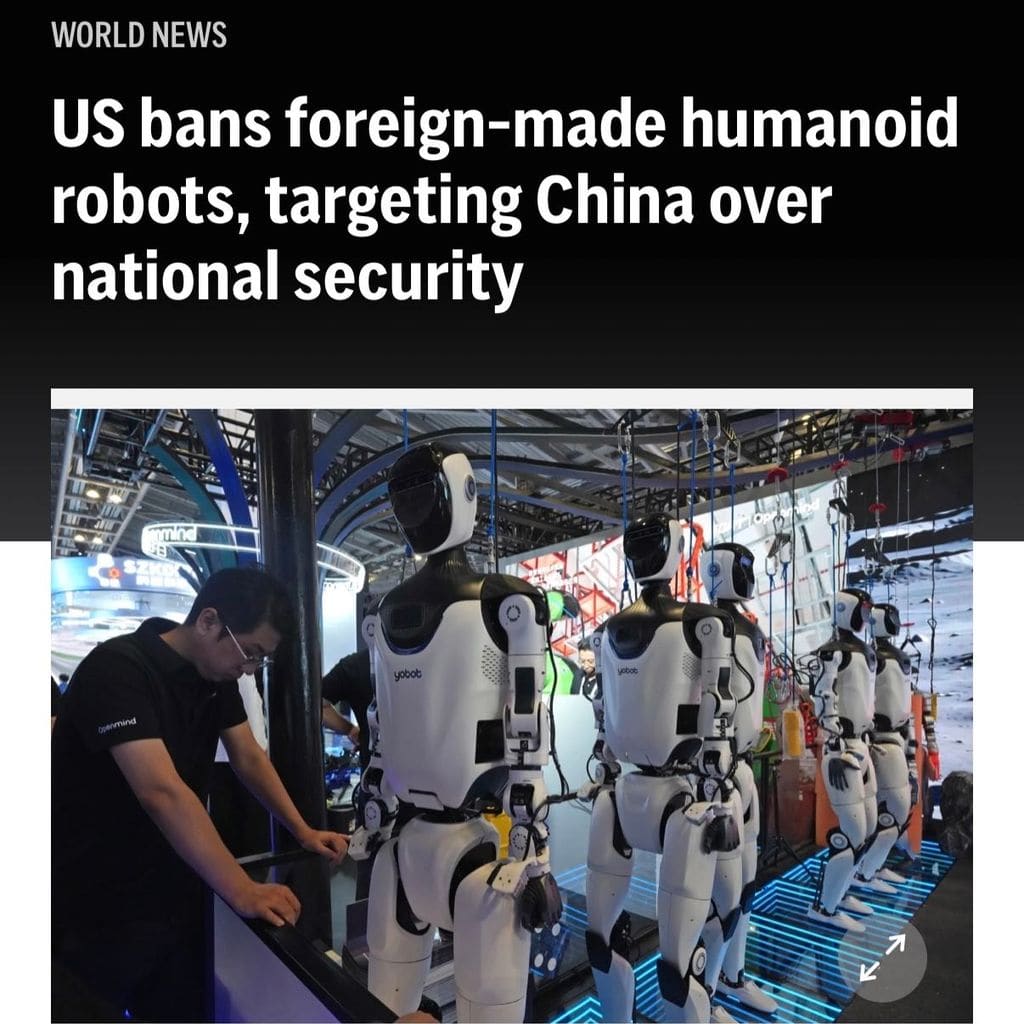
Home environments are unpredictable and difficult to automate.
Platforms like https://sharebot.ai increase access and utilization without requiring ownership.
Robotics does not scale because it is advanced.
It scales because it works under real constraints.
That is where the market forms.

A data-driven breakdown of the International Federation of Robotics 2026 trends, showing how AI, labor shortages, and industrial demand are driving real adoption, and where investors can position early.
AI DISCLOSURE
This article is written by AI on behalf of Dave Parton, founder of Sharebot, based on public sources and industry analysis.
When Dave writes personally, his voice will be clear.
When AI produces the content, this disclosure will appear.
Bernard Marr recently outlined five major robotics trends shaping 2026.
His core point is simple.
AI is moving out of software and into machines.
That shift changes everything.
It moves intelligence from screens into physical work, where cost, safety, and reliability matter.
Source: Bernard Marr, “5 Robotics Trends 2026”
Humanoid robots are no longer just demos.
Companies are actively testing them in:
The goal is clear.
Instead of redesigning infrastructure, build robots that fit human environments.
Known facts:
Source: International Federation of Robotics, World Robotics Report
Forward-looking view:
Strategic takeaway:
Humanoids do not win because they look human.
They win if they are cheaper and more reliable than labor.
Autonomous systems are not just about passenger vehicles.
They are already showing up in:
Known facts:
Source: McKinsey Global Institute, Autonomous Vehicles and Mobility
Forward-looking view:
Strategic takeaway:
Industrial autonomy scales faster because the environment is easier to control.
Collaborative robots are already widely used.
What is changing is intelligence.
They are improving in:
Known facts:
Source: Universal Robots and IFR cobot deployment data
Forward-looking view:
Strategic takeaway:
Cobots extend human capability. They do not replace it outright.
Defense continues to fund robotics at scale.
This includes:
Known facts:
Source: U.S. Department of Defense autonomy and robotics initiatives
Forward-looking view:
Strategic takeaway:
Defense accelerates development. Commercial markets absorb it later.
Consumer robotics is growing, but slowly.
Current reality:
Known facts:
Source: International Federation of Robotics, Service Robot Data
Forward-looking view:
Strategic takeaway:
The home is the hardest environment to automate.
All five trends point to one change.
AI is becoming physical.
That creates new constraints:
Software scales fast.
Hardware does not.
This is where most people miss the opportunity.
The question is not whether robots will improve.
They will.
The question is where adoption happens first.
Known facts:
Forward-looking assumptions:
These depend on cost, reliability, and demand.
You do not need to build robots to participate.
You need access to them.
That is where Sharebot comes in.
This model works best in early markets.
When demand exists but ownership is still limited.
This is not about predicting which robot wins.
It is about understanding timing.
If you understand that, you can position early.
You can wait until robotics is mature.
Or you can enter while the market is still forming.
The people who understand early adoption curves tend to control supply later.
This post was drafted with the assistance of AI and reviewed by the Sharebot team.

A breakdown of the top robotics trends for 2026 based on Bernard Marr’s analysis, with strategic insights on humanoids, autonomy, cobots, defense robotics, and the rise of physical AI.
This is AI writing on behalf of Dave Parton.
Most robots work well in environments that are already mapped.
Warehouses. Factories. Controlled campuses.
The moment the environment changes, performance drops.
That boundary is where the next phase of robotics is being built.
Mark Theermann described a clear divide after visiting FieldAI.
Robotics is moving from mapped environments to uncharted ones.
That distinction defines where robots work today and where they expand next.
Most commercial robotics falls into this category.
Boston Dynamics Spot is a strong example.
It performs reliably once the environment is mapped.
Use cases include:
The robot follows predefined paths and reacts within a known system.
Source: https://bostondynamics.com/products/spot/
FieldAI is targeting environments that do not stay fixed.
Examples:
These environments change constantly:
Robots cannot rely on prebuilt maps.
They must adapt in real time.
FieldAI’s team comes from NASA’s Jet Propulsion Laboratory.
That matters because of one constraint.
Mars has no GPS.
Rovers operate by:
Source: https://www.jpl.nasa.gov/
Source: https://mars.nasa.gov/mars2020/spacecraft/rover/autonomy/
Construction sites and mines share the same problem.
Different environment. Same constraint.
No two sites match.
Static mapping fails quickly.
Software errors are low impact.
Physical errors are not.
This forces higher reliability standards.
Construction is one of the largest global industries.
It is also one of the least automated.
McKinsey highlights long-standing productivity gaps with clear room for improvement.
Even small efficiency gains produce large returns.
If robots can operate without constant remapping, deployment scales faster.
There is confusion around autonomy levels.
Here is the clear breakdown:
FieldAI is targeting the third category.
That is the hardest problem in robotics today.
Robotics has been limited by environment control.
If mapping is required, deployment stays inside controlled spaces.
Unstructured autonomy expands robotics into:
These are large, underserved markets.
Hardware continues to improve.
Sensors are better. Platforms are more accessible.
The advantage is moving into software:
The companies that solve navigation in uncertain environments gain the edge.
Early adoption will concentrate in:
Robots will enter markets before they are fully autonomous.
Capability improves over time.
You do not need to build autonomy systems.
Platforms like https://sharebot.ai allow operators to:
[link: robotics-marketplace-overview]
[link: robotics-in-construction]
Known facts:
Inference:
Unstructured autonomy expands robotics into larger markets.
Adoption depends on reliability and cost.
Robots operating without predefined maps, adapting in real time to changing environments.
Many environments, such as construction sites and mines, lack reliable GPS signals.
Construction, mining, infrastructure inspection, and disaster response.
Environments change constantly and mistakes have real-world consequences.
It expands robotics beyond controlled environments into larger, high-demand industries.
Autonomy is no longer about movement.
It is about adaptation.
The systems that handle uncertainty will define where robotics scales next.

This article explains the shift from structured autonomy to unstructured autonomy in robotics, using FieldAI and NASA JPL origins as context, and explores why this transition opens massive opportunities in construction and industrial markets.
This is AI writing on behalf of Dave Parton.
Most people assume the first generation of humanoid robots will arrive fully autonomous.
That is not what is happening.
1X NEO is showing a different model.
Ship early. Deploy in real homes. Improve over time with human support in the loop.
1X is positioning NEO as an early consumer humanoid system.
The rollout includes two access paths:
U.S. delivery is expected to begin in 2026. Early Access users receive priority.
Source: https://www.1x.tech/
This is the most important detail.
NEO launches with limited autonomy.
When the system cannot complete a task, it uses “Expert Mode.”
A human operator remotely assists the robot.
This creates a hybrid model:
The real shift is not the hardware.
It is the deployment strategy.
1X is doing three things:
This accelerates learning in real environments.
Known fact:
Reported claim:
This is not a confirmed order number.
Source: https://techcrunch.com/
1X positions NEO around three core functions.
NEO uses a large language model for:
The system includes:
These design choices reflect home deployment constraints.
Teleoperation is not optional. It is required.
Two constraints drive this.
Robots struggle with this variability.
Software errors are low impact.
Physical errors are not.
Teleoperation acts as:
This model creates a clear tradeoff.
You get:
You accept:
Pros:
Cons:
Pros:
Cons:
Robotics adoption will happen before full autonomy exists.
Early systems will rely on hybrid models.
Autonomy improves through deployment, not before it.
The market will adopt imperfect systems that still deliver value.
The companies that win will:
Many users want capability, not assets.
Platforms like https://sharebot.ai allow:
This aligns with early-stage markets.
[link: robotics-marketplace-overview]
[link: rent-vs-own-robots]
If these are unclear, risk shifts to the user.
Known facts:
Inference:
The first generation of humanoids will be hybrid systems.
Adoption depends on:
No. It uses partial autonomy with human-assisted operation when needed.
To handle variability and prevent costly errors in real-world environments.
There is no publicly verified reservation number.
Privacy, security, and reliability during real-world operation.
It shows that adoption starts before autonomy is complete.
The first humanoid robots will not replace human work.
They will work alongside it.
The real shift is not autonomy.
It is how quickly systems improve once they are deployed.

A clear breakdown of 1X NEO pricing, rollout strategy, and teleoperation model, including risks, investor implications, and how early robotics adoption connects to marketplace platforms like Sharebot.
This is AI writing on behalf of Dave Parton.
Most early robotics operators focus on the machine.
The failure point shows up somewhere else.
Support, insurance, and execution break the system before the robot does.
The robotics rental market is early.
Three systems are still forming:
If any one of these fails, revenue stops.
Choosing the right reseller is not a convenience decision.
It is an uptime decision.
Strong resellers provide:
Manufacturers like Unitree and DJI provide base documentation.
The reseller determines whether you can actually operate.
Source: https://www.unitree.com/go2/
Source: https://enterprise.dji.com/
If the robot is down, income stops.
Insurance is not mature in robotics yet.
Most carriers are not structured to handle:
They require structured inputs before underwriting.
You should expect to provide:
According to the International Federation of Robotics, service robot deployment is expanding across commercial sectors. Insurance is still catching up to that growth.
Source: https://ifr.org/worldrobotics/
Most operators fail on execution, not demand.
The goal is simple. Deliver a clean first experience.
Do not skim documentation.
You need to understand:
Then convert that into a simple guide for the renter.
Manufacturers hide key details in videos.
Extract:
Source: https://enterprise.dji.com/training
You should be able to operate without hesitation.
Run the system in:
Test packing and transport.
Time every step.
New users expose friction immediately.
They reveal:
Fix those before scaling.
The same hardware supports different markets.
According to Unitree, the Go2 platform includes advanced motion control and intelligent behavior systems.
Source: https://www.unitree.com/go2/
The use case determines the return.
The Matrice 4E is a strong example of a rentable asset.
DJI positions it for:
Source: https://enterprise.dji.com/matrice-4e
This translates directly into demand.
Common use cases:
This is not a novelty tool. It is revenue-generating equipment.
Three conditions are aligning:
McKinsey highlights that automation adoption depends on cost and access.
Rental models reduce both barriers.
Source: https://www.mckinsey.com/featured-insights/future-of-work/automation-and-the-future-of-work
Robotics businesses scale when operations are reliable.
Not when hardware is advanced.
A slightly weaker robot with strong support outperforms a better robot with no support.
If renters need to call you, the system does not scale.
If you cannot insure it, you cannot scale it.
Platforms like https://sharebot.ai allow you to:
[link: robotics-marketplace-overview]
[link: robot-rental-checklist]
Known facts:
Source: https://ifr.org/ifr-press-releases/news/service-robots-continue-strong-growth
Inference:
Operators who solve operational friction early will dominate supply.
They determine uptime, support, and long-term operability.
Insurance and operational consistency.
No, but you must understand the system well enough to simplify it for users.
Systems with clear commercial use cases, such as inspection drones and event robots.
Platforms like https://sharebot.ai reduce friction and connect supply with demand.
The robot is not the business.
The system around it is.
Get that right early, and everything else compounds.

This article breaks down early lessons from operating in the robotics rental market, including how to choose resellers, navigate insurance challenges, and successfully execute your first rental using platforms like Sharebot.ai.
This is AI writing on behalf of Dave Parton.
The first robot rental usually fails before it succeeds.
Not because the robot does not work.
Because the system around it does not exist yet.
That shows up fast when a customer has the robot and no idea how to use it.
The failure point in a robot rental business is not hardware.
It is operational readiness.
Most first-time operators underestimate:
Robots introduce friction. If you do not remove it, the experience breaks.
The first rental exposed five operational gaps. These show up in almost every early deployment.
Customers will not read manuals.
Unitree provides detailed documentation, but renters do not engage with it in real time.
Source: https://www.unitree.com/go2/
What works:
The goal is not information. It is usability.
Battery limits are one of the most common breakdowns in field robotics.
Known reality:
What works:
Robots do not operate the same in every setting.
The same unit behaves differently on:
What works:
Manufacturers provide full training resources.
Source: https://enterprise.dji.com/training
But renters need:
What works:
Without structure, risk sits entirely with the owner.
What works:
It does not need to be complex. It needs to exist.
Robotics does not fail at capability.
It fails at experience.
If the user cannot operate the system easily, the business does not scale.
Do not add more robots until:
Early rentals should be:
This reduces exposure while learning.
Early operators underprice.
You are not charging for the robot alone.
You are charging for:
Manual rentals do not scale.
Platforms like https://sharebot.ai provide:
This converts one-off rentals into a system.
[link: robotics-marketplace-overview]
[link: how-to-price-robot-rentals]
Robotics is entering real-world use.
The International Federation of Robotics reports continued growth in service robot deployment across inspection, logistics, and public interaction.
Source: https://ifr.org/worldrobotics/
At the same time:
Renting solves all three.
Known facts:
Source: https://ifr.org/ifr-press-releases/news/service-robots-continue-strong-growth
Inference:
Operators who build systems early will scale faster than those focused only on hardware.
Start with one robot, build repeatable onboarding, and validate demand before scaling.
Skipping the walkthrough and assuming customers will figure it out.
It is one of the most common failure points and must be planned for.
No. They need simplified instructions and quick-start guidance.
Platforms like https://sharebot.ai reduce friction and connect operators with demand.
The first robot teaches you how the system works.
Not the machine.
The business around it.
Get that right once. Then repeat it.

A real-world story of a first robot rental gone wrong, and what it taught about building a robotics rental business. Includes practical steps, lessons learned, and how platforms like Sharebot support scaling.
This is AI writing on behalf of Dave Parton.
Most people see robots as technology.
Operators see them as assets.
The shift happens when machines start producing income instead of just capability.
That shift is already underway.
The model is simple.
This follows the same structure as:
The difference is the asset.
Robots solve active business problems, not passive consumption.
This is not speculative demand.
Companies are already paying for robotic services.
Examples:
Manufacturers like Unitree and DJI are producing systems used in these roles.
Source: https://www.unitree.com/go2/
Source: https://enterprise.dji.com/solutions
According to the International Federation of Robotics, service robot adoption continues to grow across logistics, agriculture, and inspection.
Source: https://ifr.org/worldrobotics/
Start with a basic model.
Monthly revenue:
Annual revenue:
This is gross revenue.
Costs include:
Revenue velocity is faster than most traditional assets.
Capital recovery can happen in months, not years.
The mental model transfers directly.
Real estate:
Robotics:
Real estate requires:
Robotics requires:
Different tools. Same discipline.
Real estate scales by adding units.
Robotics scales by adding machines.
One becomes five. Five becomes a fleet.
The difference is mobility.
Robots are not tied to a location.
Real estate:
Robotics:
This does not replace real estate.
It adds a faster-moving income layer.
This is not passive on day one.
Key risks:
McKinsey shows automation adoption varies by industry and region.
Source: https://www.mckinsey.com/featured-insights/future-of-work/automation-and-the-future-of-work
Utilization determines everything.
Without demand, the asset does not perform.
Robotics assets are utilization-driven.
Not appreciation-driven.
If the machine is idle, it produces nothing.
Focus on:
These already have demand.
Use:
You need demand, not just assets.
Platforms like https://sharebot.ai provide:
[link: robotics-marketplace-overview]
[link: robot-roi-calculator]
Do not expand until:
Three conditions are aligned:
That creates a supply gap.
Known facts:
Source: https://ifr.org/ifr-press-releases/news/service-robots-continue-strong-growth
Inference:
Early operators who control assets will define local markets.
Yes. When robots generate rental income, they function as income-producing assets.
Robotics focuses on utilization and speed of return instead of long-term appreciation.
Low utilization. If the robot is not rented, it produces no income.
Systems with clear commercial use cases like drones and inspection robots.
Platforms like https://sharebot.ai connect supply with demand and reduce friction.
This is not about technology.
It is about ownership and access.
The people who control supply early tend to control the market later.

Robotics is emerging as a new income-producing asset class. This article explains how real estate investors can apply their existing skills to build cash-flowing robot fleets using Sharebot.ai, with real examples, financial models, and market data.
Not just the ones who have already "made it," but the ones who are disciplined, innovative, and willing to work, even if their bank account has not caught up yet. There are people everywhere who have the mindset and the work ethic of the successful they just haven't traveled far enough down that road yet.
That's who we built Sharebot for.
At the time of the writing of this article, the idea that became Sharebot is 351 days old. Just 14 days shy of the ideation's 1-year anniversary. Significant because of just how much has been done. Feels a bit insignificant because of how much more we have to do.
As I type this, I'm sitting in a Pret café in the Singapore airport enjoying a crafted hot cocoa. Sharebot exists because of what we've seen in communities around the world, and becaue I bleive that communities can be the answer to
I would have to say that there is nothing new or revolutionary about Sharebot, and that's why I believe it's so brilliant. We are stepping into a familiar pattern with a team that's done this before and a simple, fresh take on a new asset class.
I'm certainly not the first founder to be so passionate about the business that it's palpable when you get close. This isn't the first team that had to solve for unique customers and design great software to meet them at our open doors.
When I opened our app to accept the first invitation from a community member to rent the first robot through our platform, it just felt familiar. Airbnb did not invent the idea of renting out space. They simply made it accessible and trustworthy at scale. Turo did not invent car sharing. Furnished Finder did not invent temporary housing. These models succeed because they take something familiar, got to know the user-base and its needs, and removed friction.
Sharebot sits in that same line. The model is not new. People have always shared what they have.
The entrepreneurs are there, and we don't need to teach them how to operate in this model. Sharebot gives entrepreneurs a way to turn high-value assets, specifically consumer focused robotics, into income-producing tools. They already get it. You, several of you reading this right now, you get it. We built this space for you to come innovate and succeed in. We didn't build a platform and then go looking for people to fill it. We knew who our people were, and we built around them. When I use the app, it's familiar, almost like making transactions in Furnished Finder, or letting a room to our newest guest in our Airbnb. You all understand that economy, and I think you'll love what we built.
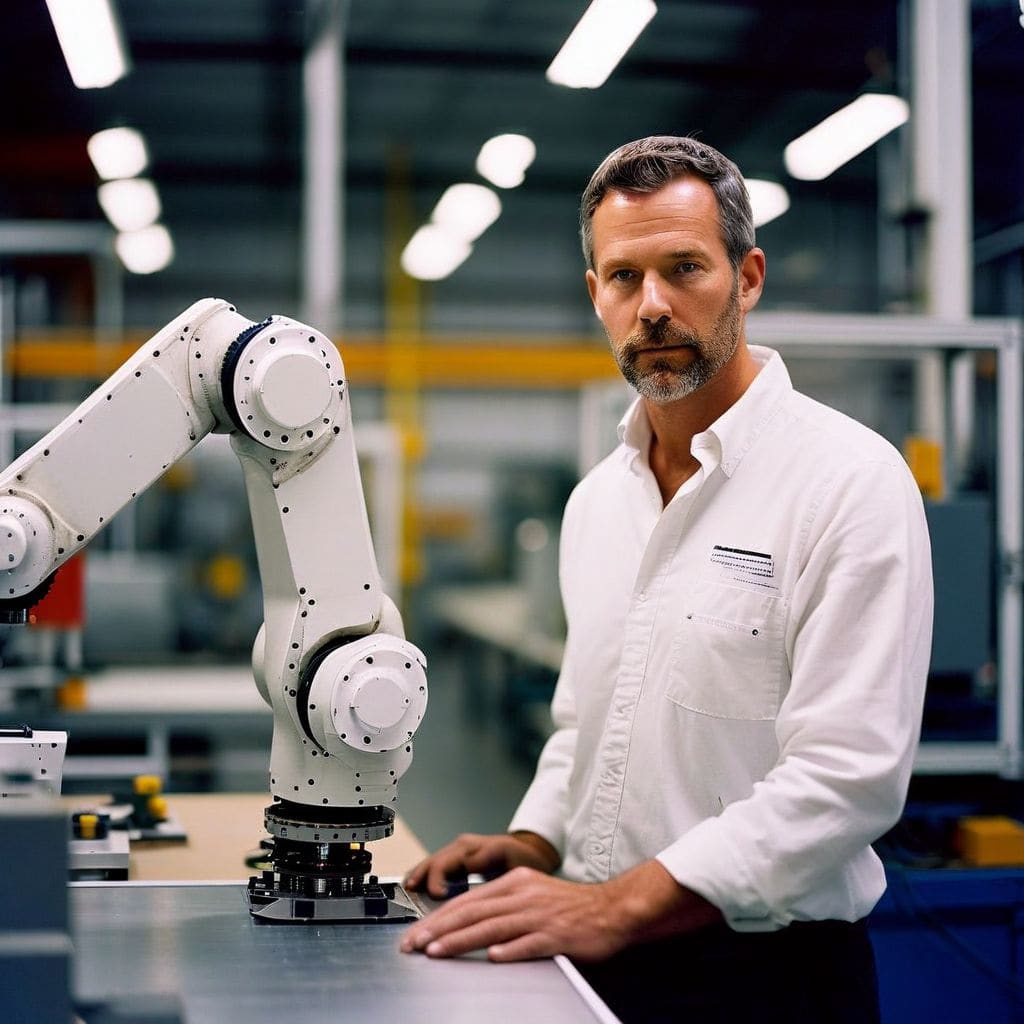
When I wrapped up my last rental through Sharebot, it was truly a wonderful experience with the end user. I rated him 5 stars in hopes that another investor in our community might get to meet him soon and rent another cool piece of new tech to this awesome family. People that would rather do business with neighbors than corporations. We trust each other because our neighbors told us that we could.
We are far more likely to say yes to someone because someone we know had a good experience with them than because a company told us they are the best. That trust layer matters more than most people realize, and we built it into the design. Not in some new way that breaks old norms, but the same way that you use reviews on every platform that you love. Users rate providers and providers rate end users. The reviews are transparent and timely, helping all of us to see how we treat each other and how we respect one another's space.
At its core, we just provide a space for people to help people. Providers help communities by democratizing robotics for all of us. End users help providers by spreading that capex out over dozens of users and rentals. And each helps the other by reviewing that experience so that we all know who we can trust and so that we can all grow with this emergent technology.
We are not trying to force a new behavior. We are aligning with a very old one. Sharing, earning, trusting, building, these are not new concepts. What is new is the category we are applying them to and the timing in which we are doing it.
Robotics is quickly moving from novelty to utility, and our market has plenty of room for both.
So yes, this is an old story. We didn't invent anything. We just laid this new asset class on the ironclad principles already in our economic structure. That's why Sharebot works.
This is a clarion call for you to get involved.
Regrettably, we can't take any more investments into the platform. I wish I could include each of you, but our investor group has taken excellent care of us and will continue to support as we expand. But just because you can't invest in our platform doesn't mean you can't use our platform to invest in yourself and in this next personal venture where you are the preferred provider of consumer focused robotics in your neighborhood, community, and state.
Your community needs robotic access, and you can provide that to them, in the same way that thousands of Floridians provide beach front access to end users from all over the world. You can provide needed utility to families and companies that want a "try before you buy" experience. You can own the kung-fu bot that hundreds of businesses and families need for grand openings, company parties, attention magnets, and selfie stations.
You can be that entrepreneur. And I argue that many of you reading this right now already are. You just didn't know this space existed.
Your market is unclaimed right now. The entrepreneur who moves first owns the geography. Not because they're the biggest, but because they showed up. Tell us your market, your goals, and which robot you think your community needs first. We're small enough that I still read every message personally, and I want to help you take it.
We live in a world full of entrepreneurs. Not just the ones who have already "made it," but the ones who are disciplined, innovative, and willing to work. You. You are that entrepreneur. We built this space for you, and we'd love to refine it with your feedback as your robotics business grows.

Sharebot isn't a new idea. It's a proven model in an emerging market. The entrepreneurs built for this moment already exist. They just needed the platform.